
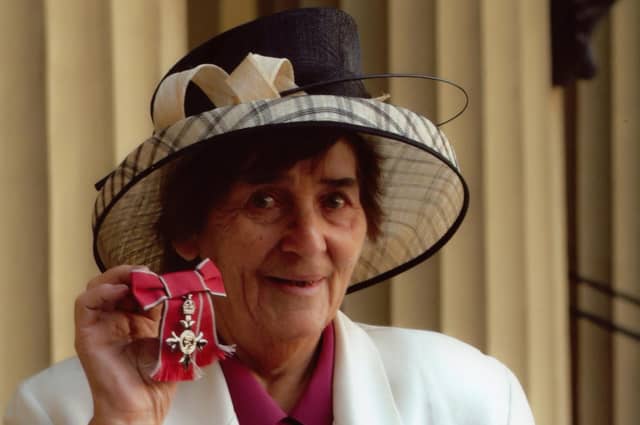


Molly, who lived at Hough-on-the-Hill from 1969, and more lately, Caythorpe was legendary in the Sleaford area.
As a child evacuee she befriended Molly Badham, who would later found Twycross Zoo. She watched Jewish refugees arrive, was waved at by German pilots flying low overhead, and once had to stay indoors because lions escaped after a bombing raid.
Author of more than 120 books, she also ran one of Britain’s longest-running private wildlife rehabilitation centres for sick and injured wildlife for over 60 years.
Her home life with late husband John and children St John and Sophie, would later become legendary. At its height, the Burkett household cared for up to 400 sick and injured animals, including owls, eagles, swans, ravens, badgers, rheas and — briefly — a pygmy hippopotamus from Belle Vue Zoo.
There were birds in the airing cupboard, seabirds in the bath, and badger cubs sleeping in laundry baskets alongside her baby son. One crow, Jack, developed a fondness for beer and achieved national fame on That’s Life, watched by more than 20 million people. Orphaned badgers, meanwhile, learned to ambush cyclists carrying cream cakes.
Molly’s wildlife work placed her at the centre of major national moments. After the Torrey Canyon oil spill, she pioneered an early method of de-oiling seabirds, nearly bankrupting herself when promised funding failed to appear. She supplied captive-bred ravens to the Tower of London, later helping establish its internal breeding programme, and advised the government on the Dangerous Wild Animals Act. Yet she refused to open her centre to the public or accept donations.
Among her many other achievements, Molly was a regular television guest and presenter between 1956 and 1967, mainly on Zoo Time, hosted by George Cansdale.
Alongside this, she built an extraordinary literary career. First published at eight years old, she went on to write books translated into multiple languages, winning major UK and US awards and selling film rights that funded her own publishing house. She also exposed sharp practices in publishing: buying back her rights when illustrators were paid more than authors, and quietly watching as a book she co-wrote appeared almost word-for-word under another writer’s name — later becoming a hugely successful television series.
Burkett was equally formidable in public life. She confronted ministers, inspected children’s homes, chaired Home Office boards, stood (briefly) as a Liberal parliamentary candidate, and became Britain’s first person to be labelled a “NIMBY” by The Times after being part of a campaign that successfully stopped nuclear waste being buried beneath Fulbeck airfield. Molly founded, with others, the Arnhem Museum in Fulbeck; the Conservation Section at The East of England Show; LAND (Lincolnshire Against Nuclear Dumping); led a march to Downing Street for equal pay for women teachers and tirelessly supported individuals in difficulty.
For her services to wildlife she was awarded the MBE in 2008.
In the last few years, Molly was a member of TV actress Vicky McClure’s ‘Our Dementia Choir’ recording at Abbey Road, performing at the Cavern Club and singing before tens of thousands at music festivals.
A tireless activist and legendary helper of strangers, she died aged 93 on January 8.
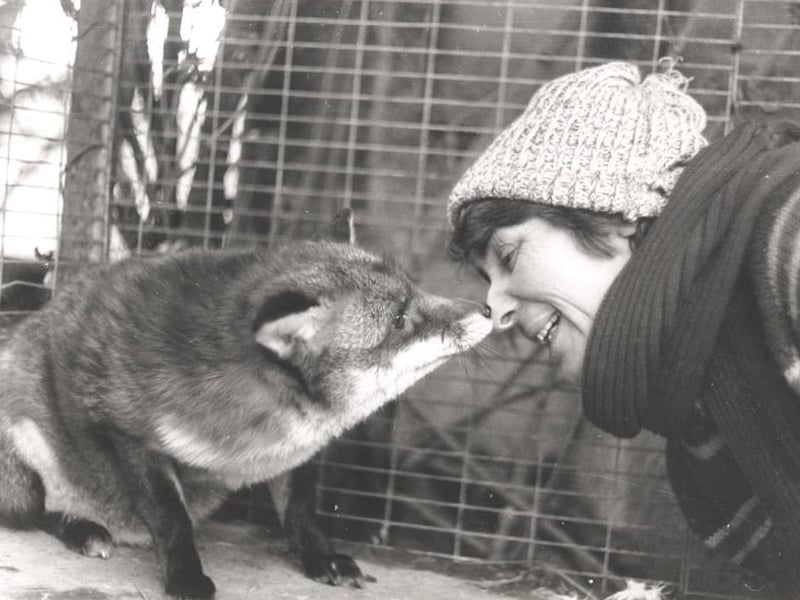
1. Molly & fox, 1980.jpg
Molly took in over 400 animals at her private sanctuary. Photo: ugc
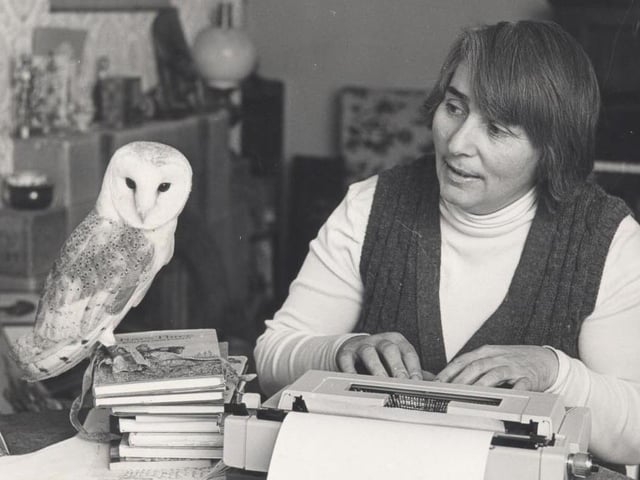
2. Molly & Barny writing, 1976 crop.jpg
Molly Burkett also wrote 120 books, pictured with Barny the barn owl in 1976. Her publishing brand was Barny Books. Photo: ugc
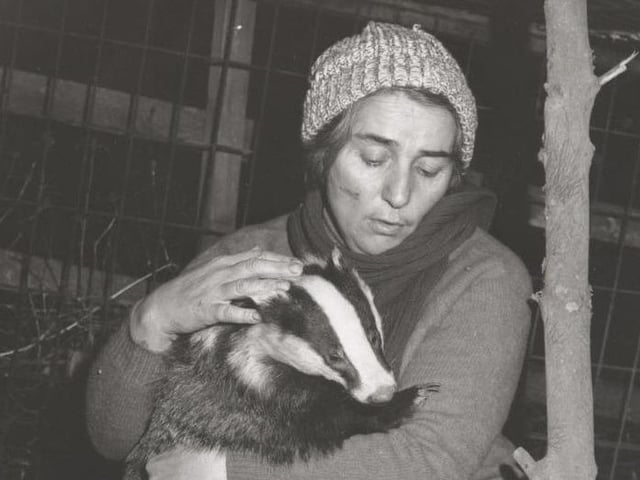
3. Molly and badger, 1981 crop.jpg
Molly and one of her rescued badgers in 1981. Photo: ugc
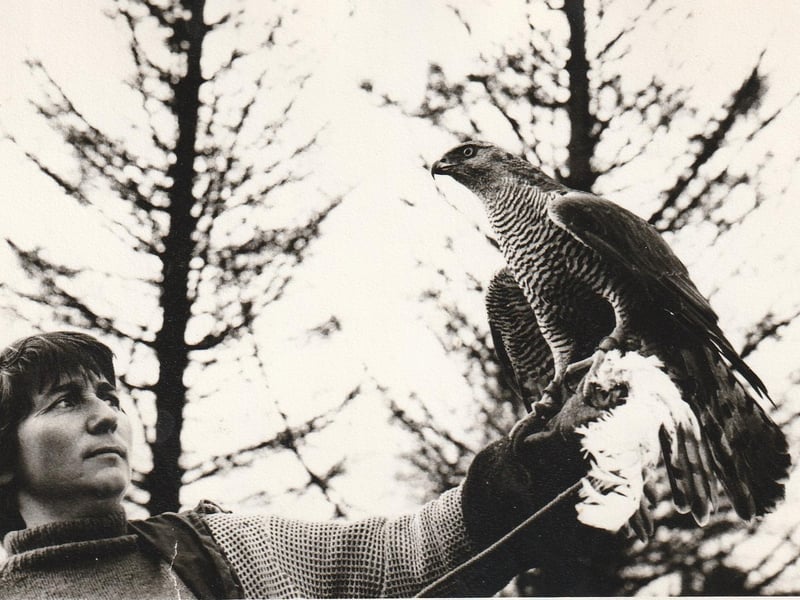
4. Molly & goshawk 1960.jpg
An impressive goshawk that Molly cared for. Photo: ugc