
New UK book sheds a candid light on the personal struggles post adoption and its effects on mental health
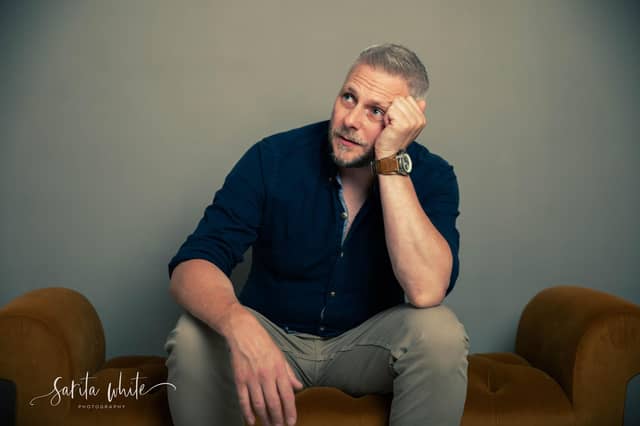

Adoption changes lives — but what happens after the happy ending? In the new book, Who’s Wally? - Adoption, Brian, and Me by Andy Wallis, Andy, explores the hidden and personal realities of adoption and its profound impact on his mental health.
Although I can fully understand why adoptees have a need to connect with their birth parents, I don't feel that need.
That confuses me.
As I scroll through the posts on the ‘Adopted in the UK’ Facebook page, it is full of adoptees desperately looking for birth families and I think it is fantastic that people are going to great lengths to find their families. But that just confuses me more.
Why don't I feel the urge to find and connect with more of my birth family?
Over a 13-year period I was able to gain access to my birth certificate and adoption records, as well as having a very By the end of 2012, I had been contacted by one of my sisters. Which was brilliant. And that seems to be enough for me.
All the information that seems to have satisfied my ‘lost adoptee brain’ was hidden in my birth records, one phone call, and knowing one half-sister. Doesn't seem like a lot does it?
My birth mother only knew me for a few days before giving me up. We had very little in the way of quality Mother/son bonding, if any I suppose. For me, I feel there is nothing to gain from exploring this more.
How much information is enough? I wonder, would knowing about her life growing up or her life after she relinquished me really offer me anything? From where I sit today I'm saying no, I doubt it.
Being adopted has affected my mental state, of that I am certain, but I feel no kinship with my origins anymore. My birth name was David, David is not me, David was the kid that was given up in 1973. I feel as if David died long ago. Andrew just carries the grief of that loss.
Maybe it's the grief of that loss that drives people to want to know more and make connections with their primary life-givers. It's well documented that Grief is a big part of the psychology of the adoptee. So why is that?
Grief works its dark magic on us in stages. These ‘stages’ make up what's known as ‘The Grief Cycle’. Is anyone imagining an old man crying into the handlebars or a rusty old bicycle?... Oh, possibly just me! Tough crowd!
Grief in adulthood is something that can complete its cycle in a relatively obvious time frame, which might be a couple of years or months. Hell, it might just be weeks or days. In adoptees, however, I feel it's slowly happening over our entire lives. Now I'm not clinically trained, but in my own opinion, I'm going to see if I can make the cycle fit.
The 5 stages of this hard-to-ride ‘bicycle’ are described thus: Denial, Anger, Depression, Bargaining, and Acceptance. At times denial is quoted twice in the cycle, taking the place of ‘Bargaining’ but let's stick with it as it is.
Denial
I can definitely see that if you lose a loved one in later life, going through a period of denial is obvious. ”If I'd just been to see them more”. “Should I have suggested they see a doctor?” “What could I have done differently to keep them alive?” “Shit, are they really dead?”
But where and how does denial fit with adoptees?
Perhaps this is the newborn going into shock after being taken from her mother so early on. The panic of forced solitude. The disbelief that the warmth, sounds, and smells that baby craves is gone, and gone forever. The denial is just our mind's everlasting insecurity and lack of trust for the world we were thrown into.
Anger
Hostility and anger in varying degrees is a common theme for adoptees, and it usually comes out in later childhood and adolescence. I read lots of accounts of people claiming to be very angry as kids causing all sorts of issues for them and their adoptive parents. I had a good friend who lived close to me growing up, he too was adopted and boy was he angry. He was forever in trouble with school, the police, his parents, and getting into the wrong crowds. He was the epitome of ‘delinquency’.
My parents were always very weary of him spending time with me. But strangely he was a great mate to me and always treated me and my parents with the greatest respect. If anger lies within me, it's very deep and must manifest itself in ways I've yet to appreciate. But paint me into a corner, I’ll kick you in the balls.
Depression
Stage 3 of the cycle. I have suffered from depressive periods in varying degrees for about 10 years now. It leaves me feeling as im im stood on an abandoned beach, it is cold and desolate, and I’m alone. Could this possibly be part of my perpetual grief?
I've always been lucky enough to have a full-time job but was never fully satisfied with it. Always feeling I was destined for more in life. Depressive thoughts started when I gave up a part-time business that kept me so busy I could barely see. Finding myself with nothing to be doing, Brian the brain started to look ever more deeply for things to occupy us. I could never place where my depression came from but It took hold and continues to do so. Thankfully now I'm finding ways to cope and I see these moments coming from a mile away. I'm not saying I have all the answers here, but I'm learning.
Bargaining
This could also be seen as guilt, after a loss, people resort to the same sort of questions they had right at the start during the Denial process, “if only I’d…” but what if I’d… and perhaps adoptees who start their journey to trace original parentage go through a similar process, “was I not a good baby?” “Did I cry too much?” “why was I not wanted?”. This is where I struggle because I don't have these questions within. I'm not suggesting they are not present in others, just that I can't find them in me, yet.
Acceptance
The mental Health Charity ‘Mind’ on their website, quotes acceptance in this way:
“Acceptance does not mean that somebody likes the situation or that it is right or fair, but rather it involves acknowledging the implications of the loss and the new circumstances and being prepared to move forward in a new direction.”
In my opinion, acceptance happens later on in an adoptee's life, middle age in fact. Why else are there so many 40-something adoptees finally coming out of the ‘fog’ of adoption? Once the situation of relinquishment has been accepted we can then look for ways to heal. Through, for example; counseling, reading, joining Facebook groups, or as I am doing writing about my experiences to aid catharsis. In whatever way we choose to carry this part out, it seems to me to be “preparing to move forward in a new direction”.
We are looking for solidarity, for answers in others. And after a lifelong battle with unrecognised grief, and all that healing we do in later life, we are gaining acceptance. Then, we can think about connecting with birth parents, and we do, in our thousands. I do consider the possibility that if and when I have gained enough acceptance, I too will need to connect with my roots. But by then it could be all too late,
And… that confuses me still further.
My head was a mixed-up mess before I discovered the links to it and my adoption.
Drawing on Andy’s personal experiences and years of insight into the adoption community, Who’s Wally? combines memoir, research, and advocacy. It lifts the curtain on the struggles adoptees often face with identity, resilience, and wellbeing — while offering hope and understanding to families, social workers, and mental health professionals, from Andy’s own experience “Adoption trauma manifests itself in lots of ways, it would seem from emotional stuff like anxiety, depression, difficulty in creating healthy attachments and relationships. There are ever-present feelings of inadequacy, closing down emotionally, or even social quirks like refusing to do something fun because it wasn't the adoptee's idea. They were all present in me! Adoption is often portrayed as the perfect ending to a child’s story,” says Andy. “But for many adoptees, it’s also the beginning of a lifelong journey with identity, trauma, and poor mental health. This book is about challenging stigma and showing that healing is possible.”
Andy Wallis is a father to 3 grown-up children, living in Grantham. He is an author, blogger, speaker, has trained in mental health awareness, and is an occupational Mental Health First Aider and advocate. Taken from his Birth Mother as a newborn and adopted as a 6-month-old, he draws on both personal experience and gained insight to shed light on the complex emotional journey of his adoption and its impact on his mental health. Throughout his adult life, he struggled with poor mental health.
During a particularly dark period in 2023, he was asked if his current state might have been influenced by his adoption. Andy always maintained that this was not the case. Then he was given a book to read, written by an adoptee. Reading it open-mouthed in amazement. He was not alone! He realised he needed to write, to look deep inside. First of all, in a blog that received a few thousand views in its first month, and then for the book that followed. Andy writes, and has written for his website (whoswally.co.uk), Anne Heffron, Author of ‘You Don’t Look Adopted’, Simon Benn - Thriving adoptees, and Adoption UK. He has also appeared on BBC Radio (Nottingham), Hive FM (Grantham), as well as producing a short series of his own podcasts. He has appeared on podcasts such as Thriving Adoptees, Adoptees at Work, and The Wandering Tree.
For more about Andy Wallis and the book Who's Wally? - Adoption, Brian, and Me, go to the website www.whoswally.co.uk