
Lincolnshire-based behaviour expert on unlocking team potential through emotional intelligence


Based on the Cambridgeshire-Lincolnshire border, Jez Rose has brought national attention to the region through his pioneering work in behavioural science and environmental sustainability. In 2017, he transformed a derelict farmhouse into the world’s first certified carbon-neutral honey farm, Bees & Co., dedicated to protecting the native British honeybee.
An award-winning speaker, author, and broadcaster, Jez is recognised globally among top emotional intelligence speakers. He has delivered keynote presentations and workshops for some of the world’s most recognisable brands, including Google, American Express, and Pfizer, helping individuals and teams reach peak performance.
In this exclusive interview with The Champions Speakers Agency, Jez shares insights into the mindset behind high-performance teams, the real challenges of modern leadership, and why embracing change is essential—not just in business, but in how we choose to live.
Q: As someone who’s worked with high-performing teams around the world—what, in your view, truly defines a high-performance workplace?
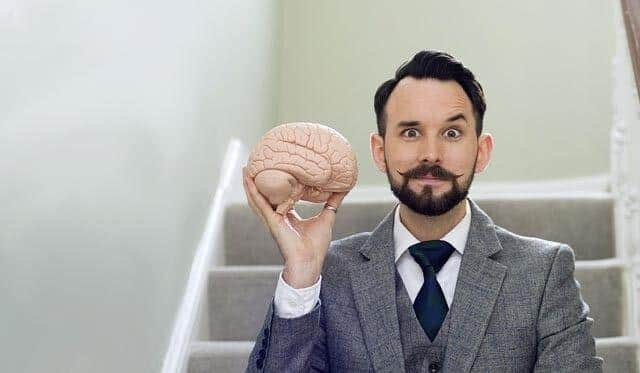
Jez Rose: “Well, this is a good one because I sample everything. I'm a big geek when it comes to stats and figures, and almost all—not exclusively, but almost all—of the organisations that come to me and say, "Can you help us be a high performing team?" or, "We need to focus on high performance," when I throw that back to them and say, "Okay, what does a high-performance team look like? What is a high-performing team?" almost none of them can describe it.
“They just know it's this sort of aspirational thing that we know we should be doing, but they don't necessarily know what it is or what that consists of. I think there are—you could ask lots of different people that would probably give you lots of different answers. And, you know, the internet will be awash with interpretations of this. But from a behavioural perspective specifically, I think there are probably a couple of things that really make those organisations stand out.
“The first one is curiosity. Some of the best people I work with—the most, sorry no, that's wrong—some of the most interesting people I work with from a purely personal perspective, not necessarily the best, are the high-performing teams already.
“You know, the Premiership elite sports teams, the high-performing government teams, the high-performing industrial teams—because they know that when they've reached that point, just like a sports or professional athlete, they're now looking to, "Okay, how do we dial it up a little bit? How do we move the needle just a tiny bit more?"
“Whereas there is this misconception by an awful lot of organisations—and indeed teams—that high performance is this sort of total elitist, definitive point that once we get there, everything will be fine. And actually, the work continues, just continues in a slightly different way.
“So curiosity is naturally that characteristic that helps us kind of look forward. What else? What's new? Okay, we've got that, we're really brilliant, we got 10 out of 10—how do we move the needle somewhere else?
“The second thing is a culture and an environment which allows for—dare I say, encourages—mistakes and risk. Because it's only through exhibiting different behaviours and trying different behaviours that we're going to get anything new or different.
“It's that old adage that you can't keep delivering the same behaviour and expecting different results. Behaviour begets behaviour, but it is also habitual. We are creatures of habit. So it's about trying different things to develop new habits.
“The third thing I would say is a real insatiable desire to improve, to change. High-performing teams are not afraid of change. And I would say that about 75% of the organisations I work with have cultures that are anxious about change. And that's normally a culture problem. There's normally some history there as to why they might be anxious about things that change. It's normally senior leadership teams perhaps not delivering on their word, or changing and not communicating very well.
“So I would say those are the three sort of—and that's enough, right? If you think about those three things to work on, that's quite a lot of focus. So it's no good, I don't think, having a list of 10 things because you'll just cherry-pick through them. I think you should think about the elements that are the most effective, the most efficacious.
“I've spent just over 10 years researching what the best questions are to ask to get the biggest changes quickest, and I think I would say—but then I would, wouldn't I?—I would say those three things probably are the defining features of a high-performing team.”
Q: Despite countless models and training programmes, leadership remains a struggle in many organisations. What do you believe is the core issue holding effective leadership back?
Jez Rose: “There are several. The most significant—and it requires not very much effort and not much work, actually—but requires quite a significant mindset shift. We've got to almost, you know, turn a 90-degree corner to look at this very differently. And that is the focus on the people.
“Leadership is a craft, and it is leaders as individuals leading other people. It's people leading people. The bare bones of leadership, the sort of beating heart, the golden thread is getting other people to want to do something differently. It's a lot more complicated than that and a lot more complex as a craft.
“But we have focused for far too long—to the detriment, actually. You look at the stats; it's horrific. Forbes released a piece of research earlier this year: over 70% of CEOs said that they did not believe they had high-performing people in their teams—in their leadership teams. Two-thirds of the workplaces that were sampled said that people had left a job because of poor leadership. The stats are bad about leadership across pretty much every industry across the world.
“Because we focused on buying into leadership systems, or processes, or physical pillars, or models. We just need to focus on the people. It needs to be much more human-centred. And the clients I work with are so hungry for that information because they see seismic changes almost immediately.
So yeah, the greatest challenge, I think, is just viewing it from a completely different point of view—from a person-centred leadership perspective.”
Q: Change often meets resistance, especially in traditional business environments. Why is it so important for leaders to challenge the status quo—and what’s the real benefit of embracing change?
Jez Rose: “I love this question. I like to be the cat among the pigeons—in a good way. I think it's really important to rock the boat and ask more questions. Fundamentally, the importance of change management is that as human beings, we don't like change. We resist change a lot.
“If we're fully in control, we love that—"I'm going to redecorate the lounge, I've bought new cushions, I'm going to put a shelf up here, I want a new carpet, I'm going to move the sofa"—all of that's great, totally within our charge.
“But when change happens to us, we see that as destabilising. Because most of the things around us form a part of our identity: as much as your name, the mug you use for work, the route you travel to work, the authors you read, the websites you visit, the position you have your car seat in—all of those things form us. They're a part of us.
“Take a little bit of that away, and we lose a bit of our perceived identity. And that's what change does—it threatens to destabilise the comfort zone and the things we know.
“Change management is critical because, without that, without a support system and a structure to help people first understand the importance of change—change is evolution, change is development, change is progress. And I love the fact that if you just change the word, it kind of mixes things up a little bit. You know, it's like changing the word 'complaint' to 'feedback'—it just changes it, shifts the way it feels inside your brain. And language is so important to how we think, feel and behave.
“So change management is the only way that we successfully move through change without causing significant cultural disruption and ruptures. And those ruptures normally are deep, and they take a long time to repair.
“So I'm a big, big advocate of people understanding what change management is and making sure that the systems and tools and the process that you use are super, super effective—because change is a wonderful thing. It's happening to us all the time. It's forced upon us every time that your phone updates its software and you have to work out where everything is all over again.
“But also, it's happening literally every day within us. We just aren't aware of the changes that happen all the time, because most of the time they're small and gradual. Of course, when they happen at work, they're normally a little bit more dramatic, and that's why it needs a much more careful approach.”
This exclusive interview with Jez Rose was conducted by Sophia Hayes of The Motivational Speakers Agency.
To book Jez Rose for your events, visit: Champions Peak Performance Speakers