
Campaign launched against second biogas plant near village
Villagers are expressing concerns about plans to site a second biogas plant near their homes.
An anaerobic digestion plant processing locally sourced agricultural by-products such as straw, chicken manure and potato waste into biomethane gas, was constructed near the West Lindsey village of Glentham in 2022, and plans have now been submitted for a second one nearby by the same Dutch-based energy developer, VIDA Bioenergy Ltd.
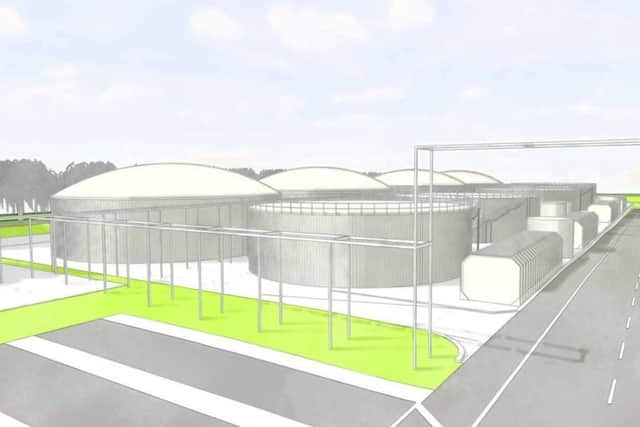

The planning application says the renewable energy could power approximately 20,000 homes.
The 10-hectare site would be accessed off Cross Lane, a short distance from the current smaller plant.
The facility would handle 150,000 tonnes of feedstock per year, made up of crops, agricultural by-products and other waste.
It also claims that this would boost local farms by ensuring they can plant a wider range of crops, offering economic stability in a time of uncertainty.
The anaerobic digestion process would also create carbon dioxide for industrial uses and natural organic fertiliser.
However a number of neighbours are unhappy about a second plant on their doorstep and the accompanying increase in trucks delivering waste to and from the site, with dozens of objections already sent to Lincolnshire County Council.
Ray and Sue Postolowsky live on Cross Lane and are part a local action group against what they describe as the largest non food waste anaerobic digester in the country. She said: “There is a suggested 16-fold increase in HGVs past our house and we are only a few metres from the road.”
There was to be a public meeting at nearby Bishop Norton village hall on Monday April 20 and another in Glentham on Thursday April 23.
Ray said there was the question of the loss of food producing land given over to growing energy crops, as well as risk of methane and digestate leaks from the plants themselves.
He said: "The new proposal makes no sense as they will have to ship in all the energy crops and animal waste.”
Planning documents from the developers claim that the carbon reduction benefit could be equivalent to planting 2.7 million trees per year.
They state: “Like the existing anaerobic digestion facility, the proposed facility would produce a renewable energy source by producing biomethane, which would be cleaned and injected into the local natural gas distribution network using the established connection point (offsetting supplies of fossil fuel).”
Mayor of Greater Lincolnshire Andrea Jenkyns has “serious concerns” about the plant’s suitability. She states: “The application estimates thousands of additional HGV movements each year, many using rural roads and passing directly through nearby villages. These roads were not designed for sustained heavy industrial traffic.
"There are also legitimate concerns about noise, odour emissions and air quality from increased processing of poultry waste, pig manure and other feedstocks.”
Local county councillor Stephen Bunney said, in principle he supported the application but had “grave concerns” that the existing road system could not cope and Glentham Cross Lane was already in poor condition. “The lane is too narrow for the current volume of HGVs, farm machinery, and tourist caravans, especially when they meet oncoming traffic,” he said.
"The junction of Glentham Cross Lane and the A631 Bishopbridge Road is hazardous due to restricted visibility.”
Lincolnshire County Council highways team agreed about the poor condition of Cross Lane meaning it would currently be unsuitable for the increase in HGVs.
"It will be necessary for full carriageway reconstruction from the A631 junction up to the site access, to include widening to 6 metres, to enable the proposed HGV movements.”
Vida Bioenergy’s application documents suggest they would repair the existing road and widen sections to 6m, adding that based on data “there is no reason to suggest that the forecast increase in HGVs associated with the proposed development and Glentham 1 would lead to a higher risk of collisions.” They stated: “No significant effects are expected on transport during the construction, operation and decommissioning of the proposed development, both individually and in combination with other proposed developments.”