
Lincolnshire County Council launches judicial review into major solar farm decision

Lincolnshire County Council has put forward a legal challenge to a major solar energy park development which was approved by the government in August.
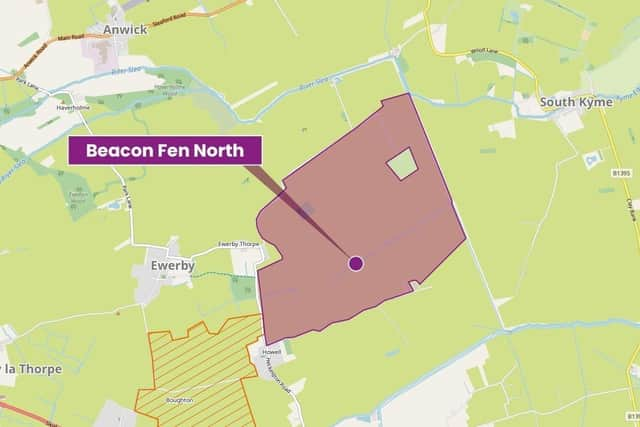
Beacon Fen Energy Park is a proposed 700-plus hectare development including solar panels, battery storage and a substation, north of Heckington, designed to generate enough clean energy to power over 180,000 homes annually
The development, proposed by Low Carbon Ltd, was approved by the Secretary of State for Energy Security and Net Zero on August 21 as a Nationally Significant Infrastructure Project (NSIP).
Throughout the planning process, the county council raised concerns that insufficient weight may have been given to the impacts of the development, including its effects on local communities, the rural landscape and agricultural land, and the cumulative effects of several other major solar developments in Lincolnshire.
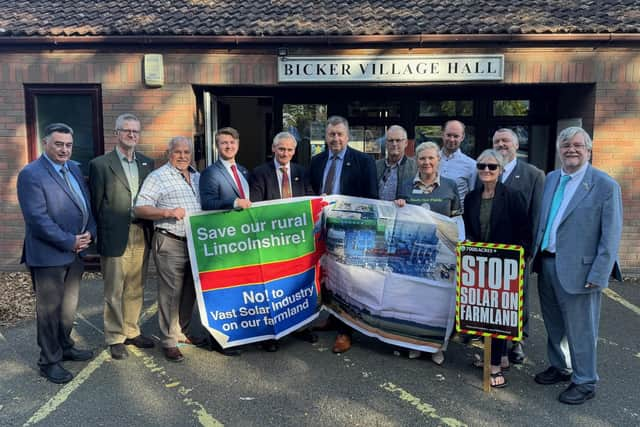

Lincolnshire County Council has looked at the decision-making process, sought legal advice and has now submitted a claim for a Judicial Review to the High Court to review the decision.
Local MP for Sleaford and North Hykeham, Dr Caroline Johnson, had also called upon the county council to set the wheels in motion for a judicial review.
It marks the second judicial review into major solar developments approved by the Government this year, with a joint legal challenge with North Kesteven District Council against the decision to approve Springwell Solar Farm ongoing.
In both cases, a judge will consider the claims and decide whether this can proceed beyond the permission stage to a full hearing.
Coun Sean Matthews, Leader of Lincolnshire County Council, said: “Following the Government’s decision to approve this development, we carefully considered our options, took legal advice, and we believe there are reasonable grounds to challenge this decision in court.
“Legal action isn’t something we take lightly, but we need to use whatever means we have available to stop these developments eating up our best and most versatile farmland, dwarfing local communities, and covering Lincolnshire in glass.
“Our county is still bearing the brunt of NSIP applications and, with no NSIP application ever being refused in Lincolnshire by successive Governments, it’s important that we take a stand on behalf of our residents and our national food security when we believe we have the grounds to challenge.”
Dr Johnson said: "Residents, parish councils and local representatives have consistently raised serious concerns about the scale of this proposal and its impact on our countryside. Many local people feel their voices have been ignored in favour of a decision imposed from the centre."
Dr Johnson said the approval raises important questions about balancing national energy objectives with the need to protect productive farmland, rural landscapes and local communities.
"Lincolnshire plays a vital role in feeding the nation and safeguarding our food security. Decisions of this scale shouldn’t simply be waved through without properly considering the long-term consequences for food production, the rural economy and the character of our villages.
"This is about ensuring that decisions are made lawfully, transparently and with proper regard for local concerns. Communities deserve confidence that their objections have been fully and fairly considered."
The final green light was given on August 21, with Energy Minister Michael Shanks saying: “Solar power is the cheapest to deploy and is our route to energy security and affordable bills.
“By securing more homegrown power we control, we are driving a generational opportunity to grow our economy and tackle the root cause of sky-high energy bills: our exposure to volatile global fossil fuel markets.”
The government stated: “The decision follows a rigorous planning process that considered impacts on local communities, land use and the environment, with solar farms occupying a small proportion of agricultural land while helping strengthen Britain’s energy security.”
A Nationally Significant Infrastructure Project (NSIP) is a project that Government determines is essential for the country’s economy, security, energy system or national infrastructure strategy.
The Government decides which projects are important and then considers them through a separate, national planning process.
An independent Examining Authority examines the application and considers evidence and representations before making a recommendation, with a final decision made by the relevant Secretary of State.
The NSIP process was introduced to streamline planning and decision-making for major infrastructure projects, decentralise decision-making and ensure consistency across regions, and promote economic growth through timely development of infrastructure.
The proposed Beacon Fen Energy Park is part of a concentration of major energy developments across Lincolnshire. The county is currently dealing with various NSIPs at different stages, including several large-scale solar proposals.
Lincolnshire County Council has previously called on the Government to review the NSIP planning process, arguing that it often ignores local views and concerns and has led to a system that has never rejected an application in Lincolnshire since the process was established in 2010.