
New book celebrates former Lincolnshire captain as founding father of Malay Regiment
2025 marks 90 years since the birth of the Malay Regiment – and now, its full story is finally told. And in a surprising twist Capt George Bruce was at ground zero in forming and shaping the regiment.
A powerful new book, The Malay Experiment: The Colonial Origins and Homegrown Heroism of the Malay Regiment, has been released to mark the 90th anniversary of the founding of Malaysia’s most iconic military unit.
Written by military historian Stuart Lloyd, The Malay Experiment offers the first comprehensive account of the Malay Regiment’s colourful origins and its evolution into one of the nation’s most respected institutions. More than a military history, the book traces a story of dignity, discipline, and national pride — one that parallels Malaysia’s own journey to independence and identity.
“The initial company of 25 local recruits formed up in 1933 to answer the British Army’s question: could Malays form an effective modern fighting force?” explains Lloyd, who lived in Southeast Asia for 25 years.
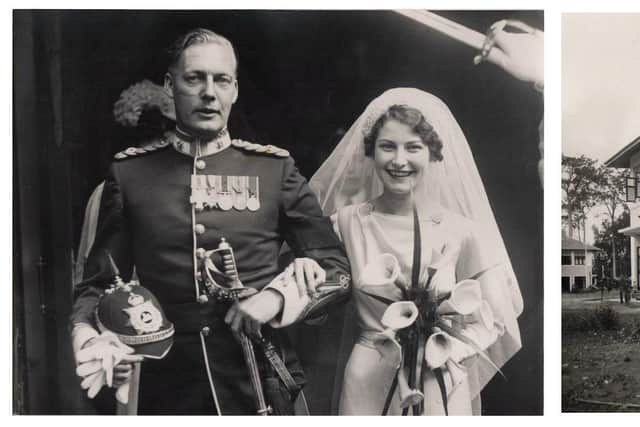

The man chosen to head up the experimental company was Capt George Bruce, MC, then just 36 years old, who’d come up via Haileybury and Sandhurst to the Lincolnshire Regiment. “The World War 1 hero was the perfect man to shape the regiment,” explains Lloyd. ‘Physically imposing, dashing looks — with a large scar across the right cheek earned in the Somme — but culturally sensitive, which was the exception rather than the rule back in the colonial days.”
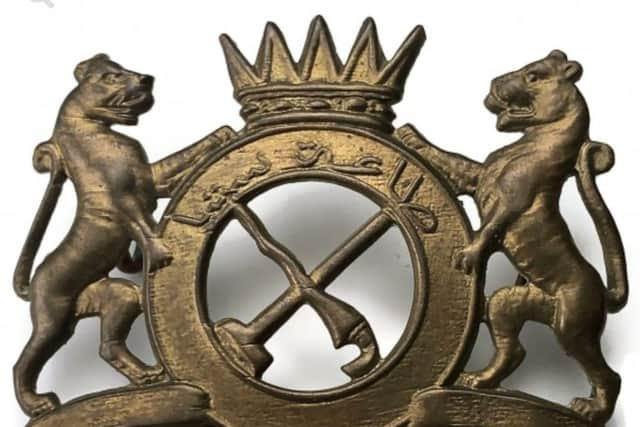
Bruce localised the regiment by embracing Malay values, religion and lots of good makan (food). He and Adjutant Capt Kenneth Exham, who’d spent considerable time in Asia, designed the unit’s badge of fighting tigers, their dapper uniforms (which utilised Malay songkok caps, sarongs and kris daggers) and their motto ‘Ta’at dan Setia’ (‘loyal and true’.)
“Capt Bruce did a crash-course in Malay language before sailing out to Malaya on this commission, and was determined to make it ‘their’ regiment,” says Lloyd. “Proof that it worked was that they only had one desertion in five years that Bruce was in charge. And many locals proved their mettle and stayed on for the entirety of their careers, including Oxford-educated Pte Raja Lope who rose from private to brigadier.” Locals Malays also played in the cricket team alongside their British officers, to great effect.
The company was immediately impressive, and it officially became the Malay Regiment in 1935, sending a detachment to the Coronation in 1937.
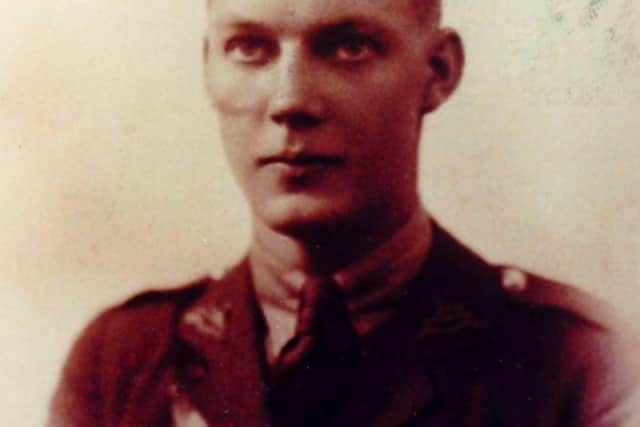
Bruce was promoted to Major, and earned an OBE for his efforts, before his tour was up in 1938, and then was promoted again to Major-General, and appointed GOC Nigeria. He formed, trained, and commanded the 82nd West African Division from 1943 to 1945 — similar to what he’d done so successfully with the Malay Regiment — and led them in operations across West Africa, India, and Burma (where they were part of XV Corps, charged with driving the Japanese out of the colony). He had 28,000 men under his charge.
Brigadier General Dato' Arshad Raji (Rtd), former officer of the regiment, offered high praise: “This book impresses me beyond words, and I humbly acknowledge that what Stuart Lloyd has contributed through this book makes up for what many of us who served in the Malay Regiment (now designated Royal Malay Regiment), could not fulfil. Here is a writer driven by passion for the deeds of brave soldiers who laid down their lives, made immense sacrifices and stayed steadfast to their calling.”
Indeed homegrown heroes were made in the form of Lt Adnan Saidi and Pte Yaacob bin Bidin, who emulated founding father Capt Bruce’s bravery when they came under ferocious fire from the Japanese in Singapore in 1942. While the regiment’s 1st Battalion made a desperate last stand, they were heavily defeated in the Battle for Pasir Panjang. “But the regiment’s DNA and distinctive values in line with their motto were forged in that heat,” says Lloyd.
From the earliest recruits to wartime heroes, the book brings to life the personal sacrifices, battlefield stories, and enduring traditions of the regiment. It also spans critical periods like the Malayan Emergency and post-Merdeka (Independence) era.
“This book is a must-read for all officers of the Malay Regiment,” says Brigadier General Dato' Arshad Raji (Rtd).
His words reflect what many in Malaysia’s defence community have long felt — that the regiment’s legacy deserves renewed national recognition. But who knew it had such colourful colonial origins, with a Lincolnshire captain at the helm, no less?
The Malay Experiment (ISBN: 978-0-645-328097)
• Paperback: Amazon (English) £14.80
• eBook: Amazon (English) | Kobo (Bahasa Melayu)
• Audiobook: Audible, Apple, audiobooks.com