
Chris Whitty visits drugs support service in Lincolnshire

England’s Chief Medical Officer, Professor Sir Chris Whitty, visited Lincolnshire Recovery Partnership on Thursday (January 22) to learn more about the innovative ways the substance use service reaches rural communities and market towns.
Lincolnshire Recovery Partnership is a collaboration between Turning Point, Double Impact and Framework who are experts in providing an all-round holistic approach to the physical and mental wellbeing of people struggling with substance use. The service is commissioned by Lincolnshire County Council.
There is also a dedicated young people’s service, Horizon, and a friends and families service, Beacon, that offer support, information and advice about drugs and alcohol.
Sir Chris, who played a key role in the country’s response to the pandemic, met with members of the Lincolnshire Recovery Partnership and Lincolnshire County Council at the Partnership's hub in Grantham.
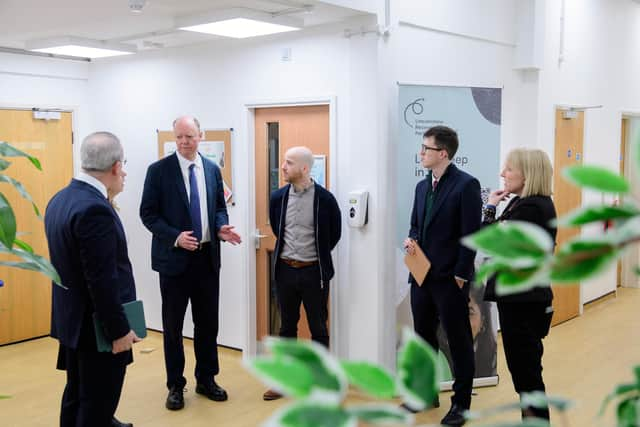

Lincolnshire Recovery Partnership has six hubs situated in Lincoln, Boston, Grantham, Skegness, Spalding, and Gainsborough. There has been an increase in outreach capacity with the introduction of mobile units to provide services closer to home in rural parts of the county.
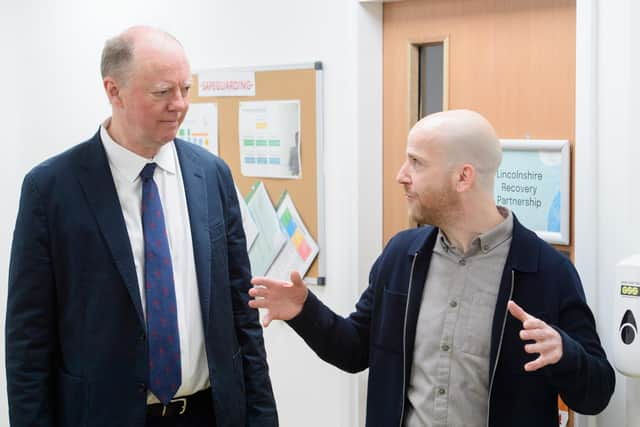
Sir Chris shared his thoughts on the challenges that Lincolnshire Recovery Partnership faces. The team discussed how they strive to deliver services across six geographically different hubs and local communities who have different cultures, age groups, and patterns in substance use.
The service has teams that work closely with local hospitals, the criminal justice services and rough sleeper outreach. There is a dedicated team which works closely with local healthcare providers to support people who have both mental health and substance use issues and help people make positive long-term changes.
People who use the service are also able to access support in preparing for work and finding employment.
Increasing use of ketamine, particularly among young people, has led the service to develop a dedicated ketamine team.
The Partnership has developed close relationships with Lincolnshire Police, training over 300 officers to administer Naloxone - the lifesaving opioid overdose kit.
The service has also created an ADHD pathway to ensure those at highest risk are able to access medication and support.
Horizon, the young people’s part of the service, facilitates drug and alcohol awareness sessions to over 25,000 students each academic year..
Sir Chris said: “In particular, I was struck by their flexible and adaptive approach, tailoring their offer to best suit the needs of diverse communities throughout Lincolnshire’s towns and rural areas. I am grateful to the staff and team members who made the visit possible.”
Dr Lucy Gavens, Consultant in Public Health at Lincolnshire County Council, said: “The service is delivering several innovative projects to improve the health of people living across Lincolnshire's towns and rural communities and we really valued the opportunity to share some of these with Sir Chris.”
Sarah Hancock-Smith, Regional Head of Operations at Turning Point, said: “Sir Chris was impressed with the joined-up approach that substance use and mental health services in Lincolnshire have taken to support the most vulnerable people who struggle with co-existing health conditions. He was also keen to learn more about the ADHD and ketamine pathways being developed by the service.
“We hope that having Sir Chris’s visit to Lincolnshire Recovery Partnership will lead to greater recognition of the challenges in serving market towns and rural communities.”