
How hospitals in Lincolnshire are coping with the flu surge - and everything you need to know about the new strain

Lincolnshire hospitals currently have 15 patients admitted with flu as a new super strain ramps up pressure on health services in the Uk and Europe, however, flu may not be not be the primary reason they are admitted with us.
Lincolnshire Community and Hospitals Group say they currently have 15 patients across its hospitals in Lincoln, Boston and Grantham with flu, however, flu may not be not be the primary reason they were admitted.
Caroline Landon, Group Chief Operating Officer at Lincolnshire Community and Hospitals Group, said: "As expected for this time of year, we are seeing an increase of the number of patients in our hospitals with flu and other respiratory viruses in addition to an increased demand to our urgent and emergency care services.
"Flu and other respiratory viruses are factored into our winter planning and our staff are doing all they can to help reduce transmission of the virus while caring for our patients. Face masks have recently been reintroduced for all admissions and some higher risk areas, and we continue to ask that visitors make use of the hand sanitiser and to avoid visiting our hospitals if they are feeling unwell.
"Our advice to the public is to protect yourself with the flu vaccination if you are eligible, and if you need help but it’s not a 999 emergency, use alternative services including your GP, local pharmacy or NHS 111 online or over the telephone for clinical advice, assessment and for direction to the most appropriate services for your treatment."
Get vaccinated if you can
Lincolnshire Integrated Care Board says with the countdown to Christmas now in full swing, an impressive two thirds of people aged 65 and over in Lincolnshire have come forward for their flu vaccination. Those not eligible have also been paying for a flu jab at local pharmacies.
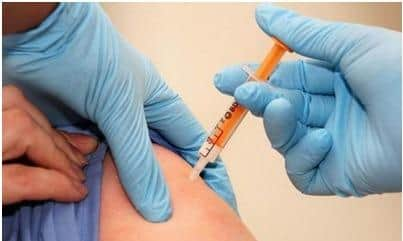
A spokesperson said uptake has been good to-date, particularly in over 65s where two thirds of people have had their flu jab, but they are keen for anyone eligible who is yet to be vaccinated to come forward as soon as possible. There is still time for anyone else eligible for a flu vaccination to get one before Christmas, and plenty of capacity, in terms of appointments, at GP practices and community pharmacies across the county.

They said: "Our core message as always is to use services wisely/appropriately and that there are various options (in non-life threatening instances) where people can seek help and advice. Obviously if the industrial action by resident doctors goes ahead next week, this message will be even more important.”
Kerrie Linger, Assistant Locality Lead – Vaccination Programme Team, at NHS Lincolnshire Integrated Care Board commented: “The thing to remember is that the flu vaccine usually takes two weeks to become fully effective. So, to get protected before Christmas, people really need to be having their flu vaccination in the next week.”
As with the rest of the country, the NHS in Lincolnshire is continuing to strongly encourage people to get jabbed in line with the countrywide NHS vaccination drive.
“Flu can be a nasty illness, particularly if you’re not vaccinated. At this time of year, viruses including flu spread very easily indoors, so we’re particularly keen eligible people come forward as soon as possible for a flu vaccination,” said Ms Linger.
“By getting your flu vaccination, you are not only protecting yourself but also those around you. It’s really easy to book in for your flu jab if you’re eligible. You can book an appointment now at your local pharmacy using the NHS App, you can get vaccinated at your GP practice, you can book online www.nhs.uk/bookflu or you can call 119”.
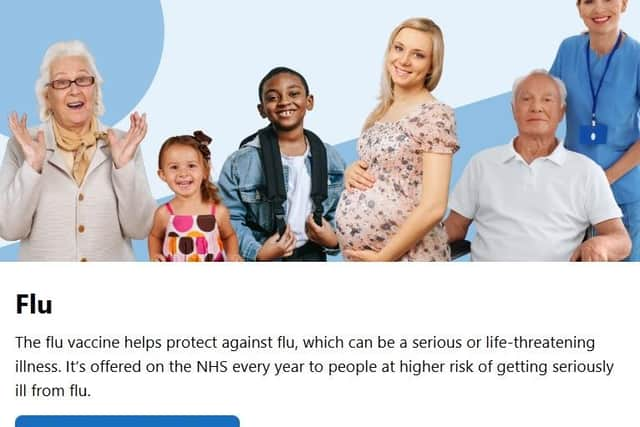
Eligible people include those aged 65 and over, those in clinical risk groups and close contacts of those who are immunosuppressed, pregnant women, children, care home residents and carers, frontline social care workers, and health and social care staff.
Parents of younger children (2-3 year-olds – i.e. born between 1 September 2021 and 31 August 2023) can contact their GP surgery to book an appointment. Alternatively, participating community pharmacies are also offering the flu vaccination to 2-3 year-olds using a nasal spray and you can book online at http://www.nhs.uk/bookflu. You can also use the pharmacy finder to find walk-in appointments for your child.
Cases of RSV (Respiratory Syncytial Virus), another respiratory virus, that is a common cause of coughs and colds are on the rise.
“Adults aged over 75 years, babies under six months old and young children who were born prematurely are at risk from RSV. If you are 28 weeks pregnant or more, aged 75 to 79 or you turned 80 years old after 1 September 2024, you are eligible for and strongly encouraged to have an RSV vaccination,” adds Ms Linger.
Pregnant women should be offered the RSV vaccine around the time of their 28-week antenatal appointment. And people aged 75 to 79 (or turned 80 after 1 September 2024) should contact their GP surgery to book an RSV vaccination.
People eligible for a flu vaccination this winter include those who:
- are aged 65 or over (including those who will be 65 by 31 March 2026)
- have certain long-term health conditions
- are pregnant
- live in a care home
- are the main carer for an older or disabled person, or receive a carer’s allowance
- live with someone who has a weakened immune system
The children’s flu vaccination is offered to children aged 2 to 3 years, school-aged children (Reception to Year 11), and children with certain long-term health conditions.
There is more information about the NHS vaccination programme on NHS Lincolnshire ICB’s website www.lincolnshire.icb.nhs.uk/grabajab
What is the new flu strain?
The new flu strain driving a severe and unusually early season in the UK and other countries is an Influenza A (H3N2) subclade known as "subclade K". It has been nicknamed "superflu" by some health officials due to its rapid spread and the potential for a severe winter outbreak.
About the H3N2 Subclade K Strain
Mutation: This strain mutated over the summer, after the composition for the current season's vaccine had already been decided in February. This means the present vaccine is not a perfect match, which is contributing to higher infection rates as people have less pre-existing immunity.
Severity: H3N2 strains generally tend to be "hotter" or more severe, particularly for older adults and those with underlying health conditions.
Transmission: The virus appears to be more transmissible than typical flu strains, with an estimated R number of around 1.4, compared to a usual 1.2.
Global Impact: Australia experienced its worst flu season on record due to this strain, and Japan has seen schools close as cases reached epidemic levels.
Symptoms
Despite the new variant, the symptoms are similar to typical flu. They tend to come on suddenly, unlike a cold:
Fever
Cough and sore throat
Muscle aches and fatigue
Headache
Sometimes gastrointestinal upset (diarrhea/vomiting)
Red flags that require medical attention include difficulty breathing, chest pain, confusion, persistent high fever, or symptoms that suddenly worsen.
Protection and Advice
Health authorities strongly urge eligible individuals to get vaccinated. Even though the vaccine is not a perfect match for subclade K, it still offers the best protection against severe illness, hospitalisation, and death.
Simple measures like frequent handwashing and wearing a face mask when unwell can help prevent the spread.
If you have the flu, staying home helps reduce community transmission, especially to vulnerable populations.