
Officials see rise in children with speech and language difficulties in Lincolnshire
Officials say they are seeing a rise in the number of young children with speech and language difficulties across Lincolnshire.
Martin Smith, assistant director of children’s education at Lincolnshire County Council said the authority has also seen an increase in requests for special educational needs (SEN) assessments.
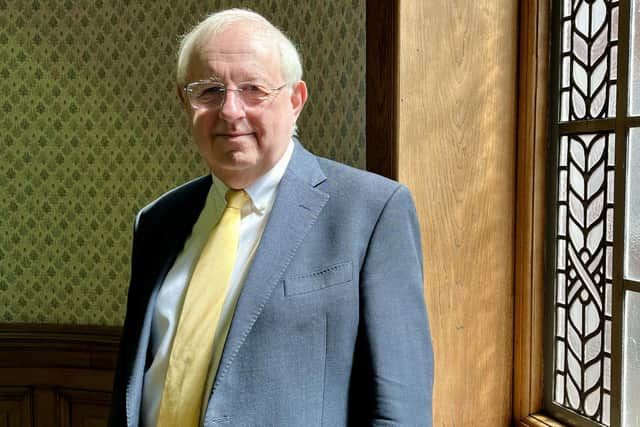

Members of the county council’s audit committee heard that the number of requests for SEN assessments had risen from 1,258 in 2022 to 1,957 in 2024, at a meeting on Monday, November 17.
Mr Smith told the committee that the Children’s and Families Act 2014, introduced a series of reforms to the education system which aimed to improve the support available to children and young people with additional needs.
He went on to say that this has resulted in a rise in the number of requests for additional support to be provided to individual children at school.
Mr Smith added: “During that time, we’ve seen significant demand increases. In 2022, we had 1,258 requests for assessments, as an example, compared to 1,957 in 2024.
“If you look back over the period of reforms, we’ve gone from approximately 2,000 statements as they used to be called, to just over 9,100 EHCPs (Educational Health and Care Plans) today. We can see that demand has increased.”
Mr Smith went on to say that the county council is managing the demand better than many other local authorities.
He added: “In terms of performance, Lincolnshire’s managed to perform really well, compared to national averages in its decision-making time-frames which we are guided by in our code of practice.
“There’s a six week deadline, a 16 week deadline and a 20 week deadline. We have been running it this year at 76.8 per cent of EHCPs have been completed within 20 weeks and that’s compared to a national average of 46.4 per cent.”
Mr Smith provided details of some of the additional needs which the county council has identified across its SEN provision.
He added: “Within all of the needs within the SEND system, in Lincolnshire, what we’re seeing is a predominant increase in speech and language and communication needs, social and mental health needs and ASD, which is autism.”
Coun Ian Carrington (Conservative), who represents the Potterhanworth and Coleby division, questioned why the county council has seen a rise in young children with communication difficulties.
He said: “It seems to me that when we go back to the children involved, and they’re the core of all of this, there are probably three cohorts.
“There are the kids who don’t need SEND provision, there are the ones who clearly do need SEND provision in one sort or another, and then we’ve got this increase in demand which suggests that we’ve got a third cohort of people, parents perhaps, who would like to get into this sector.
“I just wonder when you were talking earlier about results in that way children are measured, are we seeing real changes in the last five, 10, 15, 20 years, or are we looking at changes in diagnoses and demand?”
Coun Carrington went on to say that the county council should prioritise the children who are most in need of additional support.
He said: “That leads me to two risks. The first risk is that we have to focus finite resources on those in real need so there’s a question of A, operationally, how do we make that happen and B how do we manage the risk of that focus being diluted?
“Is there a further risk that we kind of lock children at an early age into a definition which in the long-term might restrict their life chances rather than improving them, not intentionally but as a perverse outcome of providing additional care.
“It’s the child which is the important thing, but what is also important is the level of resource that we have as a council to do that work and make sure that it’s those who really need it.”
Mr Smith added: “I think the issue around the current SEND system is that there are a number of different views and beliefs about what it should deliver.
“There is a perception, and you will have heard it from residents and people in the public domain, around it being a ‘constant battle to get what I need or what I want’.
“We work really hard through multi-agency decision processes so no decision is made by one professional. All of the decisions are made by representatives from the entire partnership.”