
Tree expert defies Motor Neurone Disease to take part in Rob Burrow Leeds Marathon

Three years on from a diagnosis of Motor Neurone Disease, council officer Sean Davies wouldn’t normally be expected to have survived.
Yet thanks to ground breaking new genetic therapy, he will be running a relay marathon next month to boost awareness of his condition and raise money for more research.
Sean is a Tree Officer in the Planning department at South Kesteven District Council, an employer he describes as “very supportive”, working around medical appointments and being flexible according to his needs.
This has been alongside him and wife Mary spending the last few years working and crowdfunding towards converting the old water tower at the former RAF Nocton Hall hospital into their bespoke family home.
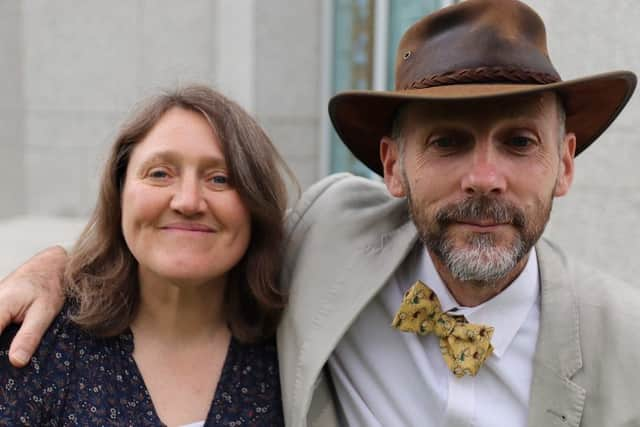

He said: “Although MND is one of those conditions that tends to worry people as soon as they hear the name and look it up, my version is familial and slowly progressive, and I’m in the two per cent who can receive treatment which means I should be fine into my 60s.”
In most cases the average life expectancy from diagnosis of MND is 18 months to three years, and around 50 per cent of people die within 30 months, which is why it’s so important to raise awareness because for most people with the condition, there’s no cure.
Taking part in the Rob Burrow Marathon relay in Leeds on May 10 will be a celebration of Sean’s prognosis and longevity, not only raising awareness but also money for research.
Former Leeds Rhinos Rugby League player Rob Burrow was diagnosed with MND in 2019, and since then his family has campaigned tirelessly to help other families living with the condition.
Running with Sean on the day will be his wife Mary, son Samuel, with Samuel’s wife Chloe, Sean’s nephew Adam, his daughter’s husband Troy, and his sister’s son-in-law Ewan.
Sean said: “When we all cross the finish line together, I want people to see the size of the group and what a difference the funding has made. Without that funding, I’d be unlikely to still be running three years after diagnosis.
“I know I’m in the small two per cent group at the far end of things. My genetic therapy is effective for my inherited form of MND and while it doesn't cure the condition, it slows down its progression.
“A treatment for two per cent can look like a small thing on paper, and MND is a terrible condition. While there’s currently no cure, there is hope. And if the progress seems minor, it really doesn’t feel that in real life: I’m three years on from my diagnosis and still running.”
Donations can be made to the fundraiser via www.justgiving.com/page/mary-davies-11-sod1t
Sean added: “There is no cure out there and that's one of the critical things. When you get that diagnosis, your time is limited.
“My father had MND, as did my grandfather. My father was alive before this treatment became available, and he survived less than two years from diagnosis.
“On my father’s side, I also have aunts and cousins who’ve had MND. In my immediate family, both my brother and my sister carry the inherited gene. Between us, we have 11 children and five grandchildren, and on average, 50 per cent will inherit the gene.”
More information about Motor Neurone Disease can be found at www.mndassociation.org
The first Rob Burrow Leeds Marathon saw over 10,000 take to the streets of Leeds in a fitting tribute to the city that launched Rob’s career. The event is held in support of the Rob Burrow Centre for Motor Neurone Disease Appeal as well as the MND Association. www.runforall.com/events/marathon/leeds-marathon