
Column – The everyday things we use, tell a story
The everyday things we use, tell a story. That story is: What it’s Like to Live in the 21st Century.
In archaeology, we are looking for the things that can tell us the stories of our ancestors. This can be through site formations, the clues left by people living or working in an area – ditches, postholes, pits, remnants of structures etc. But we also look at the artefacts, the everyday things used by the people who were there, people just like us.
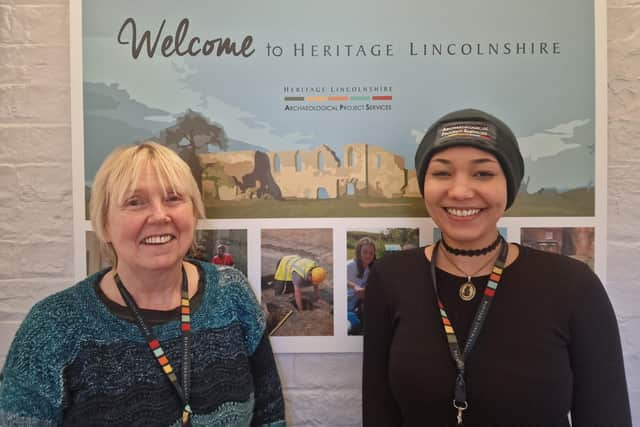

In part of the APS (Archaeological Project Services) office - affectionately dubbed The Finds Shed - the artefacts can start to tell their stories.
Having been discovered and collected on site by archaeologists, we in the Finds and Archiving Team start our work.
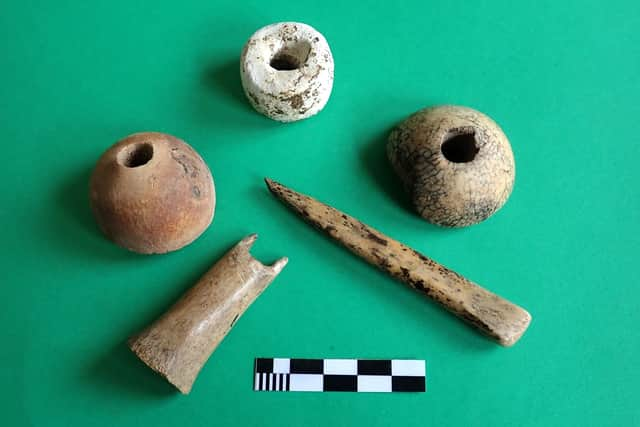
Firstly, the finds are carefully cleaned. Depending on the artefact and its condition, methods range from a bucket of water and a toothbrush, to delicately directing puffs of air at unwanted dirt until it’s gone.
Now it can be properly identified! …which can be trickier than it sounds. We see things from every era of British history, in all forms of preservation; detective work is a significant part of the job – Poirot Mode!
Then comes marking. Using a quill (not a feathered one unfortunately) and ink to place unique identifiers on every individual artefact ensures they can be tracked from site to archive.
Next, the finds are catalogued and packed. Conservation being the top consideration, the finds are assessed on a case-by-case basis, meaning the likes of acid-free tissue paper and crystal boxes are in regular use.
The artefacts will then go on to be examined by specialists. Each type and era of artefact has a specialist in our address book, able to give a detailed account within their area of expertise; their reports will be used as puzzle pieces to reconstruct the day-to-day lives of the people who came before us.
Those stories will then go on to be available in archives and museums for us now, and for the generations to come.
By Sally Horwill and Denise Buckley of Heritage Lincolnshire.