
Photographs taken by John Byford along the shoreline show sections of rusting barbed wire emerging from the sand, remnants of the Second World War coastal defences once used to guard against invasion. What might look like an ordinary stretch of beach is, in reality, part of a much wider network of fortifications built when the threat of enemy landings along the Lincolnshire coast was very real.
The metal anti-tank defences were most notably uncovered following the tidal surge of 1953 – which caused devastating floods along the Lincolnshire coast. Today, the area is marked by warning signs, for those times when the ominous structures re-emerge.
“The sea may hide them for decades, but when these wartime structures emerge once more, they offer a rare glimpse into a chapter of history that shaped our coastline and our country,” said John.
“There’s something fascinating about seeing World War II defences revealed by the tides. They stand as silent reminders of the people who prepared, served and sacrificed during uncertain times.”
Last year saw the 80th anniversary of VE and VJ day with celebrations across the county, but John’s images have sparked renewed interest in how much of this wartime infrastructure still survives, often discovered unexpectantly by walkers and holidaymakers who visit the area today.
At nearby Friskney, another wartime survivor continues to stand in plain sight. A former coastal watchtower once used to monitor activity across The Wash and the North Sea, has since been transformed into holiday accommodation. Its modern use contrasts sharply with its original purpose, but the structure remains a tangible link to a time when vigilance along the coast was essential.
Inland, the legacy of Lincolnshire’s wartime role continues to surface in unexpected places. Around Woodhall Spa, wooded areas that once concealed military storage sites still carry traces of their former use. Carefully hidden from aerial reconnaissance during the war, these locations formed part of the vast logistical network that supported Britain’s armed forces.
Of course, Lincolnshire’s reputation as “Bomber County” is most strongly preserved at Lincolnshire Aviation Heritage Centre. Built on the site of a former RAF bomber station, the centre keeps alive the story of the crews who flew perilous missions from airfields across the county.
The presence of preserved buildings and a working Lancaster bomber offers visitors a direct connection to the wartime generation, ensuring that this history is not only remembered but experienced.
More recently, Lincoln itself has strengthened its commemorative landscape with the development of the International Bomber Command Centre. Alongside striking memorial spaces and visitor facilities, the site provides a focal point for reflection on the scale of loss suffered by Bomber Command aircrews and their families. The Battle of Britain Memorial Flight is an aerial display group which offers a visitor centre at RAF Coningsby, where visitors can get up-close to the iconic aircraft.
Elsewhere, modern installations such as the prominent Lancaster silhouette artwork on the edge of the city have become powerful visual reminders of the aircraft that defined much of Lincolnshire’s wartime identity.
Taken together, these sites show that Lincolnshire’s tourism offer is about far more than seaside resorts and rural scenery. It is also a landscape of hidden history — where a photographer’s lens on a strip of barbed wire can open a window onto the county’s deeper role in the Second World War.
As interest in heritage tourism continues to grow following last year’s VE Day and VJ Day 80 commemorations, Lincolnshire’s “Bomber County” story remains very much alive, waiting to be discovered in plain sight.
Sites keeping war-time heritage alive:
• We’ll Meet Again WWII museum, Freiston Shore, near Boston.
• Lincolnshire Aviation Heritage Centre, East Kirkby.
• Battle of Britain Memorial Flight visitor centre, RAF Coningsby.
• Bomber Command Centre, Lincoln.
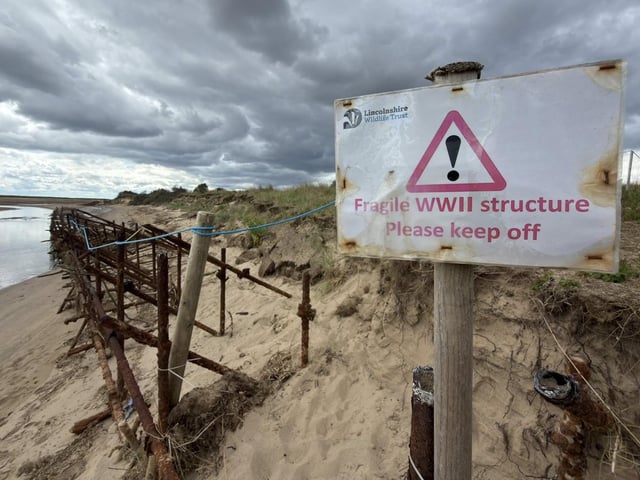
1. WWII Defences
Warning signs at the site of the old WWII anti-tank defences at Gibraltar Point. Photo: John Byford
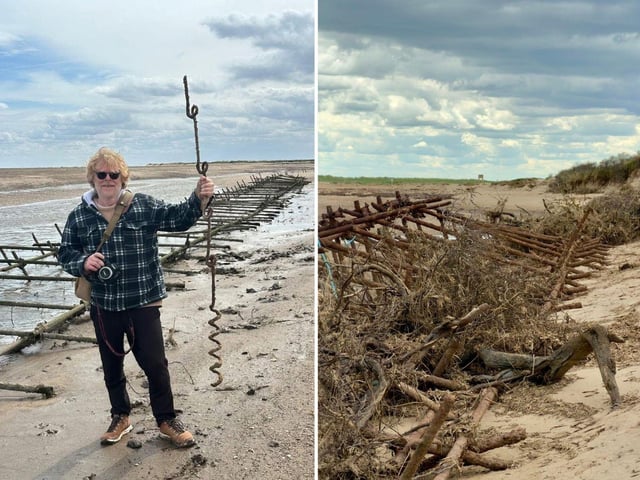
2. WWII Defences
Photographer John Byford with some of the war-time debris, and one of his snaps of the metal defences at Gibraltar Point, Skegness. Photo: John Byford

3. WWII Defences
A remnant of the Second World War. Photo: John Byford
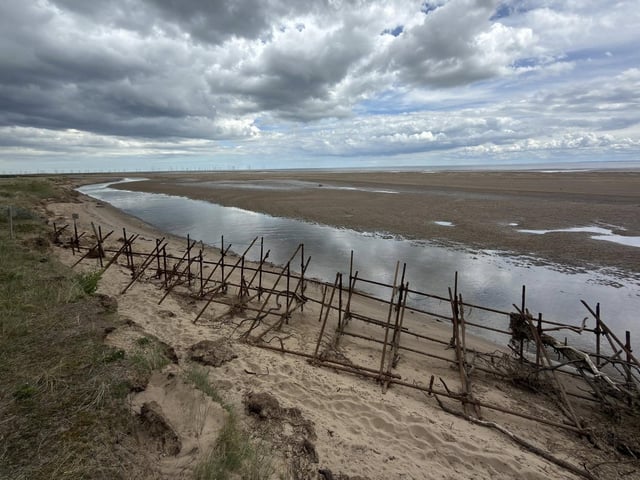
4. WWII Defences
Visitors are advised to not get too close to the old structures. Photo: John Byford