
Fifty sites were investigated along the Viking Link interconnector cable route – with a significant discoveries made at a number of them.
Among these were 32 Anglo-Saxon graves, gold and silver jewellery, pottery and weapons – all providing evidence of human activity from the Mesolithic era (10,000-3000BC) to the modern period.
The discoveries provide a unique insight into Lincolnshire’s distant past, revealing thousands of years of human activity.
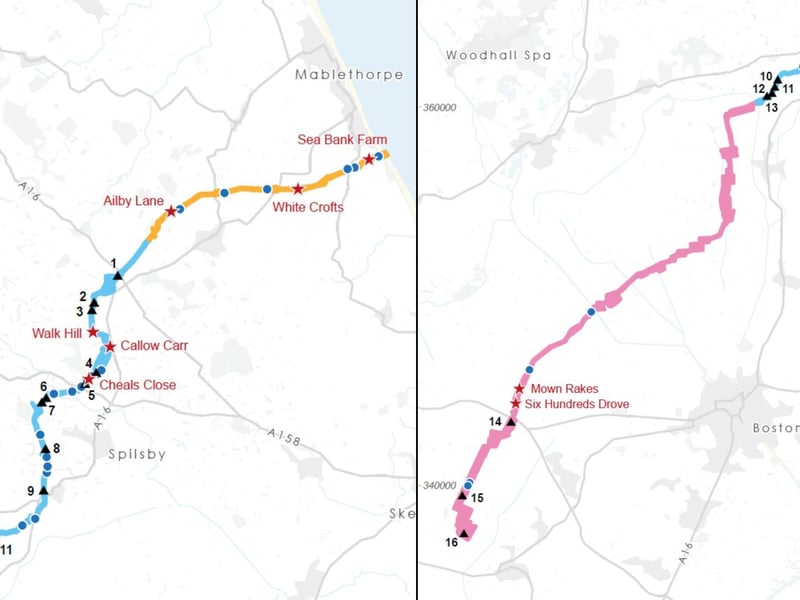
The programme traversed three distinct landscapes – the Lincolnshire Marsh, the Lincolnshire Wolds, and the northern Fens – on its 67 km course between landfall on the coast near Mablethorpe down to the electricity substation at Bicker Fen, Boston.
The work, commissioned by Balfour Beatty on behalf of National Grid, was carried out by Wessex Archaeology and Network Archaeology Ltd between 2020 and 2021 – with the subsequent analysis, testing a recording of the finds taking place in the following years.
Key findings, revealed in a new publication, ‘Marsh, Wold and Fen: The Archaeology of the Viking Link Interconnector in South East Lincolnshire’, included a previously unknown Anglo‑Saxon cemetery, evidence of very early farming, large-scale salt production and local pottery manufacture from the Roman period.
Key sites and discoveries
• Sea Bank Farm, Sandilands – Items unearthed from the tidal flats, dating from the Romano-British era, included fired clay, animal bone, iron objects, Medieval pottery and a Roman coin.
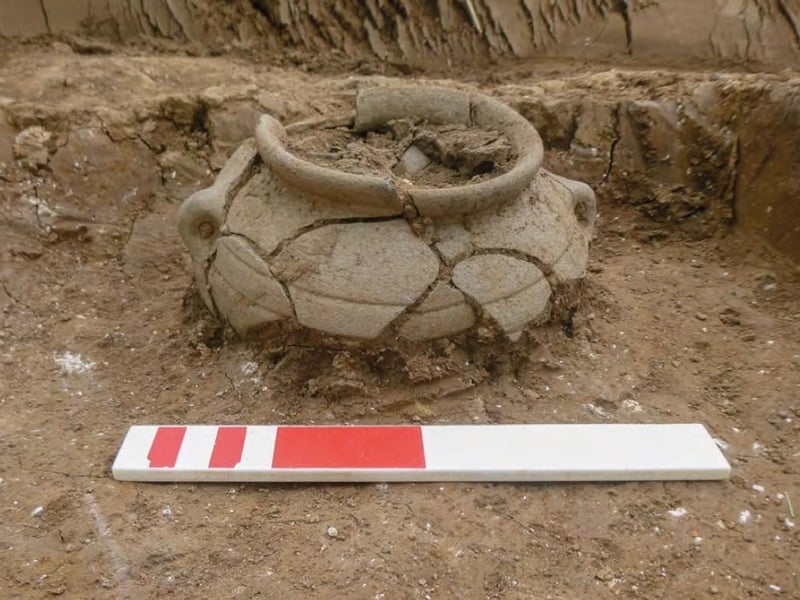
• White Crofts, Asserby – A cemetery was uncovered containing the remains of 12 individuals. Three of the graves contained goods, including a late 3rd–4th-century copper bracelet and a 4th-century grey ware jug.
• Ailby Lane, Alford – Flint, possibly Bronze Age, was recovered from one ditch, along with Late Iron Age or Romano-British pottery, and a pair of Roman copper alloy tweezers. Evidence of an Anglo-Saxon partially sunken building were also recovered.
• Walk Hill, Langton by Spilsby – Findings revealed activity on the site in prehistory, some of which dated to the Early Neolithic period (4th millennium BC). This included broken flint tools and late Iron Age to early Romano-British pottery. The remains of two crop-dryers confirm crop-processing on the site and reveal Walk Hill to have been located within an area of arable cultivation during the Romano-British period.
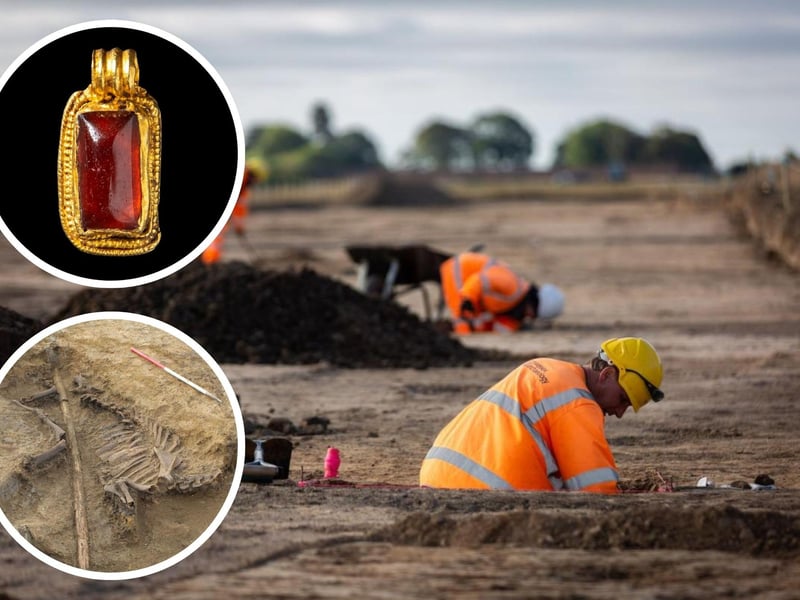
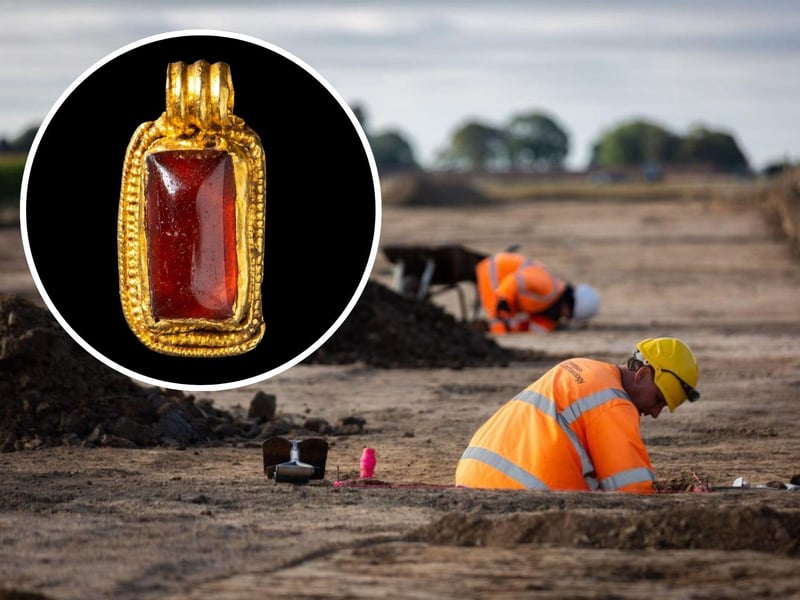
• Callow Carr, Dalby – a newly discovered early-middle Anglo-Saxon cemetery of 22 graves, including two containing the remains of children. Wessex Archaeology said: “Osteological data from the burials reveals a generally healthy population engaged in a physically strenuous agrarian lifestyle, with one male having died shortly after - possibly because of a blow to the back of the neck with a sword or seax.” All of the graves were furnished with over 250 objects amongst them, including jewellery and dress items, such as a gold and garnet pendant and silver and amber pendant, an iron knife and a bone comb. Beads, belt buckles, spindlewhorls, cups and a box were also found. A seax dagger was the sole weapon from the cemetery.
• Cheals Close, Sausthorpe – 13 pieces of struck flint and two sherds of Roman pottery were found. Cheals Close was one of the few locations on the Interconnector route where evidence of Anglo-Saxon settlement was recovered. The remains comprise the traces of three post-built structures and various ditches and gullies, as well as pottery and ceramic finds finds. Radiocarbon dating supports ceramic evidence of Anglo-Saxon (8th–9th century) activity on the site.
• Mown Rakes, Swineshead – a 1.6 km stretch of the cable route near Swineshead Bridge contained a dense concentration of Romano-British remains. Wessex Archaeology said: “The evidence relates to farming, settlement, pottery production, burial and saltmaking, the latter a reminder of the former influence of the sea on a site now 20 km inland.”
Two deposits with cremated Romano-British era human bone were also found at Mown Rakes, along with a buried cow. Most of the recovered human bone comprised small fragments and teeth.
• Six Hundreds Drove, Swineshead – Romano-British features including pottery dating to between the 1st and 2nd centuries AD were unearthed, along with 17th-18th-century pottery, modern glass bottles and clay tobacco pipes.
Together, the findings provide new insight into how communities lived, worked, and used the landscape over thousands of years. The archaeological programme included nearly 500 evaluation trenches, and 50 open-area excavations.
Rebecca Sedler, President - NGV UK, National Grid said: “Delivering projects of this scale requires careful consideration of the communities and landscapes we operate in, including protecting their history. I’m delighted the archaeological work carried out along the Viking Link route has helped uncover and preserve so much important new evidence about Lincolnshire’s past, going back to prehistoric times.”
John Hirst, Site Director, Wessex Archaeology, said: "Viking Link was one of the great privileges of my archaeological career. Seeing the project progress from the fields of Lincolnshire to the pages of a publication is a reminder of archaeology's value in preserving and sharing the stories of people who came before us.”
1. Archaeological Discoveries
Archaeology teams digging along the Viking Link cable route uncovered human burials, jewellery and other artefacts. Top inset: A gold and garden brooch. Bottom inset: The buried remains of a cow. Photo: Wessex Archaeology
2. Untitled design (7).jpg
Archaeological discoveries included this gold and garnet brooch. Photo: Wessex Archaeology
3. Impressive Jug
A Romano-British grey lug-handed jug unearthed at White Crofts. Photo: Wessex Archaeology
4. The route
Sites excavated along the cable route from Mablethorpe to Spilsby areas, left, and down to Swineshead and Bicker Fen, near Boston, right, Photo: Wessex Archaeology