
Council to look at ways to get empty properties back into use following rise in vacant homes
A council will consider ways to get empty homes back into use following an increase in the number of vacant properties.
Members of East Lindsey District Council’s overview committee were to discuss the draft empty homes policy 2026 to 2029 at a meeting on Tuesday, December 9.
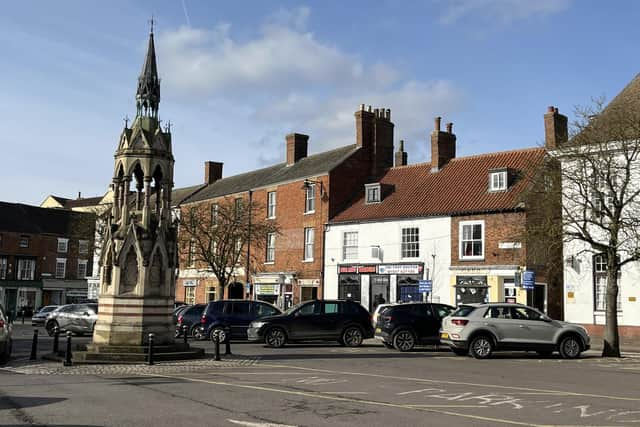

The policy has been developed by the South and East Lincolnshire Councils Partnership – which covers South Holland, Boston and East Lindsey – and aims to ‘improve housing standards, deliver affordable housing’ and reduce crime and anti-social behaviour.
The draft policy will also be considered by members of South Holland District Council and Boston Borough Council at a later date.
The South and East Lincolnshire Partnership said there were 2,847 vacant homes in East Lindsey in 2024 (4% of properties in the district) – up from 2,429 properties in 2020.
The partnership said that there were 828 vacant homes in Boston in 2024 (three per cent of homes in the borough) – up from 170 in 2020.
In South Holland, there were 1,257 vacant properties in 2024 (three per cent of properties in the district) – up from 1,138 in 2020, according to the partnership.
The report said: “Empty homes can be detrimental to neighbouring properties and the local built and natural environment.
“Reducing the number of empty properties can mitigate against this. Where these are modernised and/or brought up to decent homes standards, they are likely to be better insulated and more energy efficient, reducing their impact on the environment, as well as reducing costs to their owners and/or residents.”
The report said the policy will set out the district council’s ‘vision’ to encourage owners to bring empty homes back into use over the next three years.
It added: “Empty homes are a wasted resource, both financially and in terms of housing provision.
“Bringing empty homes back into occupation reduces property deterioration and associated crime.
“However, it is acknowledged that a level of property vacancy is required for the housing market to function, and some properties will be uneconomical to return to use in the current economic climate.”
The report draft policy will set out a framework for the district council to prioritise and target empty homes which have been left vacant for more than six months.
It will also consider factors including length of time empty, the condition of the property, the impact on the neighbourhood, anti-social behaviour and local housing demand.
The options for tackling empty homes included proactive support to bring properties back into use, such as incentivised grants/loan schemes.
Enforcement options were outlines as:
• Improvement Notices
• Prohibition Orders
• Boarding up
• Empty Dwelling Management Orders (EDMOs)
• Compulsory Purchase Order (CPOs)
• Enforced sales
• Engagement with the Empty Homes Network