
Campaigners vow to fight on over giant Lincolnshire solar farm plan despite approval
Campaigners opposing one of the country’s largest proposed solar farms say they are “not downhearted” despite the project taking another major step forward in the planning process.
The Meridian Solar Farm proposal in South Holland has now been accepted by the Planning Inspectorate, allowing the application for a Development Consent Order (DCO) to move to the next stage of examination.
The large-scale scheme, which would cover more than 1,100 hectares of land between Crowland and Gedney Hill, is among the biggest of its kind in the UK and has sparked significant local concern.
It is understood the proposal would also include a pylon route connecting the site to Weston Marsh, with communities including Cowbit, Shepeau Stow, Whaplode Drove, Holbeach St Johns, Holbeach Drove, Fleet and Gedney Hill all potentially affected.
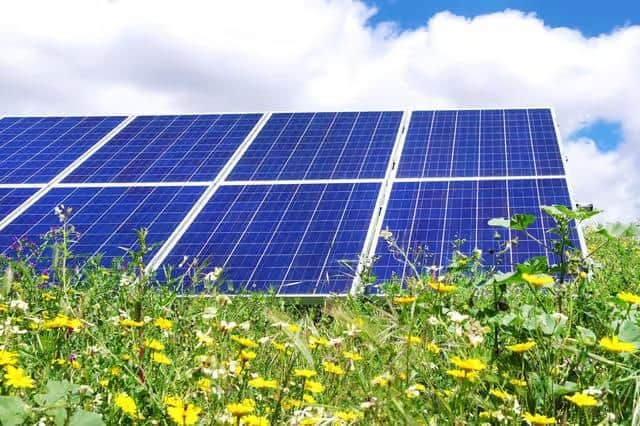

Members of the Meridian Action Group (MAG), which has been campaigning against the scheme, say they will continue to fight the plans as the process moves forward.
A MAG spokesperson said: “Although this skirmish has been lost the war is still not yet over.
“Although that well-presented objection appears to have fallen on deaf ears at this stage we are urging all who oppose this monstrous development in our countryside, and on some of the country’s best and most versatile growing land, to stay with us and prepare to meet this head-on when the development consent order application reaches the public stage.”
The decision to accept the application was made by officials acting on behalf of the Secretary of State for Housing, Communities and Local Government under delegated powers.
Independent inspectors will now examine the application in detail and produce recommendations for the Secretary of State, with the final decision expected to be made by Ed Miliband.
The examination process is expected to take up to 18 months, with opportunities for public involvement during the pre-examination stage, which typically lasts around three months.
During this stage, issues will be identified for discussion, hearings may be arranged, and deadlines set for public comment. Anyone wishing to take part will be able to register during a 30-day window once the process formally opens.
MAG says it will encourage supporters to take part when registration begins, with further updates expected to be shared through its campaign channels.
The group points to concerns raised during the planning process, including the use of what it describes as some of the country’s “best and most versatile” agricultural land.
MAG said: “Food security need not and must not be sacrificed in the quest for energy security.”
Campaigners also highlighted concerns around landscape and visual impact, biodiversity, flood risk, aviation and the use of productive farmland.
They added that they support renewable energy in principle, including rooftop and brownfield solar schemes, but argue large-scale developments should avoid high-quality agricultural land.
The group says it continues to grow its online support, with its Facebook campaign group now approaching 800 members.
The Planning Inspectorate process will now continue ahead of further consultation and examination stages in the coming months.