
Community energy funding welcomed – but campaigners say it changes nothing on pylons or vast solar schemes
Campaigners in Lincolnshire have welcomed the Government’s pledge to invest up to £1 billion in community-owned renewable energy, while warning it does not alter plans for major grid upgrades or industrial-scale solar developments across the county.
The funding, announced as part of Great British Energy’s Local Power Plan, is aimed at supporting small-scale, locally owned projects such as rooftop solar on community buildings, cooperatively owned schemes, and local generation designed to cut household bills and keep profits within communities.

Announcing the investment, Energy Secretary Ed Miliband said the move was about giving people a direct stake in the clean energy transition.
“With the biggest ever investment in community energy in Britain’s history, this government is saying to every local community: we want you to be able to own and control clean energy so the profits flow into your community, not simply out to the big energy companies,” he said.
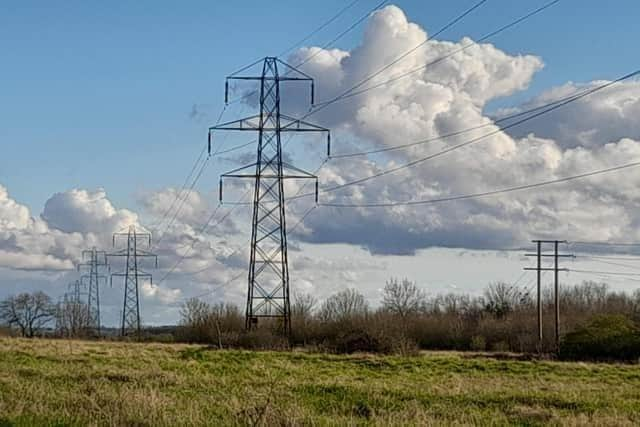
However, Lincolnshire Against Needless Destruction (LAND) said the announcement should not be confused with proposals for large commercial solar farms or new pylons, which remain unchanged.
In a statement responding to the announcement, the campaign group said it supported community energy in principle but warned the detail mattered.
“Projects like rooftop solar on community buildings, cooperatively owned generation, and small-scale schemes that cut bills for residents are a win for people and for the planet,” LAND said.
But the group stressed the funding does not represent a change in policy on industrial-scale solar developments currently proposed across Lincolnshire.
“Nothing in today’s statement suggests a U-turn on the vast commercial solar schemes being advanced by private developers—schemes designed not to power local homes, but to feed the national grid, export energy abroad, and generate substantial profits for investors,” the statement said.
LAND warned Lincolnshire could lose around 150 square miles of prime agricultural land, arguing this posed a risk to food security.
The response reflects clarification previously provided by National Grid, which said the Local Power Plan relates to lower-voltage distribution networks, while major infrastructure such as pylons and high-voltage transmission lines remain part of the Great Grid Upgrade and are not subject to community ownership.
LAND said it would continue to support renewable energy that is appropriately scaled, locally owned, locally beneficial and compatible with protecting farmland, adding:
“We welcome investment in community power. But we will not allow it to be used as a smokescreen for the unchecked industrialisation of Lincolnshire’s countryside.”