
Fury over plan for chicken 'factory farm' to rear three million birds a year
Angry residents in the Horncastle and Woodhall Spa area are spitting feathers over a plan to set up a chicken ‘factory farm’ on land in a rural hamlet.
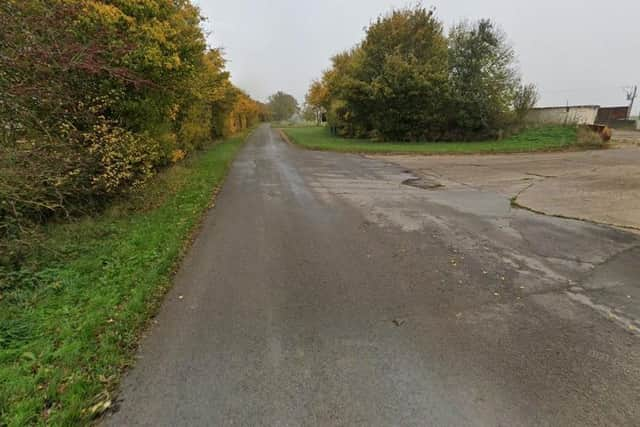
The farm would comprise eight poultry units, rearing no fewer than three million birds per year, on a site spanning more than 26 acres (10.78 hectares) at Harriet’s Farm, south of Poolham Lane in Poolham, Horsington.
However, residents of nearby villages such as Thimbleby, as well animal-welfare campaigners from across the country, have bombarded the council with hundreds of complaints.
They fear the farm would attract noise, traffic, smells and health hazards, while triggering animal-welfare concerns.
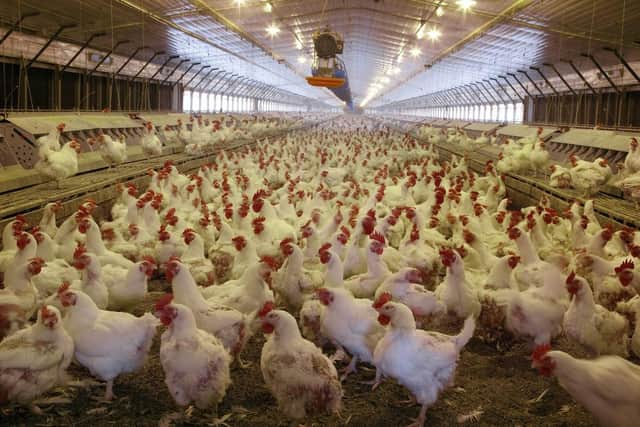

One person labelled the proposal “a monstrosity that would have a devastating impact on the area”, while another said: “Factory farming is cruel, barbaric and unnecessary in a decent society”.
A planning application for the development has been submitted to East Lindsey District Council by a Derby-based company called Poolham Poultry Ltd. According to Companies House, the firm’s two directors are 38-year-old Stewart Adams and 50-year-old Paul Clarke.
As well as the poultry houses, each measuring 113 metres by 24 metres, the farm would include underground dirty-water tanks, a drainage attenuation pond, sub-station, generator house, switch room, pump house, storage shed, clean-water tank, dead-bird shed, gas-tank banks, feed bins, a house for the site manager, staff parking for five vehicles and a new access road connecting to Poolham Lane.
Chicken ‘factory farming’ is an intensive agricultural method designed to produce the birds’ meat as cheaply and efficiently as possible.
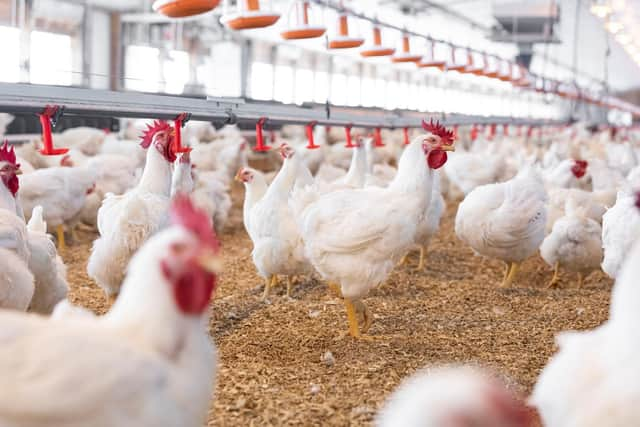
The broiler chickens are bred to grow at an unnaturally accelerated rate until they are slaughtered after 35 to 40 days.
The method is controversial because the birds are sometimes crowded into small spaces and their bodies grow so rapidly that their internal organs and skeletal structures cannot keep up, leading to severe leg deformities and heart issues.
"The potential for suffering is considerable,” says one person on the council’s website, where 39 objections, containing almost 400 comments, are posted in opposition to the Poolham plan. "Therefore, I object on clear animal-welfare grounds.
"Also, the increasing prevalence of large-scale poultry units risks fundamentally altering the character of rural areas, replacing open agricultural landscapes with intensive industrial infrastructure.”
The latter point was reinforced by the Lincolnshire Wildlife Trust, while an objector urged the council to “consider the pain these animals would endure”.
One villager in Thimbleby felt the farm could “seriously impact the health of local residents in terms of smells”.
And he feared the village, which sat in a conservation area, would come under threat “as a place people want to visit” – as would a proposed new business for 14 holiday lets at Thimbleby Lakes.
Another villager was most concerned about thousands of “additional HGV lorries” rumbling through “the beautiful, picture-postcard” Thimbleby, putting its “unique collection of historic listed buildings” at risk.
She said: “Vehicles carrying chicks, live birds, bedding, dead birds, dirty water and manure would all be travelling through the village.
"Restrictions placed on listed buildings mean that residents do not have double glazing and modern replacement windows, meaning less protection against the effects of noise, vibrations, dust and odour generated by increased heavy traffic.
"The plan does not consider the potential impacts on the historic environment of Thimbleby.”
As well as the objections posted on the council’s website, a campaign has been launched through Facebook, and opponents of the farm are urged also to send complaints to www.caff.org.uk/harriets, run by the CAFF (Communities Against Factory Farming) organisation.
The site, which sits about four miles north of Woodhall Spa and three miles west of Horncastle, is predominantly arable farmland with areas of modified grassland.
Many of the fears of objectors are addressed in a planning statement submitted to the council by Poolham Poultry Ltd’s agents for the scheme, the planning consultancy Harrison Pick, of Yorkshire.
It describes the proposal as “a large-scale broiler-rearing facility with a total capacity of 400,000 birds”, and adds:
”The development represents a significant agricultural investment that would support the rural economy, create employment opportunities and contribute to sustainable food production.
"Chicks would be delivered as day-olds and reared for approximately 38 days. A ten-day period would follow each cycle to allow for cleaning, disinfection and preparation.
"The buildings would operate a controlled environment system, with computerised control of feed, water, ventilation and heating.”
The statement stresses that the layout of the farm had been “carefully designed” to “minimise” the impact on the landscape, and would be screened behind trees, hedges and wildflower grassland.
Issues such as odour, noise, ammonia emissions, vehicle movements and the heritage of the area had all been considered too.
"The predicted noise levels are acceptable,” says the statement. “Traffic movements would be cyclical and predictable, and the development would not give rise to significant adverse odour effects.
"Our assessments also conclude that there would be no significant adverse effects on residential properties.”
Finally, the statement addresses animal welfare, stressing that it is “a fundamental consideration and has been embedded within both the design and operational strategy of the facility”.
"The units would operate in accordance with nationally recognised welfare standards,” it says.
"Each poultry house would have straw bales, perch space or raised platforms and pecking objects to encourage natural behaviours and reduce stress.
"Natural daylight would be introduced through windows, with a minimum of six hours of darkness within each 24-hour period.
“The birds would have constant access to a nutritionally balanced diet and clean water via automated systems”.
The statement goes on: “Trained stockpersons would undertake multiple daily welfare checks, with veterinary support available as required.
"The proposal places animal health and welfare at the forefront of the operation.”
.