

Concern’s the county’s Area of Outstanding Beauty is to be industrialised with giant pylons and other green engergy infastructure have grown since National Grid’s anouncement regarding the Great Grid Upgrade.
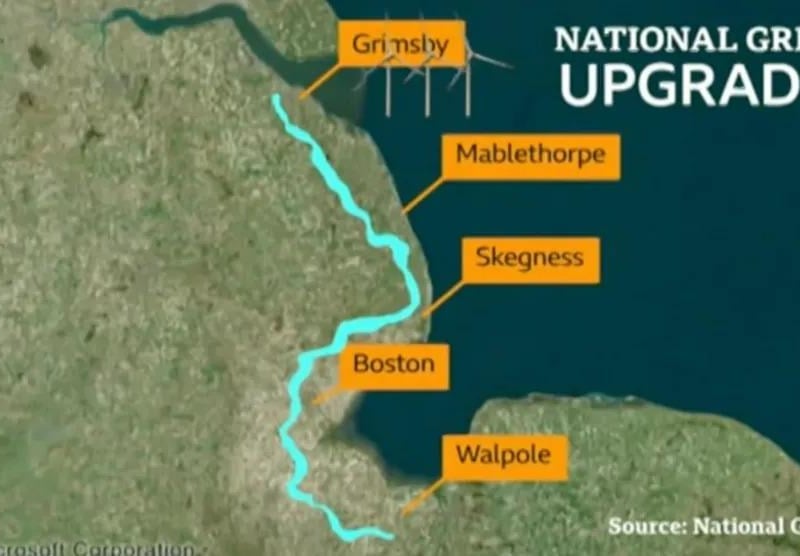
National Grid is proposing a £1billion plan to build a new high voltage electricity transmission line ‘Grimsby to Walpole’ which, National Grid say, is essential to increase the capability of Britain’s electricity transmission network in Lincolnshire, Cambridgeshire, and West Norfolk.
The energy company claims the upgrade will enhance Britain’s energy security, increase offshore wind energy from 14.7 gigawatts (GW) to 50GW by 2030, help reduce energy costs for consumers and combat climate change’.
Before the election, a number of Conservative MPs from across the county backed campaign groups in opposing the plans – but Prime Minister Kier Starmer, even before the General Election, made it clear he would not not listen to local communities with concerns about pylons.
He told the BBC he was prepared to make ‘tough decisions’ to get the country growing, even if it meant making enemies.
The new Labour government lost no time after the election by making their intentions clear. Labour's new chancellor, Rachel Reeves, announced the government is committed to a "clean power mission" and would end what she called an "absurd ban" on new onshore wind turbines.
It has scrapped a rule which it said meant "any opposition" to a proposal "cannot be considered acceptable".
Development of green belt land is also supported by the new government.
Ms Reeves said: "Any development may have environmental consequences, place pressure on services and rouse voices of local opposition, but we will not succumb to a status quo which responds to the existence of trade-offs by always saying no.”
Labour’s plans for housing, the railway and the economy were outlined today in the King’s Speech at the State Opening of Parliament.
One of the biggest voices of opposition comes from Lincolnshire County Council which in 2021 passed a motion saying it would "object to all" wind turbines except those on a small scale.
Coun Colin Davie, LCC Executive Councillor for Economy and Place, described the new government’s announcement an attack on the countryside.
"There is no indication that they (the Government) actually understands what their announcements would mean for farmland and food,” he said.
"That is actually a priority equal to anything else in my view and there’s been no attempt to address any of that."
He claimed the new government had lost no time in “repaying its gratitude” having received £3.2m in donations, amongst others, towards the Labour Party’s General Election campaign from Ecotricity.
" We want to make it clear our county is not up for sale,” Coun Davie said. “We will not back any plans that involve plastering Lincolnshire with industrial infastructure that will destroy residents’ ability to enjoy the countryside.
"There is no need for pylons or onshore windfarms when they can expand offshore cables.
"The County Council will do everything it can to stop the Labour Government’s plan to industrialise it so it is lost to future generations.”
The County Council is not alone in its fight against indistrialisation.
In spite of consultations and reassurance from National Grid, they are “here to listen” campaign groups have grown as more and more energy providers eye the county.
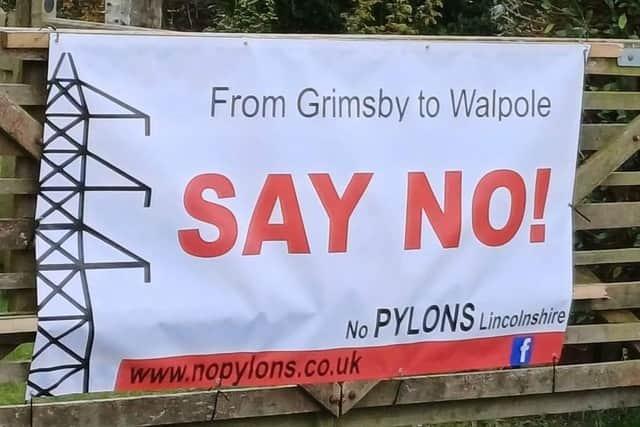
Opposition to the 87-mile swathe of hundreds of huge pylons across the county began in January with the launching on Facebook of the 4,000 strong No Pylons Lincolnshire group.
Within days of being alerted to the scheme, called the Great Grid Upgrade, concerned residents had posted thousands of worried comments and questions on the new Facebook site.
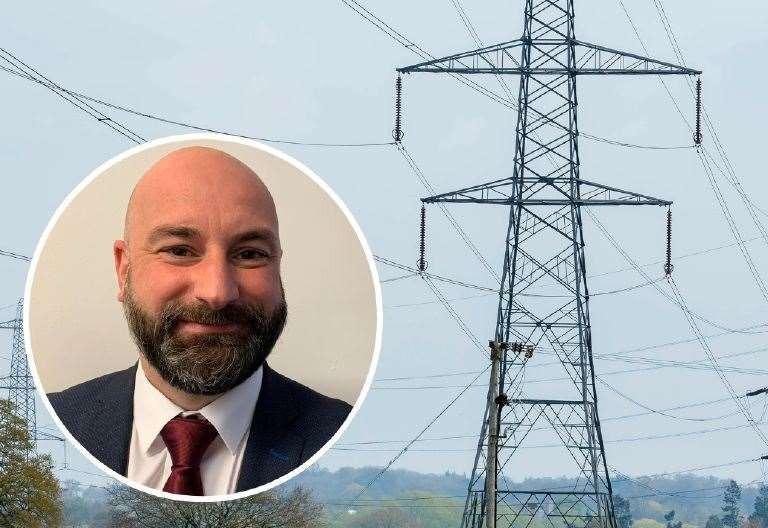
In February. Police Crime Commissioner Marc Jones joined the debate saying he believes the proposals ‘present a serious risk to the ability of all emergency services in the county to protect the people of Lincolnshire by impacting on the mission critical communications network – Airwave’.
Just weeks before the General Election, former Boston and Skegness MP Matt Warman called for a more coherent approach to the future of the electricity grid in a debate hosted in Westminster Hall.
The debate in the House of Commons provided an occasion for backbenchers to raise the many concerns of constituents about land being taken out of food production and landscapes being despoiled, at potentially significant cost to local tourism industries.
Since the new government came into power, the campaign group No Pylons Lincolnshire has called on a halt on all major projects so the options can be independently costed.
A spokesman said: "Lincolnshire is a special case because of its high-grade arable land. This is land not used for green-belt leisure and pleasure. This is working land which feeds the nation. We hope the new Government weighs food security with energy security. We can have both, but not by building energy infrastructure on top-grade arable land. We still live in a democracy, not a dictatorship, and the democratic voice of the people must still be listened to.
“We need more clarity on national infrastructure planning changes as she has avoided any detail.
“Will we still have public consultations on these major projects?
“We think a pause is sensible so that all options can be independently costed."
In the meantime some projects are progressing.
Tendering is now underway to secure cable and converter station work packages for the proposed £3.7bn Eastern Green Link 3 powerline connection between Peterhead in Scotland and Norfolk in England.
A joint venture between SSEN Transmission and National Grid Electricity Transmission intends to transfer renewable power generated in the north of Scotland to Eastern England through 680km of buried onshore and subsea cables.
EGL3 is the UK’s largest proposed HVDC transmission project and forms part of SSEN Transmission’s £20bn investment to upgrade the electricity network in the north of Scotland to unlock the country’s renewable energy resources.
It is one of four planned High Voltage Direct Current link lines planned along the east coast of Britain.
EGL1 and EGL2 have already been consented and are moving towards construction, and EGL3 and EGL4 are in the development and assessment stage.
Already there have been some wins to protect the county’s area of outstanding beauty.
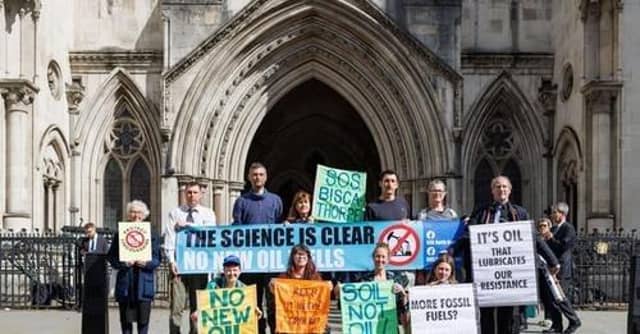
Last week a decision to approve an oilfield in the Lincolnshire Wolds has been quashed following a Supreme Court judgment, lawyers have said.
Campaigners from SOS Biscathorpe had brought the claim against the government after it approved plans for exploratory oil drilling and production last year.
Legal representatives for the campaigners said, prior to the general election, the Department for Levelling Up, Housing and Communities had conceded the case.
The developer, Egdon Resources, said it intended to "consider the outcome carefully before deciding the next steps with the project".
Lincolnshire County Council originally refused permission for the site but, in 2023, the Planning Inspectorate overturned the decision saying it was in the "public interest".
On Friday we reported plans for a 107 acre solar farm on prime agricultural land between Sleaford and Grantham have been refused by South Kesteven district councillors, despite officer recommendations for approval.
The application site was for land to the west of Church Lane in the village of Welby, which currently comprises of six fields of agricultural land.
Plans were submitted to convert this into a solar farm across 43.65 hectares, using 62,000 ground-mounted solar panels with a lifespan of around 40 years, reaching up to 3.5m in height.
It would have an energy generating capacity of around 24 megawatts, which the agent says is enough to power up to 9,000 homes in the UK.
However, despite South Kesteven District Council’s assigned planning officer recommending this development for approval, the authority’s planning committee deliberated for two hours before deciding to go against the recommendation and refuse the application.
Planning committee chair, Coun Charmaine Morgan (Independent), said: “Grade 2 and 3 land is rare and that’s the point, it’s the best land available.
“We need our agricultural land as well, if we don’t provide food grown locally then we are importing it, so we end up again increasing the amount of gases going into our environment.
“There are significant issues across the county and country, all experiencing flooding that ruins crops. I think at the moment if we don’t protect our local food supply we end up with increased costs.”
5. pylons pcc.jpg
PCC Marc Jones has added his concerns. Photo: Submitted
6. say no.jpg
The Say No to Pylons campaign continues. Photo: Submitted
7. pylons 10.jpg
The 87-mile pylon route would take electricity from offshore wind farms through Lincolnshire to a substation at Walpole Photo: Submitted