
Lincolnshire groups call for pause on grid upgrades amid rising costs — Government responds
Two Lincolnshire campaign groups have written to Energy Secretary Ed Miliband, urging a pause on parts of the Government’s Great Grid Upgrade, warning that rising costs could push household energy bills even higher.
The Government, however, says it does not agree and insists the programme is vital for energy security and long-term savings.
No Pylons Lincolnshire and Lincolnshire Against Needless Destruction (LAND) say spiralling costs for projects such as Eastern Green Link 2 (EGL2), a subsea cable linking Scotland and England, raise concerns about the wider programme’s affordability. Costs for EGL2 have reportedly increased from £2.1 billion to £4.3 billion before completion.
In a joint statement, the campaigners said: “The UK’s electricity transmission programme is showing signs of systemic financial instability. Consumers are being forced to absorb the consequences of poor planning.”
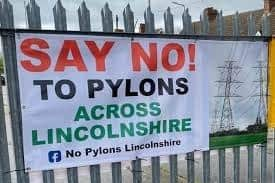

They warn that if similar cost increases occur across other eastern projects — including proposed pylon routes from Grimsby to Walpole and Weston Marsh to East Leicestershire — total costs could rise far above original estimates.
Pam Regan of No Pylons Lincolnshire said:
“Every cost overrun ultimately ends up on energy bills. Unless the Government changes course, prices will keep rising, not falling.”
Cat Makinson, on behalf of LAND, added:
“We are staring at a multi-billion-pound exposure that bill-payers across the country will fund. This is not responsible stewardship of public money.”
The groups are calling for an “immediate Strategic Pause” on pre-construction eastern onshore projects until the Government’s Strategic Spatial Energy Plan (SSEP), due in 2026, is completed. They are also urging consideration of a more integrated offshore grid, which could reduce onshore infrastructure and deliver long-term savings.
However, the Department for Energy Security and Net Zero (DESNZ) defended the programme. A spokesperson said: “We need new grid infrastructure to provide energy security and bring down bills for good.
"Communities hosting new pylons will receive direct tangible benefits, including £2,500 off household electricity bills over 10 years for those living nearby.”
National Grid also emphasised the importance of the upgrades.
A spokesperson said: “The Great Grid Upgrade projects will reduce constraint costs, strengthen energy security and ensure more electricity can flow to homes and businesses across the country, while also supporting jobs and economic growth in the regions.
"Project costs account for inflation and market conditions.
"National Grid is committed to ensuring vital infrastructure can be delivered efficiently and provide long-term value for consumers.”
In a breakdown of costs, National Grid said:
- Project cost increases reflect rising market costs, new legal and environmental obligations and often a more detailed scope. We plan project costs to account for inflation and market conditions, ensuring the projects can be delivered efficiently and provide long-term value for consumers.
- Since the original needs case for Eastern Green Link 2 (EGL2), the scope and scale of the project changed, alongside supply chain constraints and an increased global demand for offshore HVDC project equipment.
- In August 2024, Ofgem confirmed its final approval on the costs associated with the delivery of EGL2. The investment figure of £3.4bn, which is based on 2018/19 prices (the base for the price control), equates to around £4.3bn (adjusted for inflation).
The debate highlights the tension between rising project costs, household energy bills and the need for a reliable national electricity network.