
Lincolnshire must not be treated as 'spare space', campaign group says
A Lincolnshire campaign group is warning that the county risks being treated as “spare space” for national infrastructure projects, potentially threatening farming, tourism and rural communities.
Lincolnshire Against Needless Destruction (LAND) says decisions being made at Westminster increasingly view the county as somewhere to place large-scale energy developments, housing and industrial projects.
The group argues Lincolnshire plays a vital role in the UK’s economy and food supply.
According to LAND, the county produces around 30 per cent of the UK’s vegetables and 18 per cent of its poultry, while its visitor economy is estimated to be worth more than £3 billion a year. It is also home to some of the largest areas of Grade 1 agricultural land in England.
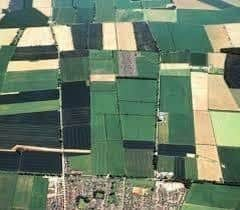

But campaigners say this productive land is facing growing pressure from major infrastructure proposals.
The county has been earmarked for significant energy development, including solar farms, battery storage sites and connections for offshore wind projects, alongside proposals for reservoirs, pylons, substations and data centres.
LAND says housing developments are also expanding on to farmland in parts of the county.
Campaigner Cat Makinson, writing on behalf of the group, said Lincolnshire should be recognised for the industries it already supports.
She said: “Lincolnshire is not empty land waiting to be filled. It is working land that feeds the nation and supports thriving communities.”
The group argues farming should be treated as a strategic national industry and is calling for long-term agricultural policy, investment in technology such as precision farming and robotics, and stronger support for British producers.
LAND also highlighted the importance of tourism, particularly along the Lincolnshire coast, the Wolds and the county’s market towns, saying the character of these areas is key to attracting visitors.
Campaigners believe new industrial development should instead focus on areas that already have the infrastructure to support it, including established centres such as Grimsby, Immingham, Boston, Grantham and Scunthorpe.
However, the role of renewable energy in rural areas has also been highlighted by industry bodies.
A spokesperson for the Department for Energy Security and Net Zero (DESNZ) has previously pointed to comments from National Farmers’ Union president Tom Bradshaw, who said renewable energy production forms a core part of the NFU’s net zero plan and that solar projects can offer a useful diversification option for farmers.
Mr Bradshaw has also said it is “important that we’re not sensationalist about the impact” when it comes to claims about food security.
Government planning guidance states that, wherever possible, developers should prioritise brownfield, industrial, contaminated or previously developed land. Where development on agricultural land is necessary, the guidance says lower-quality land should be used in preference to higher-quality farmland.
LAND says it will continue to campaign on the issue while keeping residents informed about infrastructure proposals affecting the county.