
Millions of holidaymakers to lose accommodation to Great Grid Upgrade workforce - claim
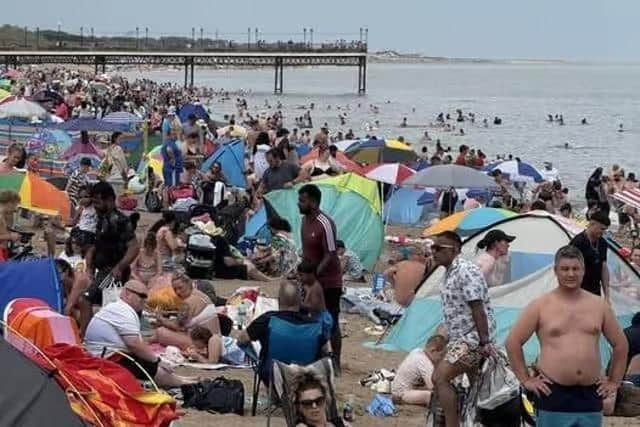
Millions of adults and children could be left without holiday accommodation on the East Coast as workers connected to the Great Grid Upgrade are housed during its six years of construction, new figures claim.
National Grid maintains it is delivering electricity projects in Lincolnshire to meet the region’s doubling demand and says it is committed to managing workforce needs carefully, creating local jobs and supporting supply chains so the county’s economy benefits
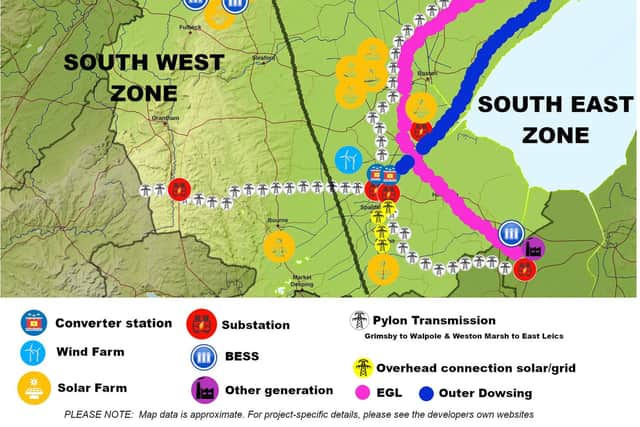

However, Lincolnshire Against Needless Destruction (LAND) claims developers have stated that workers will be housed in existing seasonal accommodation such as holiday parks and sites - mostly around the Mablethorpe- Skegness area as they would be central for commute to the construction sites.
According to LAND, these statitics cover just a section of the total area of construction sites as currently 51 individual projects across the county have been proposed.

LAND previously called on the Government and National Grid to produce an overarching plan showing all new energy infrastructure projects for Lincolnshire and a new document demonstrates the disproportionate numbers targeting the county.
The new report includes all the projects currently listed with NESO, to be connected to substations within Lincolnshire and the county borders and excludes those that have already been built.
According to LAND, the contruction sites themselves would receive income for housing the workforce, however those caravans and chalets would likely house one or two workers as opposed to a family of four or more tourists.
"We have looked at how many tourists would be directly displaced from holidays in the area, though would expect the numbers staying away to be far higher as a holiday area populated by large numbers of males surrounded by construction sites doesn't make for a happy family holiday atmosphere,” the statement reads.
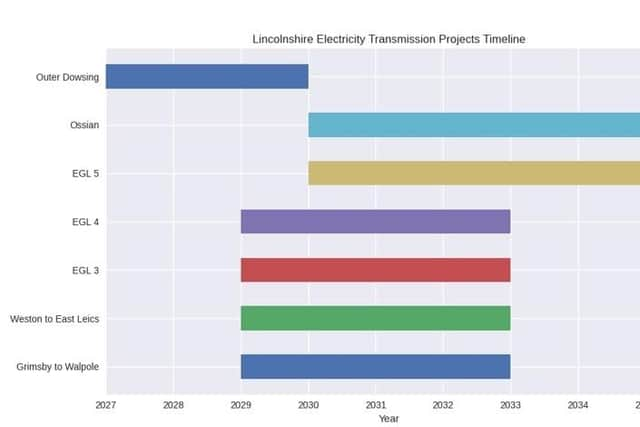
Estimated direct displacement of holidaymakers due to accommodation being used to house workers is as follows:
Figures per week
2028 = 6000 adults and 6000 children
2029 = 14000 adults and 14000 children
2030 = 18000 adults and 18000 children
2031 and 2032 = 15000 adults and 15000 children
2033 = 11000 adults and 11000 children
2034 = 6000 adults and 6000 children
That equates to a yearly displacement of:
2028 = 156,000 adults 156,000 children
2029 = 364,000 adults 364,000 children
2030 = 468,000 adults 468,000 children
2031 = 390,000 adults 390,000 children
2032 = 390,000 adults 390,000 children
2033 = 286,000 adults 280,000 children
2034 = 156,000 adults 156,000 children
The total estimated to be directly displaced from holidaying in the region duruing the construction period is 2,210 000 adults and 2,210 000, LAND says,
Cat Makinson, on behalf of Lincolnshire Against Needless Destruction (LAND) has wriiten a letter to DESNZ, NESO, National Grid, Ofgem, LCC and MPs outlining concerns in relation to the scale and concentration of energy infrastructure.
Referring to the multitude of substations, solar farms, BESS installations, hydrogen projects, interconnectors and more that are proposed, she said: “The cumulative impact on our county’s farming landscape, communities, heritage and environment is unprecedented.
“Despite this, there is no coordinated or transparent assessment of the combined effects of these developments.
“The public are very much in the dark about of the full extent of plans, most have heard about pylons and cables but are unaware that there are multiple underground cables within the area and often assume they are all the same."
In order to ensure that everyone is provided with all the information a number of demands have been made:
• That a comprehensive Cumulative Impact Assessment be commissioned immediately, encompassing all current and proposed energy infrastructure projects across Lincolnshire.
• That an immediate pause be placed on the progression of all related proposals until this report is completed, published, and made fully accessible to the public—allowing residents to make informed decisions based on the full facts.
• That representatives from DESNZ, NESO, National Grid, OFGEM, Lincolnshire County Council and community representation work collaboratively to deliver this assessment and ensure accountability.
• That this process be established as standard practice across the UK, ensuring that no region is subjected to unchecked industrialisation without holistic planning and public transparency.
National Grid told Lincolnshire World it is developing several electricity projects in Lincolnshire to meet the region’s doubling electricity demand and deliver more home-grown, cleaner and affordable energy.
These projects form part of a wider network in Lincolnshire, with other developers also delivering infrastructure. National Grid says they are coordinating across their own projects, including shared landing points and co-located routes, and working with other developers and key stakeholders to plan infrastructure efficiently, minimise disruption, and reduce impacts on local communities and tourism.
They said they are also committed to managing workforce needs carefully, creating local jobs and supporting supply chains where we can, so Lincolnshire’s economy benefits both during construction and in the long term.
All National Grid projects are subject to a legally mandated cumulative effects assessment as part of the Environmental Impact Assessment (EIA) process. This involves identifying and screening projects that are under construction, already approved, or reasonably foreseeable. The assessment allows the Secretary of State to consider the full range of potential impacts before approving a new development, ensuring a comprehensive approach to planning and community protection.
A spokesperson for National Grid said: “National Grid is delivering electricity projects in Lincolnshire to meet the region’s doubling demand, bringing more home-grown, cleaner and affordable energy, coordinating across our own projects and with other developers, while creating local jobs, supporting supply chains, and reducing impacts on communities and tourism."