
Plans for £1.8m bridge at Gibraltar Point, near Skegness backed by councillors
Plans to spend £1.8 million on a bridge at Gibraltar Point as part of the King Charles III coastal path have been approved by councillors.
At an overview and scrutiny management board meeting at Lincolnshire County Council on September 25, councillors supported the funding arrangements for the next stage of the coastal route.
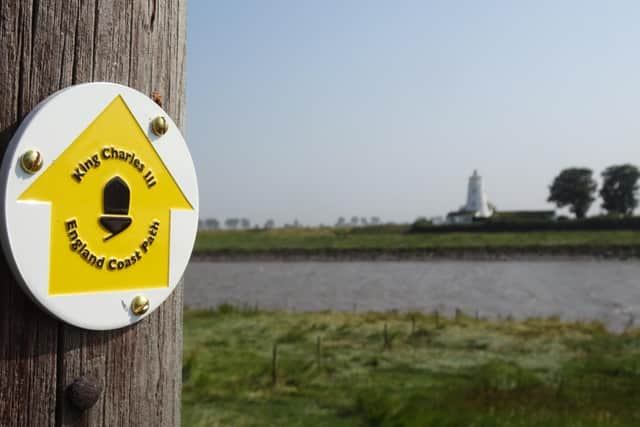

It is part of a project by Natural England to create a continuous walking route around the entire English coastline.
The main structure of the bridge is expected to last for up to 120 years while the bridge desk is anticipated to last for up to 50 years.
The county council is helping to deliver the scheme but it will be fully funded by Natural England.
Chris Miller, head of environment at the county council, said: “Our role in this as the council is part of the delivery arm for Natural England, who lead on this on behalf of Defra (Department for environment, food and rural affairs).
“Given the size of this task, we as an authority play a part in making that assistance in route selection process as well undertaking the establishment works for the path itself.
“Both of these elements are 100% funded by the government in legal agreements reviewed each year for these works.”
Mr Miller went on to say that this bridge was a key part of the scheme.
He added: “In Lincolnshire, the majority of the route from Sutton Bridge to the Humber Bridge is open.
“This is a really key piece of infrastructure for Natural England and the programme itself.
“It is also the single largest and most costly piece of infrastructure across the whole project.”
While councillors supported the scheme, many raised concerns about the financial risks which delays to the project could create.
Coun Danny Brookes (Reform UK) questioned if the county council would be left to foot the bill if Natural England was to drop out of the project
He said: “I welcome this path. Any tourism to Lincolnshire, and Skegness in particular, is a plus to me.
“But I do have some concerns. Regarding National England, if it did happen to pull out, would Lincolnshire County Council be left to finish the bridge under financial and public pressure. Do we have a backup plan just in case?”
Coun Charlotte Vernon (Conservative) asked if there would be mitigations in place if there were any delays to the project.
She said : “Like others, I do welcome this project and think it has a lot of benefits for Lincolnshire as a whole. You’ve mentioned that there is a minimal risk of not receiving money owed for reimbursement.
“But I do think that risk is still there and I would like to ask about what you’re dining to ensure timely reimbursements?
“Do we have time scale mitigations in place? I think the time scale is ambitious at best so do we have mitigations in place for this if it were to extend?”
Coun Cain Parkinson (Reform UK) said that projects are often more expensive than they were originally planned to be.
He added: “I would expect, given the past record, that during the building process you are going to find something that costs more money than you’ve allocated. That tends to be what happens.”
Mr Miller said the project would be fully funded by Natural England and that contigency plans have already been put in place.
He said: “We have a guaranteed agreement with National England to fund the full installation of the bridge if we can do it within the financial year.
“If there are issues regarding the weather we are constrained to construction during the winter because of its location and the nature of the site around Gibraltar Point. We have built in an element of that risk into the extension.
“But if there is no agreement with Defra (Department for environment, food and rural affairs) at that point then we would have to say we can’t progress any further.”
Mr Miller went on to say that the county council will be claiming the costs back from Natural England.
He added: “Every time we have an expenditure, we can claim that cost. We can stage it so that no point we are holding any cost to it within the funding grant period of this financial year.
“The mitigation is that we stop and we don’t incur any expenditure from having stopped.
“Any expenditure we incur that we have to pay for because there’s temporary works on site, it’s been made clear to Natural England that they are responsible for that. It’s not part of what we can deliver at that point.”
Mr Miller said the county council will only spend up to the grant it has been allocated.
He said: “We will spend the allocated grant and once that is used up we no longer have to proceed. That’s the agreement.
“There is an element of risk built into the programme. There’s a 20% risk built into the project.
“If there were further costs beyond what we’ve already outlined, we would have to get a further legal agreement with Natural England. Without that legal agreement, we’re not going to carry on.”
Under the plans, once the coastal path is completed, Natural England will fund 75% of the maintenance costs and the county council will cover the remaining 25%.
The proposals require the county council to maintain the path for the first five years and then it will become the responsibility of Natural England and Defra to look after it.
The original works were meant to be completed in October this year but the project is now expected to be finished by March 2026.
The funding will be considered by executive councillors at a meeting next month.