
Tenth year of peregrine falcons nesting at historic church in Louth
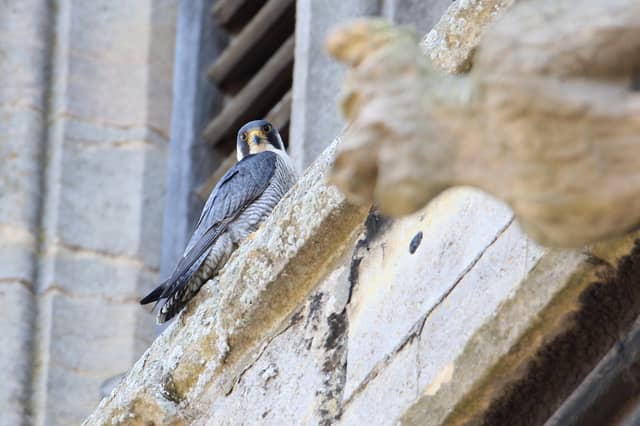

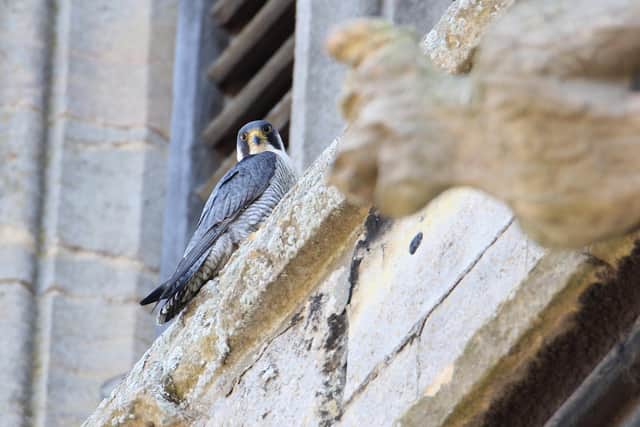
The tenth anniversary of peregrine falcons nesting at St James’s Church in Louth is being celebrated by bird enthusiasts.
Ornithologist Stephen Plant, who has been following and studying the peregrines for the last seven years, has revealed that, since the breeding programme began in 2015, the birds have successfully raised more than 20 young.
In January, a wooden nesting tray, filled with gravel, was put on the viewing platform, 200 feet up at the historic Westgate church, for the tenth year in succession.
Lincolnshire Bird Club kindly funded a live feed that enthusiasts could watch over the internet. And in May, four chicks hatched, although one sadly died later.
Last month, the three young birds were successfully ringed, which reminded Stephen of the day he was there to see such an exercise.
He said: "I was lucky enough to be invited by Alan Bell, of the British Trust for Ornithology (B.O.T.), which is an organisation focused on bird conservation and research.
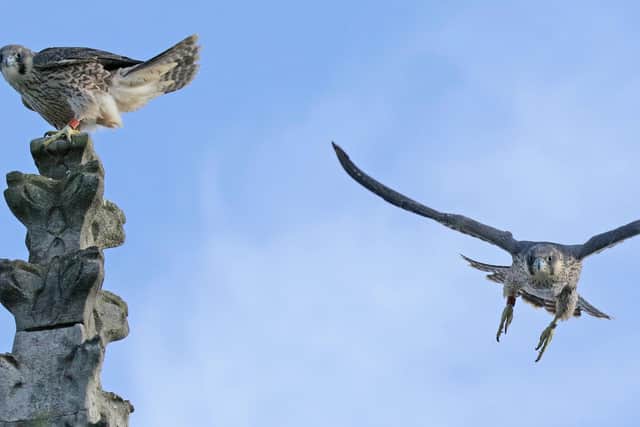
“I witnessed the ringing of four young, and I felt very privileged to pet the fastest animals on earth. By June, the last to fledge was already a very confident flyer.”
Peregrine falcons are large, striking cosmopolitan birds of prey renowned for their speed, with some sources stating they can reach 200mph when they stoop.
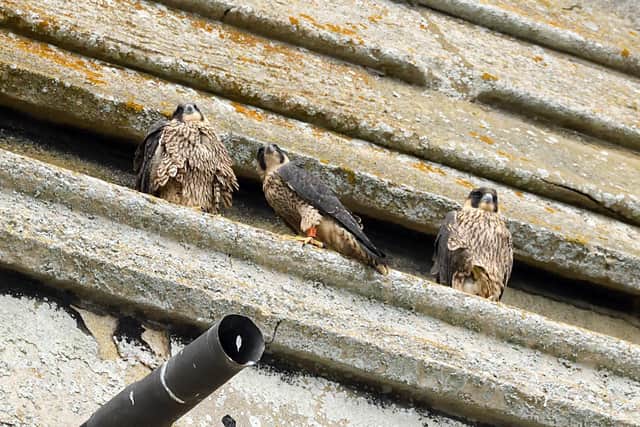
They are highly successful examples of urban wildlife and are noted for taking advantage of tall buildings or cliff edges as nest sites.
Their diet consists almost exclusively of medium-sized birds, such as pigeons, although they will sometimes hunt for mammals, small reptiles and insects.
During the Second World War, peregrine falcons were ordered to be killed by the military to protect homing pigeons that were used for carrying vital messages. A specialised unit was even formed to cull the birds and destroy their nests and eggs.
Another threat followed in the 1950s and 1960s when chemicals, such as DDT, got into their food chain. It proved so disastrous that the peregrines almost became extinct.
The Louth breeding programme also suffered a blow in 2019 when fierce winds and heavy rain in June and July led to the demise of five laid eggs and their chicks.
But since then, the weather has been kinder, and the nesting tray has been covered by a roof for added protection.
Stephen says: “In 2021, four eggs were laid, and the young were thought to be three females and one male. Within two short months, they became fine flyers.
"This was the best year so far but, in 2022, the falcons successfully bred again, producing four eggs, all female peregrines, soon to be hunting for themselves.”
Peregrine falcons now nest at many man-made locations across the UK. Their life-expectancy is thought to be about 15 years.
You can check out the progress of this year’s young at www.louthperegrines.org.uk or via www.lincsbirdclub.co.uk