
‘A greater Lincolnshire for all’: Unitary plan to bring ‘better services and bigger savings’
Residents are set to benefit from clearer, stronger local government under a new unitary plan.
Boston Borough Council, East Lindsey District Council, and South Holland District Council have today taken a major step towards reshaping local government in the area, submitting their full business case for reform to the Government.
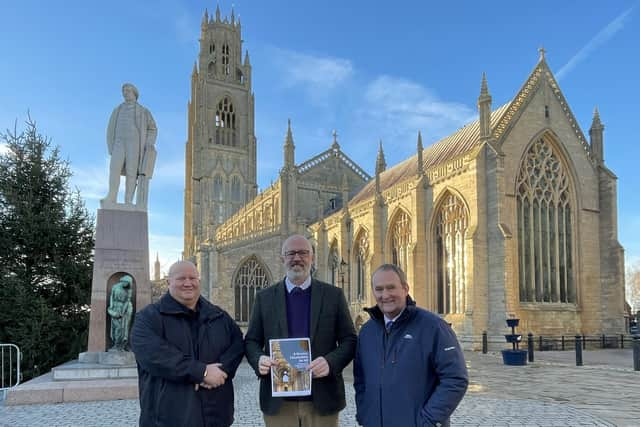

The plan, known as ‘A Greater Lincolnshire for All’, proposes replacing the current 10-council system with two new unitary authorities, promising clearer services, better value for money, and more resources directed to the frontline.
Under the proposal:
Northern Lincolnshire would cover Lincoln, North Lincolnshire, North East Lincolnshire, and West Lindsey, serving around 525,700 people.
Southern Lincolnshire, which includes Boston, East Lindsey, South Holland, North Kesteven, and South Kesteven, would serve 569,300 residents.
Leaders say the move will end the confusion caused by overlapping responsibilities, reduce duplication, and deliver significant savings that can be reinvested into public services.
Coun Dale Broughton, Leader of Boston Borough Council, said: “Our blueprint is simple and clear. It delivers what residents want: better services, decisions made locally, and an end to the confusion and bureaucracy of having 10 separate councils. Resources will go where they matter most — on the frontline.”
Coun Craig Leyland, Leader of East Lindsey District Council, added: “Our proposal is shaped by the views of communities, businesses, and partners across Greater Lincolnshire. It ensures councils are the right size to achieve efficiencies, withstand financial pressures, and deliver more for local people. Over 10 years, our plan could save more than £220 million — far more than other options.”
Coun Nick Worth, Leader of South Holland District Council, warned: “Other proposals risk leaving authorities underfunded and inefficient. ‘A Greater Lincolnshire for All’ is the only option that meets government criteria, ensures financial sustainability, and puts savings back into frontline services.”
Public engagement earlier this year showed strong support for moving to a unitary system, with residents backing a model that ends duplication, simplifies local services, and reinvests money where it counts.
The Ministry for Housing, Communities and Local Government is expected to formally consult on the proposal early next year, with a government decision later in 2026.
Residents and businesses can find out more or share their views at www.greaterlincolnshireforall.org or via email at [email protected].