
'A turning point in British railway history': Hidden press release found under Skegness locomotive seat after 65 years
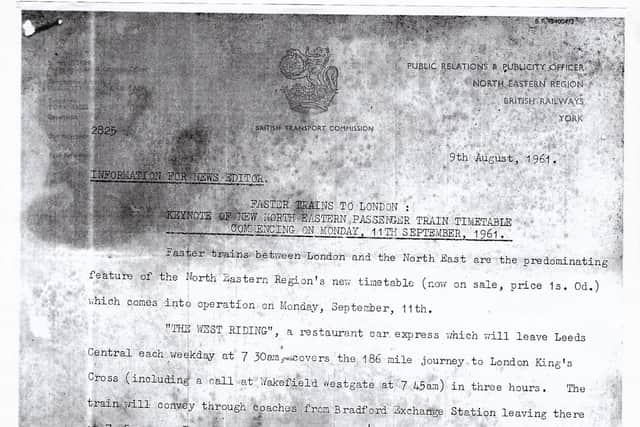
A long-forgotten press release detailing a major moment in Britain’s railway history has been discovered hidden beneath a locomotive driver’s seat in Skegness — more than six decades after it was first issued.
The document, dating back to the summer of 1961, outlines the dramatic speeding up of express services on the East Coast Main Line between London and the North East.
It was uncovered during restoration work on a 1926 Simplex diesel locomotive known as “Paul”, part of the Lincolnshire Coast Light Railway (LCLR), now based at Skegness Water Leisure Park.
Volunteers found the fragile, yellowing paperwork concealed inside the locomotive’s wooden driver’s seat — where it had remained untouched despite decades of use, storage and exposure to the elements.
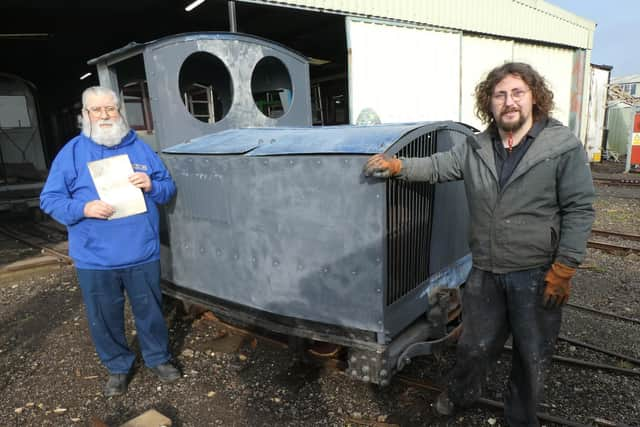

The locomotive is currently being restored to its 1960 condition, when it hauled the first passenger trains on what was then the world’s first enthusiast-built heritage railway at Humberston, near Cleethorpes.
Despite damp and ageing, much of the document remains legible, though parts have been damaged by mould.
The discovery initially puzzled volunteers, as press releases would not typically be sent to locomotive drivers. However, conversations with long-standing members of the railway have revealed a likely explanation.
The locomotive’s driver in the early 1960s was Bert Green — a former driver of the famous non-stop “Elizabethan” express service between London King’s Cross and Edinburgh.
After retiring from mainline duties, Mr Green returned to Lincolnshire and took up seasonal work on the LCLR, driving the small diesel locomotive at speeds of around 10mph — a stark contrast to the 100mph-plus runs he had once commanded.
Volunteers believe the press release may have been passed to him by a relative working in the newspaper industry and kept as a personal memento, tucked beneath his seat where it remained for 65 years.
The release itself marks a turning point in British railway history, as British Railways introduced powerful new diesel-electric “Deltic” locomotives. These engines replaced dozens of steam locomotives and significantly reduced journey times on key routes.
Among the improvements highlighted were major time savings on services such as the 07:30 from Newcastle to London King’s Cross, which was cut by 43 minutes to just four and a half hours.
Other routes across Yorkshire and the North East also saw faster connections, including services linking Scarborough, Harrogate, Halifax and Huddersfield with London.
Named trains including the “Flying Scotsman”, “Talisman” and “Yorkshire Pullman” were all sped up, reflecting a new era of high-speed diesel travel.
Richard Shepherd, chairman of the LCLR’s Historic Vehicles Trust, said the find offered a fascinating link between two very different eras of rail travel.
“We always wondered how Bert coped with the change from driving one of the fastest steam engines in the country to pottering along at 10 miles an hour,” he said.
“But when he was on the footplate of our steam engine, it was as though he was back on the main line — full steam ahead.”
Mr Shepherd added that the document would now be preserved as part of the railway’s archive, helping to tell the story of both the LCLR and the wider evolution of Britain’s railways.