
Brexit in Boston, 10 years on - Leavers, Remainers, farmers, migrant community members have their say
Ten years ago today (Tuesday, June 23), Boston delivered the highest Leave vote in the EU referendum, leaving it labelled as ‘most Eurosceptic area in the UK’.
Of the 30,000 or so votes counted in the borough, 75.6 per cent called for a break from Brussels.
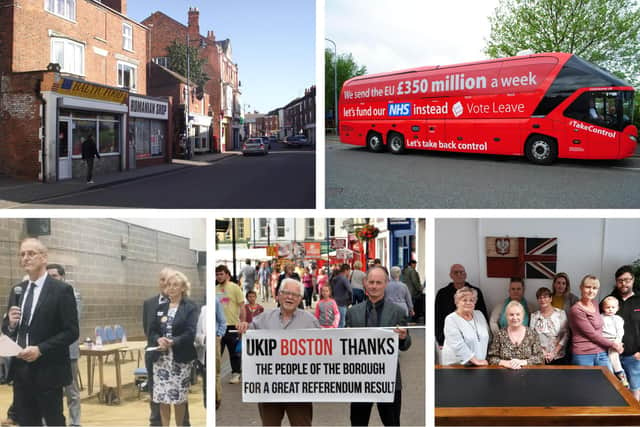

South Holland was next highest on 73.6 per cent, but nationally it was a much tighter race, with Leave finishing on 51.9 per cent.
To mark the 10th anniversary of the poll, the Standard approached a range of people on the subject – Leavers, Remainers, migrant workers who had no vote in the referendum, the MP then, the MP now, farmers, anyone we thought might have a view on the milestone. Not everyone had something to say.
But first, turning back the clock to late June 2016 ...
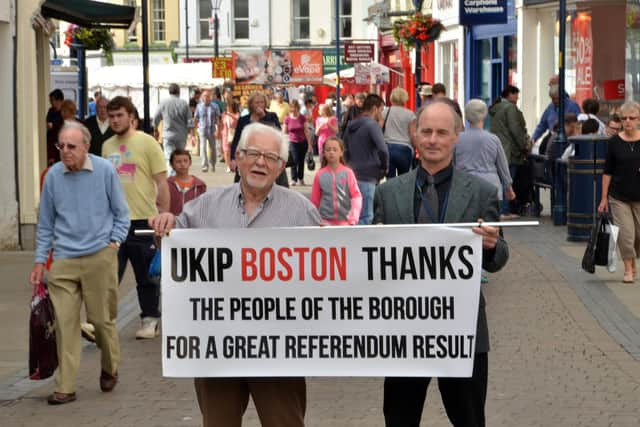
The weekend after the referendum, UKIP’s Vote Leave campaigners were in town to say ‘thank you’ to the borough for supporting them.
They placed a banner in Strait Bargate, with the words ‘UKIP Boston thanks the people of the borough for a great referendum result’ and shook hands with supporters.
The leader for UKIP on Boston Borough Council at the time was Coun Brian Rush. Speaking to The Standard this week he declined to comment on the anniversary.
The deputy leader of UKIP at the time was Coun Jonathan Noble, who today is a member of Reform. Coun Noble said he was unable to comment as he is currently serving as Mayor of Boston and must remain non political during his year in office.
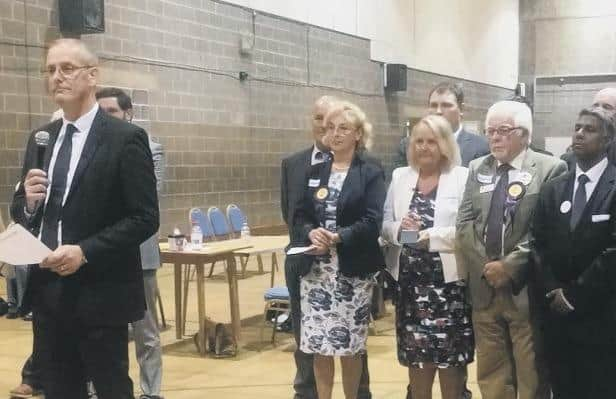
A Remain campaigner who spoke to The Standard 10 years ago was Coun Paul Gleeson, who represented Labour then, but today is part of the 20-20 Independent Group.
Speaking to The Standard today, he said the UK should rejoin the EU, describing Brexit as ‘disastrous’. “We are much worse off as a country,” he said, saying its economy is not ‘as strong as it should be’ and spoke of various restrictions now in place.
“I can’t see anything that has got better,” he said.
Criticising the type of Brexit the UK ended up getting, he said: “There was no need for the severity of the Brexit we had,” he said, though noted: “We still would have lost more than we gained.”
After the vote, the MP for Boston and Skegness at the time Matt Warman said: “We have to make sure the process of coming out is as beneficial as possible and negate the risks as much as possible.”
The Standard approached Mr Warman for an updated view, but we did not receive a reply. He was not alone, others did not reply, including the borough council.
The borough’s current MP, Reform UK deputy leader Richard Tice, was scheduled to speak to the Standard on the subject, but he was unable to make the interview in the end.
While we were unable to speak to Leave campaigners, we did speak with Leave voters.
Wendy Reed, 63, of Westlands, a fabrics and alterations business, in Main Ridge East, Boston, voted Leave in 2016 and said she would do it again if the referendum was re-held.
She explained the principle behind her vote then had not changed.
“We are an island and I don’t like being governed by Europe,” she said.
She said she did not believe the UK was suffering financially as a result of Brexit, saying that its GDP (gross domestic product) was performing better than others (it is currently second highest in Europe).
Instead, she said the nation’s struggles came from Covid-19, plus the Labour Government, which she criticised for such policies as increased national insurance contributions.
The current Government was having more of an impact on her work, she said, than Brexit.
A customer, another Leave vote, who asked not to be named, said they would vote Leave again, but was critical of how Brexit had been implemented.
“They haven’t done what they said they were going to do,” they said. “How can you do it properly if the people in charge didn’t want it in the first place.”
Turning to agriculture, Simon Gadd, who farms near Boston and is the South Lincolnshire representative on NFU Council outlined how Brexit has introduced a number of challenges for the sector.
“Since Brexit, the UK has had to make its own trade deals instead of relying on EU-wide agreements,” he said. “Farmers want these deals to be fair: they should not allow cheaper imports produced to lower standards, and they should help British food reach new markets overseas.”
“Farming support has also changed,” he continued. “In England, the old EU subsidy system has been replaced by new schemes that pay farmers for actions such as protecting nature, improving soil and managing land more sustainably.
“However, the change has been difficult to plan for, and many farms are now more exposed to sudden changes in global prices. Farmers need clearer rules, fair support and investment that recognises food production as well as environmental work.
“The Government is also discussing a new food and animal-health agreement with the EU. This could make it easier to trade with Europe, but it may also mean UK farmers have to follow more EU rules again. Any new deal should avoid unnecessary disruption, give farms time to adjust, and protect useful innovations such as precision breeding.”
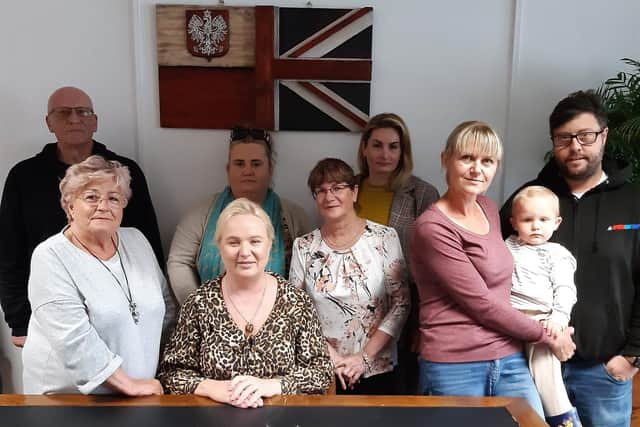
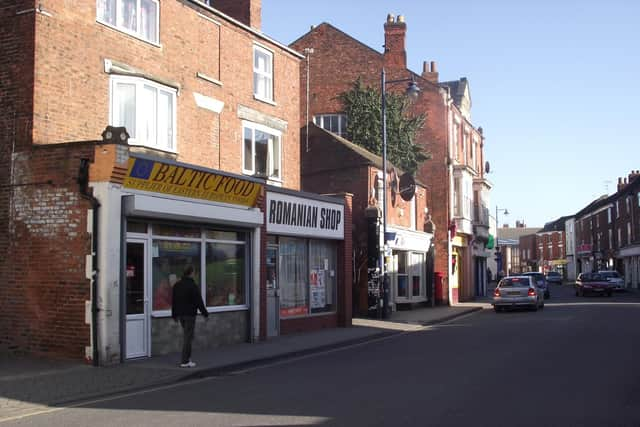
The view from members of Boston’s Polish community
Ahead of the 10th anniversary of Brexit, the Standard spent time at the WeConnect Community Hub, in Red Lion Street, Boston.
The facility was launched last year by the town's Polish Support Initiative CIC to provide a space where people of all backgrounds can come together, learn, and support each other.
There, we met a number of long-standing members of the town’s Polish community, who – with the assistance of a translator, in some cases – spoke of how life had changed for them since Brexit.
“After Brexit, a lot of things happened and happened for the worse,” said Grazyna Gasowska, 71.
She spoke of shops closing down, higher prices, and ‘people (in general) becoming more withdrawn’.
Magdalena Kaczmarksa, 45, said finding employment was now more of an issue, saying there is ‘very little work available’. Accessing a GP was also harder, she said.
The group also spoke of a diminished sense of community. Asked if loneliness felt more common, they agreed, with one replying ‘very much’.
Marzena Tomczak, 63, spoke of a sense of ‘uncertainty’ now in the town.
“Before Brexit, the atmosphere between people in town felt different,” she said.
Looking back on the vote, Marek Jasinkski, 60, said: “Great Britain lost a lot by choosing Brexit, by leaving the European Union, because – for some reason – Great Britain didn’t take into account it wasn’t just giving, it was receiving.”
Asked about separating the impact of Covid-19 from Brexit, Brigita Golawska, 45, who is a project manager at the Polish Support Initiative CIC, said she felt that Brexit ‘did the damage’, before lockdown made matters worse.
At the hub, the Standard also got to meet Ben and Marta Major and their two-year-old son Tomasz.
Ben, 37, is from Boston, while Marta, 42, is from Poland. They have been together for 17 years.
They explained Ben must now separate from Marta and their son as they make their way through airports.
Marta said: “When you travel, you have to go to different queues and [Tomasz] doesn’t understand why his Daddy is walking away from us.”
Ben voted Remain 10 years ago said he thought the issue of EU membership was ill-suited to a referendum.
“It has been horrendous for this country,” he said. “I think part of the problem was alot of people didn’t understand what they were voting more.”
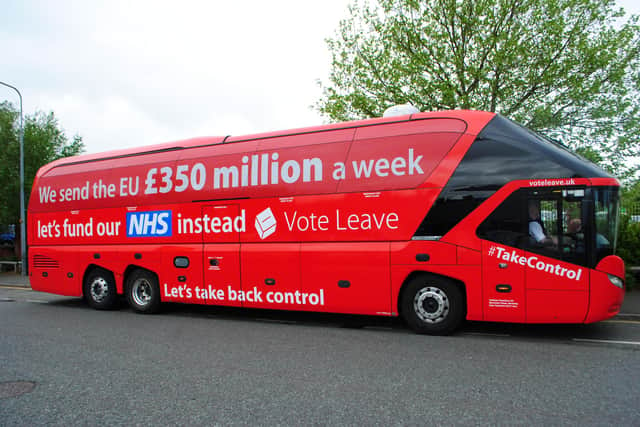
Referencing the infamous pledge on the site of a Leave bus (‘We send the EU £350 million a week, let’s fund our NHS instead’), Ben said: “It will be great when that kicks in, but we are still waiting.”
“I don't know anyone who can name one benefit,” he added.
Numerous members of the group said they consider – and have long considered – the UK to be their home.
Marek said: “We are not blaming England. We live good here, our lives are better here than in our home countries. It's harder, but still liveable.”
Brigita said she originally came to the area to help support her family back home, but ended up staying after landing a full-time job.
She thanked this country for the opportunities it has given her, saying: “I love Great Britain. I can’t see myself anywhere else.”