
Hospital worker speaks out against proposed shake-up to Lincolnshire's admin services
A Lincolnshire hospital worker has spoken out against plans to shake-up how admin services are run in the county.
Alyson Bonner, 47, is among those affected by a transformation programme being put forward by the United Lincolnshire Teaching Hospitals Trust (ULTH) – the organisation responsible for Boston’s Pilgrim Hospital, Grantham and District Hospital and Lincoln County Hospital.
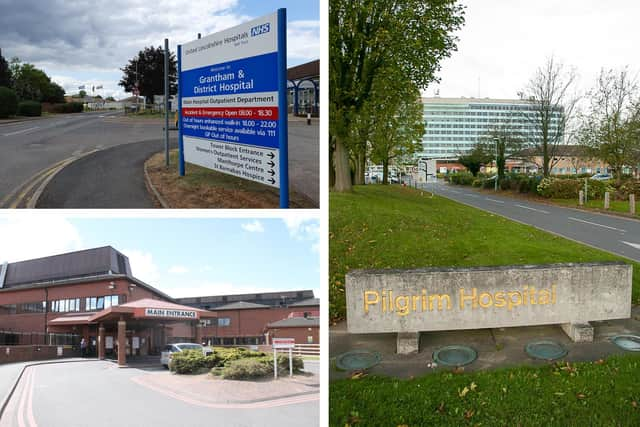

According to the Unite union, the proposals would impact almost 650 employees in a range of medical and non-medical roles and could put about 180 jobs at risk.
Separately, it has been reported to the Standard that Boston does not feature in the model being put forward (the so-called ‘Patient Service Hub’). Instead, services would be based at Lincoln and Grantham in a ‘hub and spoke’ set up.

Alyson, who is originally from Boston, but today lives in Spilsby, works as a medical secretarial assistant in colorectal surgery at Boston’s Pilgrim Hospital.
She sent an open letter to The Standard about the proposals. This was addressed to members of the public and written from the point of view of the 'dedicated administrative and clerical staff’.
She said: “Right now, our jobs are at serious risk. Proposals are being made that could lead to cuts and disestablishment of vital administrative roles across the hospital.
“These are not just ‘desk jobs’ – we are the people who answer your calls, manage appointments, process referrals, handle patient records, ensure doctors and nurses have the information they need, and help make sure every patient receives the care they deserve.
“Without us, delays increase, communication breaks down, and the already heavy pressures on clinical staff grow even worse. We know the NHS is facing enormous challenges, but cutting the staff who support its daily operations will only make things harder for everyone – especially for patients.
“Every member of our team works tirelessly, often under intense pressure, because we care deeply about our community and the people who rely on us. We take pride in helping to deliver safe, efficient, and compassionate care. Losing these roles would not only affect our livelihoods, but it would also have a direct and damaging impact on the quality of patient care at your local hospital.”
Closing with an appeal for support, she said: “Please stand with us – your NHS admin and clerical staff – and help us send a clear message: patient care depends on every part of the team. The NHS cannot function without the administrative backbone that holds it together.”
Speaking to The Standard, Alyson said that her husband, Chris, is also affected by the proposals.
Chris – a medical secretarial assistant in trauma and orthopedics – is registered disabled due to severe bilateral knee osteoarthritis. He has also suffered two heart attacks.
“He is unable to drive due to his knee pain, so I am our sole driver, but this could cause us great difficulty if we have to move sites/jobs due to this proposal,” Alyson said.
Asked about how the public can show their support, Alyson gave such examples as: airing views on social media, contacting the trust, and backing petitions and campaigns.
When approached about the open letter, the trust declined to add to its original comment (which can be found in full here).
In this, Caroline Landon, group chief operating officer at Lincolnshire Community and Hospitals NHS Group (of which ULTH is part), said: “We have launched a transformation programme that will significantly improve how we coordinate patient care. Our patients told us they are frustrated by the outdated technology currently used to manage patient appointments and timeliness of communications and letters they receive about their care.”
The Patient Service Hub, she added, would ‘bring together and modernise outpatient and inpatient administrative services’.
“By using digital tools, we aim to make processes simpler and more consistent,” she said.
“At this stage, this remains a proposal. We are consulting and engaging with the colleagues who will be directly affected by the change, to gather their views and involve them in co-designing the new service,” she added.