
'In restoring our heritage, they’re ensuring our future': From rust to revival - Skegness heritage train gets new life
A generous donation from a Hull-based paint manufacturer is helping restore a historic Lincolnshire locomotive to its original appearance as part of its centenary celebrations.
Teal & Mackrill Ltd has supplied specialist marine paint free of charge to the Lincolnshire Coast Light Railway, allowing volunteers to return the engine to the striking blue livery it carried on a landmark day in railway history.
The locomotive famously hauled the first passenger train on what is believed to be the world’s first heritage railway built by enthusiasts, on August 27, 1960.
The paint — Teamac Metalcote Enamel in Seine Net Blue — reflects the locomotive’s original finish, applied when its metal bodywork was fitted by a Grimsby docks engineering firm more accustomed to working on ships than trains.
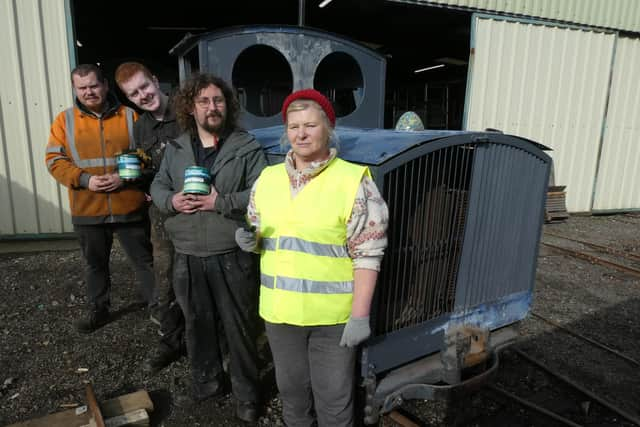

After researching the engine’s history, volunteers approached Teal & Mackrill, who responded by donating the paint and undercoat needed for the restoration.
Built in 1926 by Motor Rail Ltd, the “Simplex” locomotive originally worked on the Nocton Estates Railway, hauling potatoes and sugar beet across the Lincolnshire Fens.
In its early days, it had no cab — leaving drivers exposed to the elements — before later being converted from petrol to diesel and fitted with a basic wooden shelter.
When the engine was acquired in 1960 by the then newly formed Lincolnshire Coast Light Railway, it was given a full metal body and went on to play a key role in the pioneering heritage line at Humberston near Cleethorpes.
Now, decades later, volunteers are painstakingly restoring the locomotive at Skegness. Work includes repairing damaged panels, stripping back old paintwork, and preparing the body for its new coat.
The engine — later named “Paul” — will have its nameplate refitted once the restoration is complete.
Richard Shepherd, chairman of the railway’s Historic Vehicles Trust, said: “This is a wonderfully generous donation from Teal & Mackrill and will enable us to run our pioneering Simplex in the state it was in when it operated that first heritage passenger service.
“We still have volunteers who remember those early days, but much of the work today is being carried out by newer members. In restoring our heritage, they’re ensuring our future.”
The project marks a significant milestone for the railway, bringing a piece of Lincolnshire’s transport history back to life for future generations to enjoy.