
Winners and losers if Lincolnshire is merged into a single council
The entire of Lincolnshire should be run by a single council rather than the eight current ones, councillors have said.
Lincolnshire County Council voted to back the proposal, which could become reality if the government chooses it.
There was fierce debate about whether the region and its population of 770,000 was too big to be governed by a single body.
Reform and the Conservatives said the proposal would require the fewest changes and save the most money.
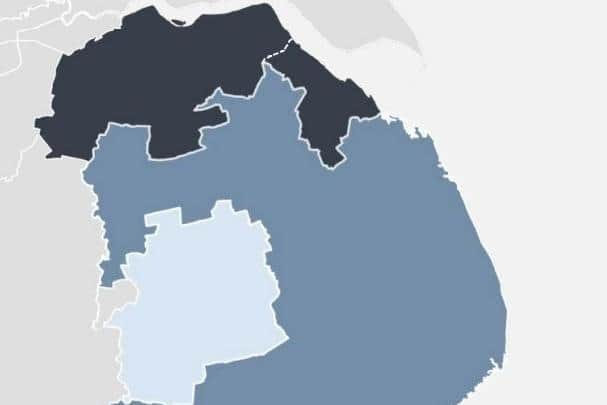

Meanwhile Independents, Labour and Liberal Democrats raised concerns about it, from loss of representation to the city of Lincoln losing out.
It’s impossible to know yet how the proposal would play out, but here are who councillors believe would be better or worse off under it.
The restructure hopes to save billions of pounds by simplifying local government, and this proposal claims it would do that most effectively.
After initial reorganisation costs of £25million, it’s estimated that it could save £46million per year.
Rather than eight sets of council buildings and employees, there would only be one – although it would be taking on a bigger task than previous authorities.
Reform Councillor Robert Gibson said it would be “Better value for residents” and “reduce duplication and red tape”.
He said that savings could be put back into frontline services, which could be made to work more efficiently, although not all councillors believe the promised benefits will appear.
The risk of splitting up Lincolnshire County Council’s services for children and adult social care is too great, leading councillors have claimed.
The change would essentially leave the services covering the same area than before, rather than breaking them up.
Reform Councillor Natalie Oliver, who is responsible for children’s services, described the alternative as “an avoidable risk for vulnerable children” and a distraction for staff, which “must be avoided”.
Coun Steve Clegg, who looks after adult social care, also warned there was a risk that smaller councils may find themselves unable to pay for the huge bill.
Lincolnshire currently has a patchwork of different types of councils which do different jobs.
Conservative Councillor Martin Hill argued that having a single unitary would create a “one-stop shop” for residents with problems.
“It will save money and make it easier for residents to know where they go,” he said.
The northern Lincolnshire authorities would continue unchanged under the proposal.
There are more than 400 councillors across Lincolnshire’s various authorities today – these would be slashed to just 70.
Independent Councillor Phil Dilks said it would lead to a “crisis in democracy”.
“People already feel disengaged and don’t trust politicians. I’m worried this proposal would further separate people from those making decisions,” he said.
Those who backed the proposal said a huge loss of councillors was unavoidable to meet the government’s requirements, and was the best option available.
With the number of councillors slashed, their workload would inevitably increase, which some claimed would limit who could take up the roles.
Liberal Democrat Councillor Matthews Boles said he would probably have to step down under the new system.
“There are six district councillors in my ward who would disappear, and all that work would fall on one person.
“I have a young family and I work – I couldn’t do justice to residents representing such a large area alone.
“It used to be that all councillors were grey-haired old men. I worry we’ll go back to the job being just for the retired and rich.”
The county’s only city has governed itself for centuries, but the city council would be abolished and replaced with a county-wide authority under the plan.
Some of those who represent Lincoln said it wouldn’t thrive in a vast, rural council.
Labour Councillor Karen Lee said: “Lincoln is unique, with its rich culture and history. It’s not just another town.
“It also has unique challenges like deprivation, which need specialist local measures from those who know the city well.”
Council leader Sean Matthews argued: “We can’t focus on individual areas, we have a look at the big view and what would be best for the whole county.”