
10 years on from Brexit - and opinion is still divided over whether it's actually worked
It’s 10 years today since people voted to leave the European Union (EU) – and it’s safe to say, opinion is still divided over the topic. But what about the view in Lincolnshire – home to the highest level of Brexit support in the country?
On June 23, 2016, 52 per cent of people voted in favour of leaving the EU, while 48 per cent voted to remain a part of it. But the margins were far clearer here.

Indeed, Boston and Skegness had the nation’s highest leave vote – with more than three quarters of voters opting for Brexit.
South Holland and the Deepings had the second highest Brexit vote – 73.6 per cent – while East Lindsey had the ninth highest at 70.7 per cent.
Ten years since the day those people went to the poll, is it possible to say that faith been repaid? Or, a decade on, should the EU referendum be looked back on as a failure. Do leading figures feel the right choice was made a decade ago?
Many supporters of the ‘vote leave’ movement told the Local Democracy Reporting Service that Brexit has delivered benefits to Lincolnshire and the UK – with some also arguing that it hasn’t gone far enough.
But opponents of Brexit say it’s been a disaster and has made the county and the country worse off than when Britain was a member of the EU.
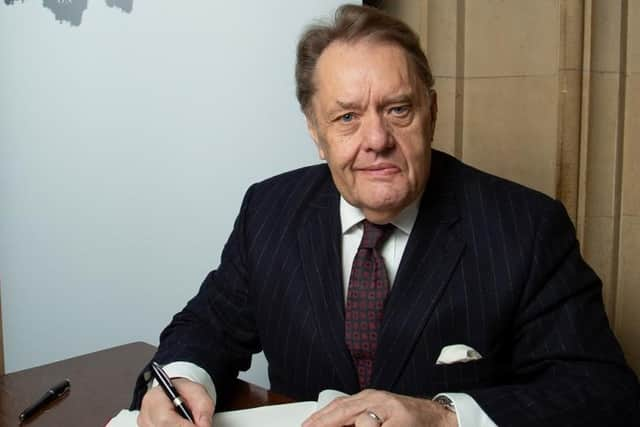
South Holland and the Deepings MP, Sir John Hayes (Conservative) was one of the leading figures behind the ‘vote leave’ campaign.
Sir John said: “Brexit provided an opportunity for the people to speak – for them to override that liberal establishment’s view – and that’s precisely what they did.
“I was delighted that in South Holland and the Deepings – my own constituency – a huge majority of people voted for Brexit. I hope they would do so again.”
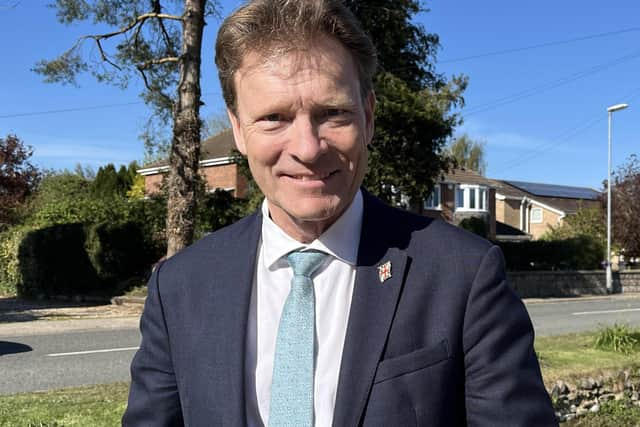
Similarly, the Boston and Skegness MP, Richard Tice was also a key proponent of the ‘vote leave’ case – years before he became a county MP in the nation’s most biggest Brexit-supporting constituency.
The deputy leader of Reform UK said: “I always felt that we should be an independent sovereign nation for all our own decisions, not beholden to bungling bureaucrats in Brussels – which is riddled with incompetence over regulation – and on occasions, waste and corruption.
“I was obviously concerned about the lack of growth, the freedom of movements that came with being a member of the EU, so it was definitely the right thing to do – I was delighted with the result.”
While the result was announced in the 2016 referendum, it wasn’t until January 31, 2020 that Brexit officially happened. Ten years on from the vote, however, and some query whether the result of the vote has ever truly been put into practice.
But East Lindsey District Councillor Colin Davie (Conservative – Ingoldmells), who was also a staunch supporter of Brexit at the time, doesn’t believe that it has been properly delivered.
He added: “I campaigned for Vote Leave. I was a very strident voice 10 years ago about why we should leave.
“I was very pleased that we actually took that decision. Have we actually left? No, I don’t think so. I still think the establishment doesn’t believe in Brexit.
“They’ve never wanted Brexit to happen in the way that the British public voted for it.
“So, we’re still in many ways tied to the coat tails of Europe without any tangible benefits whatsoever.”
The councillor was also the portfolio holder for the environment and economy at Lincolnshire County Council for 12 years up until May 2025 – one of the senior figures swept aside by Reform UK’s election surge.
Coun Davie believes that the country is economically “better off”.
He added: “We are tied to EU rules on climate change, Net Zero and we are following them constantly.
“The reason we have so many social and economic problems in this country is because the establishment does not want to accept the will of the British people which was to leave the EU entirely – with all of its institutions, including the ECHR (European Convention on Human Rights).
“A lot of the issues we have with immigration are caused by the fact that we never executed the mandate of the British people in a way that the British people wanted it to be done.”
Meanwhile, Sir John also believes that the Government could go further with Brexit and promote the need for more sustainable farming.
He said: “The Government needs to back British agriculture. The critical thing about that – and this does relate to Brexit – we need to protect our industries.
“So, we need to recognise that we should be growing much more of what we consume, making more of the food in which we depend.
“By shortening supply lines you both create greater economic resilience, because you make your country more self-sufficient, and you avoid all of the additional costs of shipping food from all over the world – which would be better grown locally here in Britain.
“So, we need to recognise that in order to do that, that the primary producers – farmers and growers – deserve a fair price for what they do. For too long governments have cowered down to the huge retailers – the supermarkets who have short-changed farmers and growers.”
Neighbouring MP, Mr Tice also believes that the Government still needs to go further in delivering Brexit.
He said: “We’ve got to negotiate the trade cooperation agreement. We’ve got to get a better deal for fishing. We’ve got to get better arrangements with regards to Northern Ireland.
“We’ve got to stop all the nonsense with the boats that people are blaming Brexit on. It’s got nothing to do with it.
“But, again, we’ve got to stand up and negotiate hard for Britain and those are just a few of the examples that we’re looking at.”
However, opponents of the Brexit movement argue that Lincolnshire has been left worse off under Brexit – and have called for greater connections with the EU.
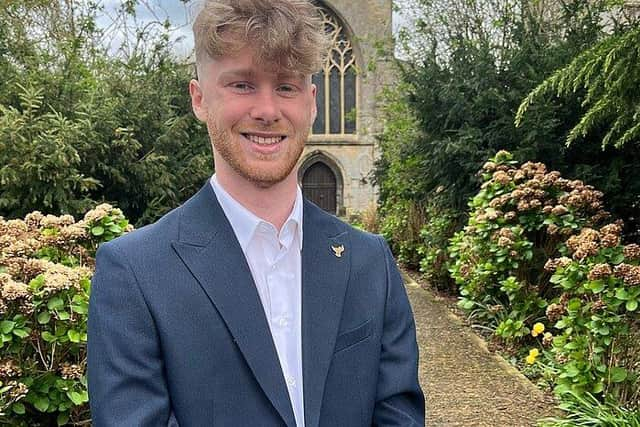
Long Sutton’s Jack Braginton, 25, was the Liberal Democrat candidate in South Holland and the Deepings in 2024 general election – and said Brexit hasn’t worked. He’s from the generation who only became eligible to vote after the referendum and feels it has had a negative effect.
He said: “The promises that were made in the campaign that ‘vote leave’ ran haven’t been fulfilled.
“This idea that Brexit would lower immigration – it hasn’t done that, it’s caused it to spike.
“That Brexit would lower food prices and boost the economy – well the economy’s stagnant and food prices have gone up – so it’s failed on that front.”
Mr Braginton said that many local businesses have been negatively affected by Brexit.
He added: “It’s absolutely suffocating these businesses and the costs – the financial cost to these businesses of navigating all this red, it’s seriously holding them back.
“To give some examples, I’d say that the horticultural industry in South Holland is one of our biggest markets, biggest industries, biggest exporters and for those businesses in that industry, what was once a really strong trade relationship with Europe, particularly with Holland, is now not there.
“It’s been massively damaged. The knock on impact of that is on jobs.”
Mr Braginton’s party is calling for closer relationships with the EU – in a bid to address some of these issues and move on from the last decade.
He added: “The Liberal Democrats are calling for a customs union arrangement with the European Union as soon as possible to boost the economy and get growth back into the British economy.
“That’s the best thing we can do right now – with the stagnant economy – is actually engage with the biggest trading block right on our doorstep.”
Mr Braginton believes that many of the things which people were promised back in 2016 haven’t been delivered upon – and that this means people in areas such as his were let down.
He said: “People voted leave for a reason. And those reasons were not delivered upon.
“People voted leave because they saw a system that wasn’t listening to them and people voted for change.
“People wanted to feel powerful. When we listen to people talk about Brexit now who were pro-Brexit – I’m talking about politicians who led it in.
“They talk a lot about parliamentary sovereignty being the real reason. For me, I don’t think that’s good enough.”
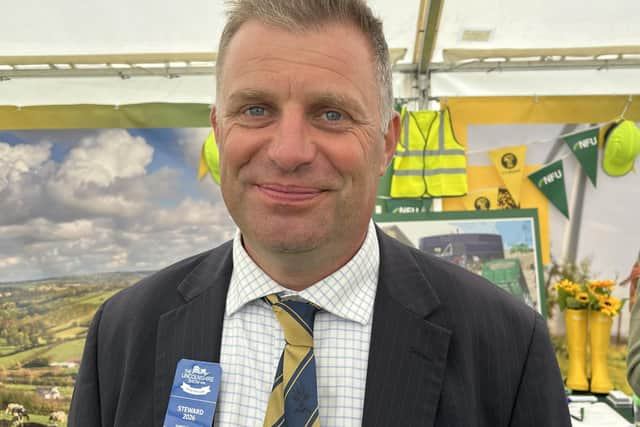
Similarly, Henry Moreton, chair of the National Farmers’ Union (NFU) in North Lincolnshire, said that Brexit has made things more expensive for farmers.
Mr Moreton, who has a farm in Bucknall, near Woodhall Spa, said: “We built the last lot of poultry sheds five years ago and each shed cost me £497,000.
“I’ve just finished one which is identical – and it is identical – for £942,000. So, that’s how everything has gone up in four years. It has doubled.”
Mr Moreton went on to say that farmers had a “bigger voice” and that agriculture was taken more seriously when Britain was part of the EU.
Meanwhile, the think tank Best for Britain has conducted studies into the impacts of Brexit across the country – and says it has found that it has made Britain worse off.
Tom Brufatto, executive director of policy and research at Best for Britain, said: “I think it’s pretty clear to many people in the country – including us as an organisation and, of course, me personally too – that Brexit has not worked out for the country – any nation of it, any corner of it, or indeed the majority of the population.
“And the reasons why we say this is most notably on economic grounds. We know now 10 years on from the referendum and since leaving the EU (European Union), it has effectively cost us between £180 and £240 billion of the economy.
“Obviously, those are huge numbers but, most importantly, they translate to real everyday impacts on people’s lives.”
Mr Brufatto explained that this has had an impact on employment levels, food prices and energy bills – and is keenly felt in areas with industry and factory work.
Mr Brufatto added: “It’s actually areas in which you find companies and people working in the manufacturing industry that have been affected the worst – and that includes Lincolnshire, of course.
“Interestingly, these areas are also the ones that stand the most to benefit from a closer relationship with Europe.
“Because it is with trading goods that we are able to suffer the most from our departure.”
Best for Britain has conducted interviews and focus groups with voters and has found that many people feel they have been misled.
Mr Brufatto explained that many people voted for Brexit in 2016 because they thought it would provide change and an “economic upturn” – and says that now many people feel this hasn’t happened.
He said: “We know that from our research that people really do say that.
“We do focus groups and public opinion research and that sentiment of ‘well I was told that something that wasn’t true’ or ‘I was misled’ or ‘I was made promises that ultimately weren’t kept’ is certainly one of the central parts that is causing this change in public opinion.”
Perhaps unsurprisingly, the think tank is calling for Britain to rejoin the EU.
He added: “What we know is that in order to improve our economy transformationally, what we need to do is to set the conditions so that businesses up and down the country can thrive.
“What that requires is for the United Kingdom to be a member of the European Union – to have access to that huge market on our doorstep, so that we can actually get the economy moving more and we can get investment and ultimately money back into the pockets of the British public.”