
Lincolnshire County Councillors to consider ways to tackle 30-year backlog of public rights of way applications
Councillors will discuss ways to tackle a 30-year backlog of public rights of way applications next week.
Members of Lincolnshire County Council’s public rights of way sub-committee heard that there had been a 1,582 per cent rise in applications for potential public rights of way at a meeting on November 3.

The committee was told that there were eight times as many Definitive Map Modification Orders (DMMOs) between 2020 and 2024 as they were in the entire decade before (452, compared to 57).
DMMOs are applications to the county council to assess whether or not a potential route should be formally recognised as a public right of way.
Officers explained that approximately 400 applications (69 per cent) had come from one person and that this was the result of a ‘desk-based trawl’ for any ‘possible’ right of way, regardless of their current functional use.
The county council said that under the current rules, it is ‘duty bound’ to investigate all applications.
Councillors are due to consider the proposed strategy at a Highways and Transport Scrutiny Committee at a later date and the final decision will be made by the executive councillor.
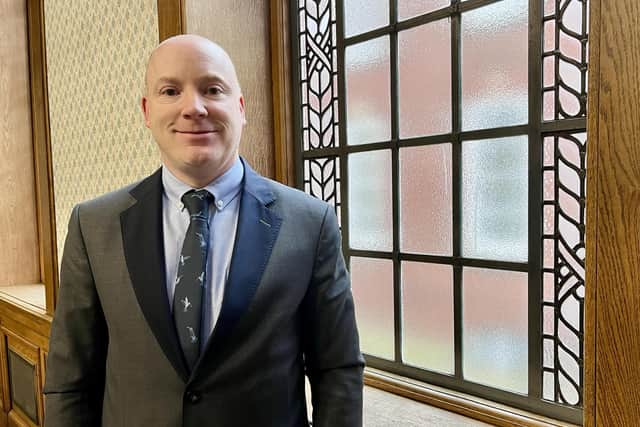
Andrew Fletcher, public rights of way and access manager at the county council, will put forward the proposed strategy and will set out how it will address the backlog.
A report said: “The existing policy to determine cases in date order (unless an application is made to re-prioritise) also means that the council has not been able to necessarily prioritise cases that would have a greater public impact first, particularly with regard to the level of applications received since 2020.
“In addition to this, the current policy introduces a degree of subjective assessment of a case as to what criteria might apply, either by officers in the first instance or the Definitive Map and Public Rights of Way Sub-Committee when an appeal is made.
“Whilst every effort is made to be as transparent and consistent as possible, the individual elements of a particular case can lead to different decisions made as to what priority a case should have, particularly when balancing a new request for review against existing re-prioritised cases.”
The county council said the proposed new strategy would create a more ‘nuanced’ framework which considers ‘public benefit, community impact and strategic alignment’.
The report added: “The weighted scoring system is designed to create a more transparent and objective assessment of an individual case, which will allow it to be assessed in isolation to any previous decisions on other cases, and lead to an easier to understand assessment as to why a case has been prioritised in the way that is has.”