
Number of Lincolnshire councillors set to be halved
The number of Lincolnshire councillors will be more than halved under major changes to the county’s political make-up.
The changes, known as local government reorganisation, will see the city of Lincoln’s border expanded to incorporate nearby parts of North Kesteven and West Lindsey, while the rest of the county will be merged into a separate council.
The government says it will create a simpler and cheaper political system, but an expert has warned it could lead to “poorer democracy” for residents.
There are currently 360 elected officials across Lincolnshire’s county council and the seven districts.
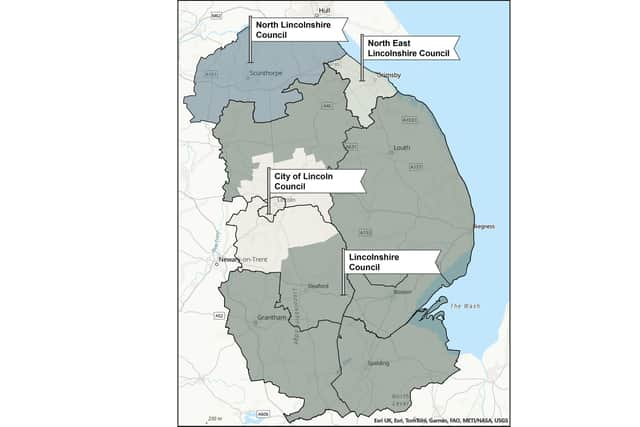

This will be reduced to just 165, according to a government letter seen by the Local Democracy Reporting Service.
The Lincoln council, containing the city and nearby villages, will have 65 councillors, with each one representing around 3,500 residents.
The rural Lincolnshire council will have 100 councillors – one per approximately 6,200 people.
While the current two-tier system isn’t an exact comparison, there is currently one councillor for every 2,300 residents.
Andrew Defty, an associate professor of politics at the University of Lincoln, says councils need overhauling but there could be drawbacks to cutting politician numbers.
“Structurally, local government is a mess,” he told the Local Democracy Reporting Service.
“With our two-tier system, most people don’t know their councillors’ names or which council collects their bins. It makes it harder to hold them accountable.
“Democracy is also expensive, because councillors and elections cost money.
“But less councillors mean less representation. Each one will be responsible for more people.
“There are questions about their capacity to be effective – will it lead to poorer democracy?”
He added: “A simpler system could lead to more people knowing their representative.
“The challenge will be drawing boundaries with coherent identities when the areas need to be so large.
“When you’re forming a Mablethorpe ward for example, will you need to include a lot of the rural hinterland with very different needs and problems?”
The eight current councils will be abolished in 2028, when the two new unitary councils will come into force.
Elections for 165 new seats will be held in 2027.
Steve Reed, the now former minister for local government, said the reorganisation would “replace the inefficient two-tier system with new unitary councils so that all parts of our country can access strong services, and are ready for devolution.”