
What Lincolnshire's new authorities could be called
The preferred names for Lincolnshire’s new councils have been put forward by leaders across the county.
The area’s seven districts and one county council will be replaced with one or two mega-councils, which will carry out all duties.

The government says this shake-up would mean better value-for-money and less confusion for taxpayers.
However, it would mean historic names like Lindsey, Kesteven and Holland which have been around for centuries would disappear from the map.
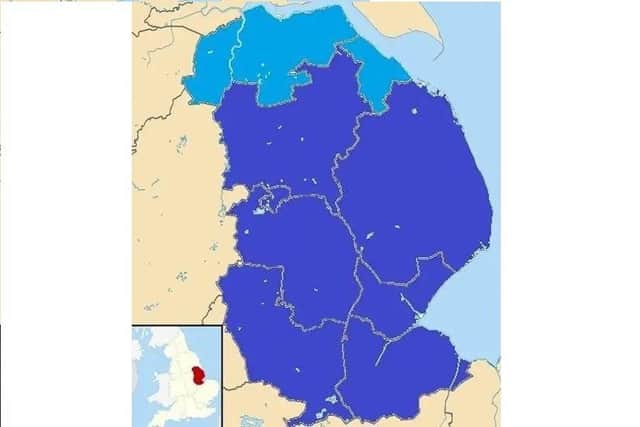
There are currently four different proposals for how to redraw Lincolnshire’s boundaries under consideration – here are council suggestions for how each of them would be named.
Full county model
The version put forward by the county council would simply create Lincolnshire Council. It would be a single unitary authority on the existing map with no districts.
Expanded city model
Sometimes dubbed the ‘donut’ model because it has a hole in the middle of the map, it would see a much larger City of Lincoln, taking in the neighbouring North Kesteven and West Lindsey villages. The rest of the county would become Lincolnshire.
A Greater Lincolnshire For All
The third proposal would also create a two council map. Northern Lincolnshire would be made of Lincoln, West Lindsey, North Lincolnshire and North East Lincolnshire. The other five districts would be amalgamated into Southern Lincolnshire.
Best 4 Greater Lincolnshire
The model put forward by the Kestevens would leave the Grimsby and Scunthorpe regions unchanged. Lincoln, Boston, West Lindsey and East Lindsey would become Central Lincolnshire. The remaining districts would be South Lincolnshire.
The Secretary of State could also opt for his own names, or draw up a completely a new map as has happened elsewhere in the country.
The number of councillors for each authority haven’t been put forward yet in public documents, although it’s thought there would be far fewer than the current number.
The results of the local government reorganisation are expected to be announced next month and become a reality in 2028.
It’s the biggest change in local government for over 50 years, although it’s proved very unpopular with councils.