
Burghley Park defeat knocks Sleaford off top spot
Sleaford’s weekend began with the sort of reverse that alters the air around a title race as the first XI were beaten by two wickets at Burghley Park and knocked off the top of the Lincolnshire Premier League Premier Division.
It was a game where the scorebook gave the facts and the batting supplied the indictment.
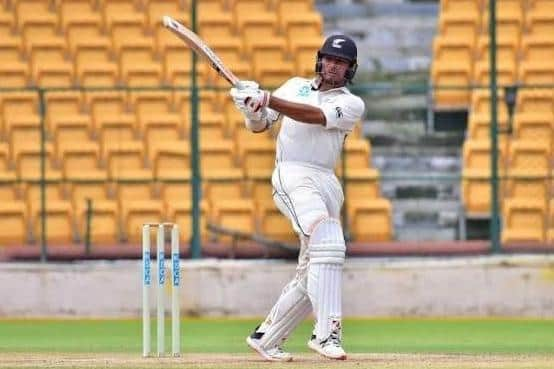

Sleaford were dismissed for 112 in 36 overs; Burghley Park, hardly serene themselves, reached 115-8 in 27.5 overs and Sleaford had been knocked off top spot.
At the beginning there remained that old cricketing hope, half faith and half superstition, that a score might be built from patience, judgement and a little adult responsibility.
Instead, Sleaford’s innings collapsed into a troubled little procession, Sean Solia standing almost alone among the fragments with a valuable 50.
Around him the batting thinned not so much by misfortune as by misjudgement, like light put out by men fumbling for the switch.
James Laud, with 5-15, was the principal author of Sleaford’s discomfort, while Xavier Wildsmith’s 2-9 brought economy, bite and no small measure of inconvenience.
The pitch was worn, certainly, and had begun to murmur in the ear of any bowler with subtlety in his fingers; yet even allowing for its caprices, 112 was not a target so much as an apology.
Burghley Park’s reply, to their credit and Sleaford’s late encouragement, was not without tremor. Sam Potter’s 34 gave the chase its first sense of order, and Ryan Gilmour’s 23 helped guide it towards calmer water.
But Sleaford at last found resistance through Kieran Harbron’s excellent 4-10 and Matthew Mills’ 2-34.
There was, too, a tactical footnote sharp enough to draw blood: with eight Sleaford wickets having earlier fallen to spin, the belated arrival of Sleaford’s own slow bowling in the 21st over looked less like strategy than delayed recognition.
By then the match had leaned too far towards Burghley Park, who crossed the line eight wickets down while Sleaford were left to wonder why the obvious had taken so long to appear.
That unease did not belong to the first XI alone.
There is now a more anxious, less forgiving music around Sleaford’s batting, and the warning note sounds loudest around the first team.
Too many players look like rabbits fixed in the headlights, almost too fearful to play the shot that might free them, uncertain how to manufacture the release stroke that carries a man to the safer end and restores breath to the innings.
This is no longer a passing wobble to be excused with a shrug and a hopeful net on Thursday night. It is a flaw beginning to acquire shape.
Sleaford have surrendered the lead at the top of the division, but not yet the argument of the season. The title remains within their own hands, though hands that keep dropping the bat will soon find it taken from them.
The lessons must be learned quickly, beginning next week with the visit of Bracebridge Heath.
If the first team’s defeat carried the sting of a missed opportunity, Sleaford second XI’s afternoon brought a sterner and more decisive reverse, a nine-wicket defeat away to Boston in the Championship South, and little in it could be dressed up as unlucky.
Sleaford were bowled out for 95 in 27.4 overs, and Boston answered with 99-1 in only 16.4 overs, making brief work of a target that had never quite possessed the dignity of a contest.
Again, the innings began with possibility and soon discovered how little possibility can survive poor occupation of the crease.
Charlie Roberts, with 30, and Mackenzie Ross, with 23, offered the main resistance, but beyond them the scorecard had the brevity of a note pushed under a door.
Damian Lawson’s 4-15 and Martin Hodgson’s 3-25 ensured there would be no late flowering, no tail-end rebellion, no awkwardness inserted into Boston’s afternoon.
And 95 all out left the home side not with a chase, but with an errand.
Boston went about the pursuit without fuss or flourish, which is often the cruellest way to confirm superiority.
Ben Troops’ 48 and Rowan Evans’ 35 gave the reply fluency and assurance, and though Harvey Barton claimed 1-26, Sleaford were granted little sustained foothold in the contest.
Boston reached 99 for 1, leaving Sleaford to travel home from another Saturday on which the club’s ledger contained more rue than romance, and rather too many questions for comfort.
Sunday, mercifully, brought colour back into the club’s weekend. Sleaford Sunday second XI travelled to Horncastle and returned with the sort of 10-wicket victory that makes the evening road home feel shorter.
Horncastle were dismissed for 174 in 40 overs; Sleaford, with an air of calm entitlement, reached 175 without loss in 22.3 overs.
Horncastle’s innings appeared for a long while to be proceeding with order and some authority, Thomas Hackett compiling an excellent 87 and Rob Bee adding 34 in support.
Yet cricket has always had a taste for mischief, and from 159-2 the home side fell into calamity, losing eight wickets for 15 runs as if the afternoon had suddenly changed its mind.
Mackenzie Ross, with 5-18, was the chief agent of the collapse, his bowling turning promise into panic, while Max Lorimer’s 2-46 gave Sleaford further purchase when the innings began to unravel.
If Horncastle’s collapse had been sudden, Sleaford’s reply was serene.
Ian Glendinning, unbeaten on 79 from 67 balls, and Harry Bailey, 76 not out from 69, treated the chase not as a problem to be solved but as a landscape to be crossed at leisure.
Horncastle summoned 10 different bowlers in search of an opening, but none could disturb the pair’s composure.
It was less a pursuit than a procession, and by its close Sleaford had administered a comprehensive 10-wicket thumping.
The weekend closed with Sleaford Women’s first XI away to Caythorpe, where effort and individual quality were present but not quite sufficient.
Sleaford were defeated by six wickets, making 152-8 from their 35 overs before Caythorpe replied with 155-4 in 25 overs.
Sleaford’s innings owed much to Leah Wilkinson’s composed 60 and Evie Jarvis’s valuable 45, two hands of substance in an innings that otherwise struggled to acquire decisive momentum.
Matilda Brown’s 3-31 kept Caythorpe’s grip firm, while Fleur Turton’s 1-10 added restraint to pressure.
The result was a score respectable enough to defend, but not so imposing as to make the chase feel forbidding.
Caythorpe, guided by Elizabeth Furber’s 71 and strengthened by Matilda Brown’s 35, moved to their target with the practical certainty of a side unwilling to make drama where none was necessary.
Evie Jarvis, tireless and influential, returned 3-14, with Millie Townend taking 1-18, but Sleaford could not quite bend the match back towards themselves.
Caythorpe reached 155-4 with 10 overs to spare, leaving Sleaford to regret not the absence of effort, but the absence of those extra runs that change a contest’s weather.
Across the weekend, then, Sleaford’s story was one of sharp contrast rather than steady pattern, but its central question belonged to the first XI.
Their defeat at Burghley Park did not end the title argument, yet it changed its tone, exposing again the batting uncertainty that must now be confronted rather than explained away.
Around that disappointment came other shades - the second XI’s heavy defeat at Boston, the Sunday second XI’s commanding victory at Horncastle, and a Women’s first XI performance at Caythorpe that contained individual performances of real worth in Wilkinson, Jarvis and Townend. It was a weekend to remind Sleaford that cricket rarely speaks in one voice.
It reproves, encourages, wounds and consoles, often before the tea things have been cleared away.