
Lincolnshire - a dangerous place in wartime
Lincolnshire is well known as Bomber County from the activities of the RAF and other nation’s Air Forces, based in Lincolnshire during the Second World War.
Local historian and Rotarian Dr Hugh Nott has researched accidents that occurred during the war, in and around his home village of Tealby.
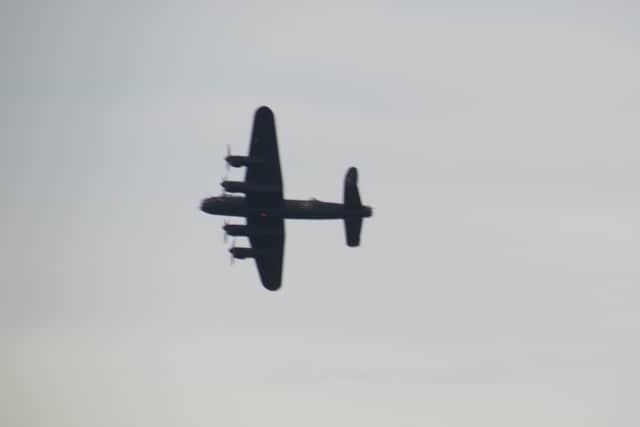

Hugh spoke about a second bomber accident he researched and to members of Market Rasen Rotary Club at one of their lunch time meetings. During the war, there were many aircraft crashes, so many, that most were never documented. The crash Hugh was going to discuss was unusual because records were kept of both the crash and the subsequent investigations. Lancaster ME641, of 166 Squadron, lifted off into the night of 24 February 1944 from RAF Kirmington, heavy with fuel and bombs, climbing on its route towards Reading then on to bomb a ball-bearing factory at Schweinfurt in southern Germany. Five minutes later, Lancaster JB457, from Binbrook (460 Squadron RAAF), which was returning after a three-hour training flight, collided with ME641 over Owersby. Both aircraft were badly damaged in the collision. JB457 was spun through 180 degrees and crash landed at Willoughton. All the crew baled out and survived. ME641 was spun through 90 degrees and two of the crew baled out and they landed in a farmyard in Claxby. The aircraft then struck the ground about 100 yards from Bully Hill Farm in Tealby before coming to rest beside the Caistor High Street. The aircraft was still fully laden with fuel and ammunition, including an 8,000lb ‘blockbuster’ bomb. The family living at the farm were awoken and thought the haystacks must be on fire. One of the family went out and helped to rescue one of the crew, amid ammunition exploding. All the remaining crew were killed. The blockbuster bomb then became detached and rolled down the hill! Another elderly occupant of the farmhouse reported in 2006 that when he was a very small boy he remembered seeing the aftermath of the crash and the lorries removing the wrecked aircraft. Later investigations concluded that neither aircraft had seen the “aircraft recognition lights” of the other aircraft. These lights were a combination of white, red, green and amber on the fuselage and wings used over friendly territory for identification. Hugh showed copies of various flight records and Inquiry reports relating to this crash and the planes and crews. He also had maps showing the location of the two airfields and the likely flight paths that the two planes would have taken. Hugh said his father-in-law was responsible for local crash reporting during the war and had a team that would go out to the crash sites and record as much information as possible. Hugh said he had been in contact with relatives of the then occupants of the farmhouse near where the plane crashed at Bully Hill Farm and went with them to where they thought that the crash had occurred; Hugh came across a piece of aluminium and thought it could have been from the plane. The piece was identified by the Heritage Group at East Kirkby who immediately recognised it as part of the engine cowling from a Lancaster.
Hugh continues to research all manner of items regarding local history around Tealby and is the source of many fascinating stories he is willing to share with others.