
New book reveals what happened to a Redbourne family who left for Africa in 1862
What begins in the estates of Lincolnshire stretches across oceans, frontiers and generations in a remarkable new memoir ‘A Monkey’s Wedding - A Pioneering Family’s Seven-generation Saga’ by author and storyteller Stuart Lloyd.
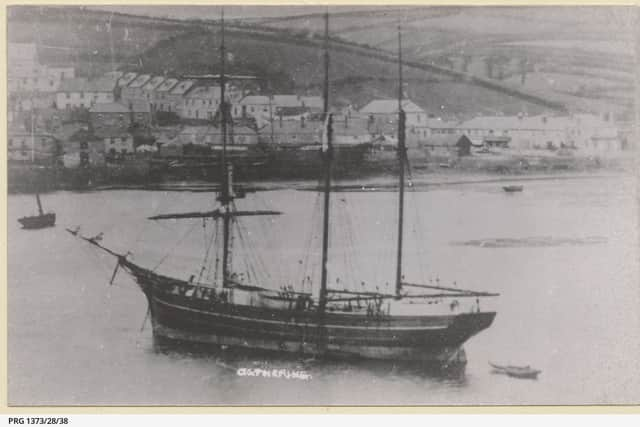

Part memoir, part family history and part historical adventure, ‘A Monkey’s Wedding’ traces the fortunes of gardener George Seymour and his wife Mary Ann, whose search for opportunity carried them and four children (all aged under 8) in 1862 from the Duke of St Albans’ Redbourne Estate, near Scunthorpe and Gainsborough, to Durban, South Africa, where they became soldiers, settlers, prospectors, adventurers and pioneers. One great-great grandson Roger Seymour even went onto play rugby against the British Lions.
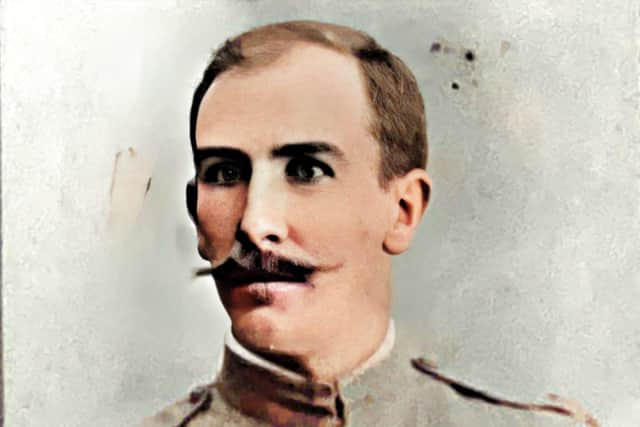
The story follows generations who witnessed some of the defining chapters of colonial southern African history: the arrival of 1820 British settlers, 1890 Pioneers in Rhodesia, the diamond rush, the gold boom and the rise and fall of fortunes on a continent that rewarded courage as readily as it punished it. Their son George joined the British South Africa Company Police as a trooper on the pioneer column into Rhodesia as a 17-year-old. Ten years later in the Boer War he was one of just 8 officers in the Imperial Light Horse who rode in to relieve the famous siege of Mafeking.
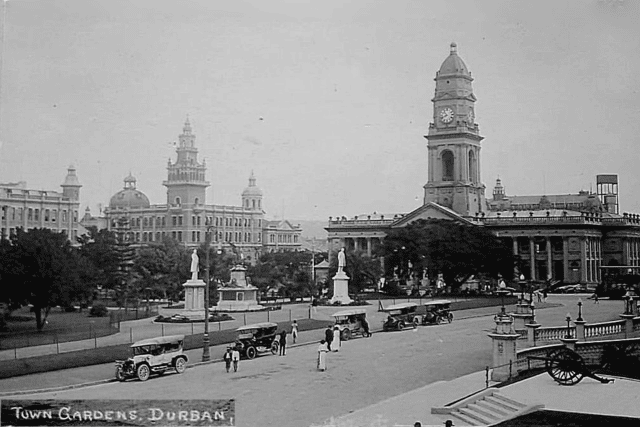
At its heart are ordinary people making extraordinary decisions. Young men and women who left behind familiar English landscapes in pursuit of a better life, never knowing whether the gamble would bring prosperity or hardship. In the case of George Seymour, he came up trumps, the former head gardener from Redbourne designing the Durban Town Gardens and being called ‘a colonist of first-stamp’
For Lloyd, the story is deeply personal, following the questions he had after the recent passing of his mother. “My family history reads like something between a frontier adventure and a cautionary tale,” he says. “Sadly, Mum -- a keen gardener -- seems to have known precious little of her English ancestry.”
The book also explores the complex connections between Britain and southern Africa, revealing how family identities were shaped by both worlds over more than two centuries.
Rich with colourful characters, forgotten history, humour and tragedy, ‘A Monkey’s Wedding’ is a story of migration, resilience, reinvention and belonging. It is also a reminder that many families across Britain have branches that disappeared into the wider Empire, leaving descendants still piecing together the journey generations later.
Today, Lloyd lives in regional Australia, but the story began long before him in the towns, villages and neighbourhoods of England that first launched his family into the world.
Douglas Rogers, author of ‘The Last Resort’ and ‘Two Weeks in November’ described the book as, “A rollicking adventure, written with wit and grace, about a remarkable family that spanned an empire and helped forge a continent.”
‘A Monkey’s Wedding’ is available now in hardback, paperback, and eBook from Amazon, and as eBooks on Kobo and Barnes & Noble.
This is Stuart Lloyd’s 21st non-fiction work, and he has been described as ‘the perfect storyteller’ by The Telegraph. He has travelled to 75 countries as an international travel writer and writes WW2 military history, colonial history, travel and music. You can see more about him at stuartlloyd.net