
New drone training package will make council investigations more time-efficient
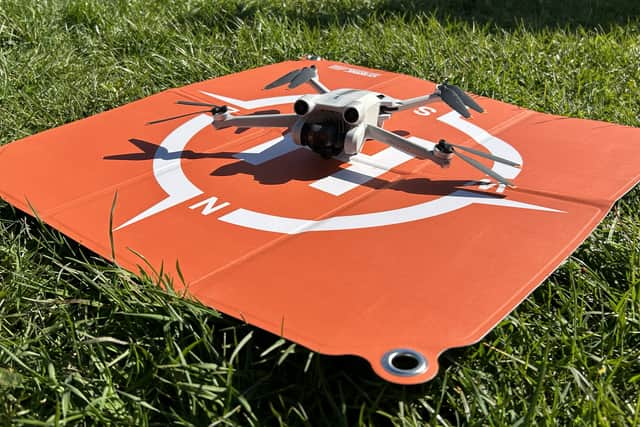
There will be new eyes in the sky at work with a new drone in North Kesteven helping to save time and money while supporting more effective investigations and prosecutions by council officers.
The drone will be used to identify possible planning enforcement issues, detect fly-tipping and nuisance bonfires, inspect private rented housing roofs, and more.
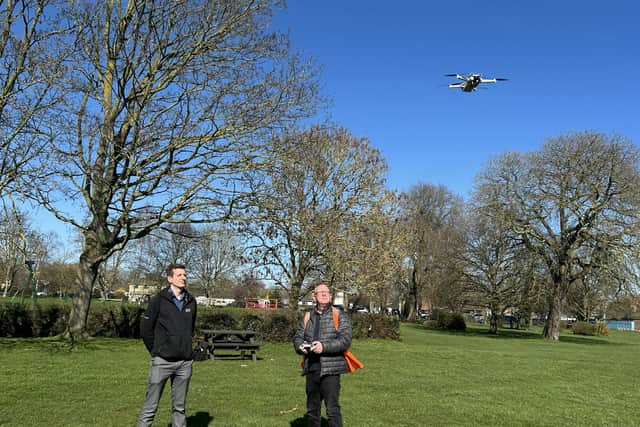

Drone usage will be overt and pilots will have to consider data protection and sensitive sites as part of their flight planning.
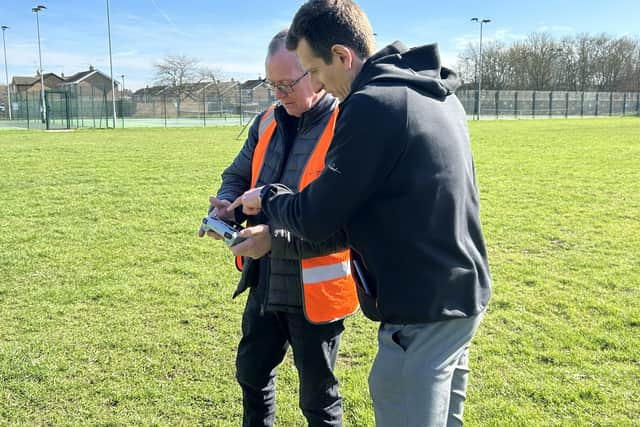
North Kesteven District Council has created an above-and-beyond training package to make sure staff are flying with confidence and legally in compliance with the Civil Aviation Drone Code. The package includes training of staff, accreditation of pilots, work procedures and emergency actions.
After successfully using contracted drone technology to map emissions in smoke control zones, the Environmental Health team saw its wider potential. They identified several ways a drone could help prevent and detect crime, increase investigation efficiency, and reduce potential health and safety risks.
These include locating fly-tipping, identifying waste accumulations, assistance with contaminated land site walkover inspections, locating sources of insect outbreaks, assessing for compliance with notices, roof inspections, locating bird scarers, light pollution cases, and smoke control zone enforcement.
Rather than use contractors, the council decided that having its own trained drone pilots would be more effective.
Councillor Mark Smith, whose Executive Board oversight includes environment and public protection, said: “The council will utilise drones to obtain video and photographic footage of premises or land for use in detecting and preventing crime, investigating an environmental concern, carrying out enforcement investigations and, crucially, being able to view sites that would be difficult to access from the ground.
“This is great news and will help ensure that the council’s investigations are more time efficient, as well as removing potential health and safety issues, such as fly-tipping.
“We would also like to reassure residents that this will be carried out in targeted areas following intelligence and not through a broad-brush approach.”
Bohdan Dawyd, Environmental Health Officer, at NKDC said: “Drones have become a vital tool in investigations, enabling teams to gather accurate, real-time information quickly and safely.
“By providing aerial perspectives that would otherwise be difficult or time-consuming to obtain, they enhance evidence collection and reduce risk to colleagues.
“Through structured procedures and targeted training, we’re ensuring drone deployments are both effective and compliant, ultimately improving the quality and efficiency of investigative work.”