
Hugh reveals history of paper making in Lincolnshire to Rotarians
Rotarian outlines his research of the history of paper making
Paper making in Lincolnshire 1600 to 1900 was the title of a talk given to Market Rasen Rotary, by one of its’ members.
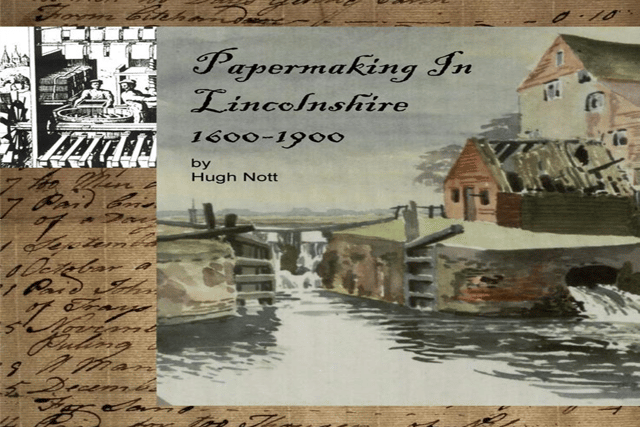

Hugh Nott spent much time researching and recording paper making history and then how paper was made in Lincolnshire, particularly in Tealby (and to a lesser extent in Caistor), which eventually resulted in the publication of a book: Paper Making in Lincolnshire 1600-1900.
Hugh referred to his book throughout his interesting talk.
Starting with the development of the written word from hieroglyphics to our alphabet and language today, Hugh also talked of the development of writing materials, from bamboo, waxed tablets, parchment and eventually paper. Similarly, he took you through the geographic development of the printed word from China in 105 AD through various countries until England got on the bandwagon in the 1600s.
When printing began, so did the need for paper, and this was produced from macerated rags and vegetable matter, thoroughly soaked, firstly in a caustic solution and then in clean water, laid on drying screens and then dried to use. Watermarks could be introduced by having a thinner layer of paper over the marks in the bottom of the drying tray.
Fresh clean water was needed and this water used to soak the raw materials but also to drive the water wheel to provide energy for the mill.
The book Hugh wrote refers to the families involved, their financial ups and downs, the sale of businesses following bankruptcy or death. It has details about the three mills in Tealby on the headwaters of the River Rase.
By 1837 local paper mills had been turned into housing, as paper making became more industrialised, and following the economic upheaval caused by the Napoleonic wars.
Hugh’s talk has been given to many interested societies and organisations throughout the county.