
'An exciting opportunity' - Developers champion plans for 102 'cutting-edge' homes on farmland near Boston
The company behind plans to turn a patch of agricultural land on the outskirts of Boston into a residential development of more than a hundred homes has spoken of its vision for the site.
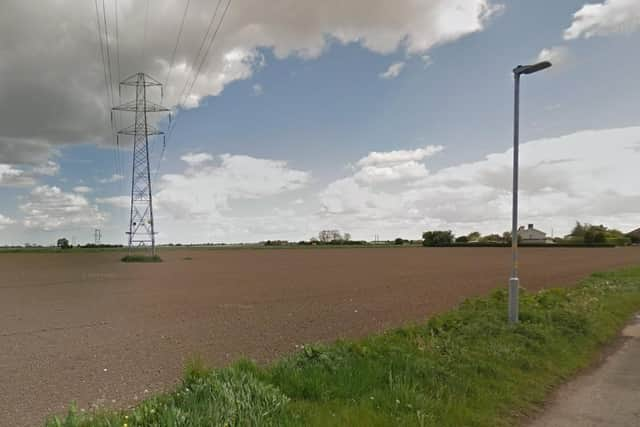
Boston New Homes Limited has asked Boston Borough Council for permission to build 102 homes on farmland off White House Lane, Fishtoft.
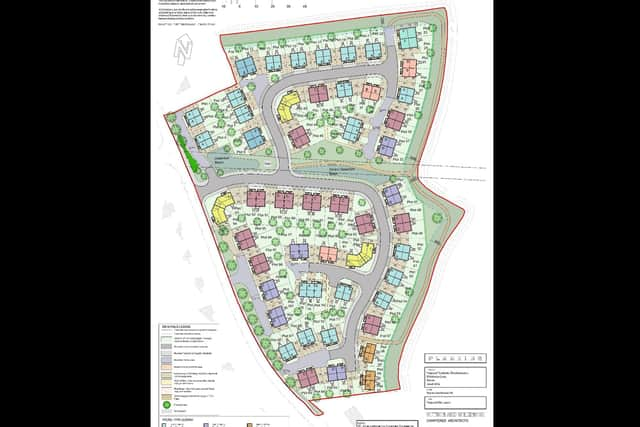

It follows separate plans to build up to 83 dwellings on the site. In January 2019, outline approval was given for such a development; however, this expired two years ago.
The 102 would break down as four one-bed units, 48 two-bed units, 46 three-bed units, and four four-bed units, with six being dormer bungalows, with 21 designated as affordable homes.
In a statement to The Standard, a spokesman for the application described the dwellings as ‘cutting-edge homes, set to redefine modern living’.
“Boasting top-notch energy efficiency with A-rated standards, these residences offer sleek, contemporary designs and spacious living areas tailored to meet the needs of young families,” the spokesman continued. “Positioned within a vibrant new community, these homes promise affordability without compromising quality.”
The application is due to be considered on June 19.
Boston New Homes Limited says it hopes to have the development complete by July 2025, describing the development as a ‘significant milestone in Boston's housing landscape’, and as ‘an exciting opportunity for families to call this thriving neighbourhood home’.
The previous application attracted some opposition from local people, with four representations made. Concerns included: increased traffic, that the road was not wide enough, increased noise, and increased pressure on local GP services.
At the time of writing, seven representations have been made, the majority opposed to the plans. Concerns this time include: increased traffic (‘l feel the roads now cannot cope with anymore traffic increase’, one writes), loss of ‘valuable’ agricultural land, loss of privacy, loss of a natural ecosystem, loss of views (a ‘wide view of the open landscape with brilliant sky views and the open fields being transformed into the view of front and back yards of 102 dwellings’, another writes), an increase in noise, and access to primary school places.