
More strikes planned for Horncastle area schools

The Trust that runs the two secondary schools in Horncastle area has strongly refuted claims by trades union officials that its leaders have failed to meaningfully engage in talks to resolve a staffing dispute, as more strike action looms.
Teaching and support staff members of NASUWT and NEU under the Horncastle Education Trust have have held multiple strikes over the past year over job cuts, working conditions, trade union recognition and the future organisation of schools within the Trust.
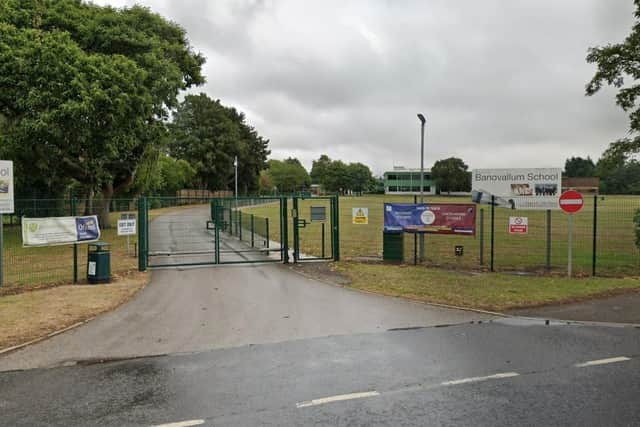
Schools involved are Banovallum School and Queen Elizabeth's Grammar School in Horncastle, alongside New York and Frithville Primary School in Boston and Huttoft Primary School.
Lincoln and District Trades Council – the local body representing local trade unions and branches – has expressed its "deep disappointment” that members of the NASUWT and NEU teaching unions will once again be taking strike action in their dispute with Horncastle Education Trust, following what they say is “the failure of the Trust's Chief Executive Officer to meaningfully engage with the unions through ACAS”.

The unions claim they have made clear throughout the dispute that they want to reach a negotiated settlement. They have engaged in discussions, participated in ACAS mediation talks and repeatedly sought a way forward that would resolve the dispute and avoid further disruption to pupils, parents and staff.
Despite this, they say negotiations have failed to deliver the progress necessary to reach a settlement.
As a result, the unions are preparing for further strike action on September 15, 23, 24, 29, 30 and October 1.
Unless meaningful progress is made, the unions have indicated that industrial action could escalate to indefinite strike action from the fourth week.

However, a spokesperson for the Horncastle Education Trust responded: “We strongly refute the fact that the continuation of the strikes is down to the actions of one individual."
Bradley Wall, Chair of Lincoln and District Trades Council, said the dispute should have been settled before reaching this point: “We are now back in a position where teachers are being forced to take further strike action because the Trust's Chief Executive has failed to properly engage with the unions.
“Strike action is not the outcome that unions want. It is what happens when every reasonable avenue for achieving a negotiated settlement is blocked.”
ACAS has now indicated that it is looking at whether discussions can take place with the Trustees, rather than continuing solely through the Chief Executive.

The Trades Council commented: “The Trustees cannot simply stand on the side-lines while this dispute continues to escalate.
“The Trustees now have an opportunity to step forward, take responsibility and help deliver the settlement that staff, parents and the wider community want.”
The Trades Council is calling on the Trustees to work directly with ACAS and the unions to ensure that meaningful negotiations take place and that every opportunity to reach a positive settlement is exhausted.
The Trades Council said unions have engaged with ACAS and sought agreements that would provide staff with a meaningful voice in the future of their schools, including regular engagement between the Trust and school representatives.

“However, discussions broke down when the Trust indicated that it would not agree to a proposed recognition arrangement because the schools may subsequently move into another Trust.
“Rather than resolving the dispute, the position has left staff with continued uncertainty and increased frustration.”
The Horncastle Education Trust spokesperson countered: “Over the last six months there have been dozens of meetings to try and resolve this dispute – including a significant number through ACAS. The Trust has attended each of these with a genuine desire to find a resolution. In fact, last term we found a way forward on well over a dozen points.
“Not being able to agree to some of the remaining points is not because of a lack of willing, it is because some of what is being requested is simply not possible – particularly as the Trust is going through a process of handing our academies to other MATs.
“We will continue to work alongside any party who can help us find a resolution for the good of our children, families and staff.”
Steve Lloyd from the NASUWT said “Staff cuts have impacted on workload and will have a negative impact on the education provided to students.
“The fact that the Trust refuses to engage in a recognition agreement, or agree key staff policies with union representatives, is a sign of their continued disregard for the needs and concerns of their teachers.”
Elodie Fleet from the NEU said: “Last academic year, Horncastle Education Trust reduced their student facing staff significantly. As a result, this academic year teachers will be teaching an extra 60 – 120 hours per school year with a cut to planning time of almost 30 per cent. The library at Queen Elizabeth Grammar School only being open for three days a week; less teaching assistants will mean reduced individual support for children with additional needs.
“Year groups are being merged, which will have a detrimental impact on children's education.”
The continuing dispute comes after a petition supporting staff in the dispute has attracted 2,613 signatures.
The Trades Council said the dispute is not simply about industrial relations but about the impact that continued uncertainty is having on education workers and the wider school community.
Concerns have also been raised around workload, PPA time, staffing levels, the use of non-specialist teachers to cover subjects, financial management, transparency and the future organisation of the schools.
“That uncertainty is damaging to wellbeing, damaging to morale and ultimately damaging to education,” stated the Trades Council.