
Blocked, overgrown or ‘hazardous’ footpaths leave Lincolnshire walkers frustrated - here’s what to do if you encounter one
Landowners are required to keep public footpaths accessible and signposted
Lincolnshire is known for its stunning countryside walks, with a wealth of well-maintained footpaths - from the rolling beauty of the Wolds and coastal regions, to the historic Fens.
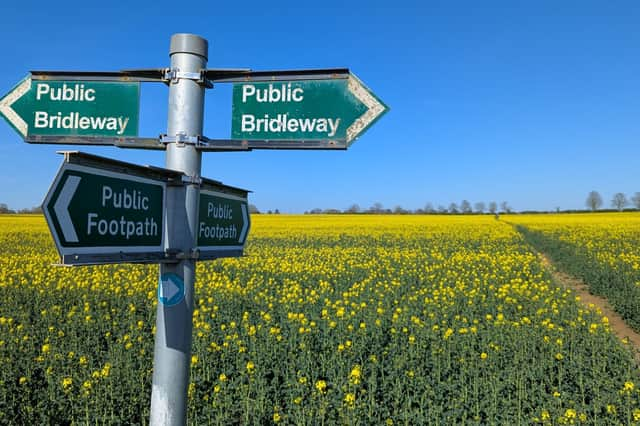

Unfortunately there are times when walkers encounter footpath issues that are frustrating at best, and dangerous at worst.
From 5ft tall stinging nettles blocking routes, to rotten bridges and missing waymarkers - here we share some of the issues encountered by locals - and advice on what you can do about it.
Residents Experiences
Philip Atkinson said: “It is most annoying to look for a path that is clearly marked on the OS map, only to find there are no signs and the route is totally blocked!”
Katherine Meekham, from the Wolds area said: “They vary where I am. A lot in the summer are impassable due to the overgrown paths. Sad, as we have some lovely countryside that doesn’t get used due to this.”
“It would be really helpful if stiles could be made with large dog access,” Judy Pittock suggests. “It’s frustrating to reach a stile and have to turn back because my dog can't get through. Also, warning signs for livestock in fields would be helpful, especially on riverside banks.”
Another resident from the Skegness area agreed: “I was on a 5km loop around footpaths through fields when my dog was blocked half way by an impassable double stile. When I tried to walk around this a few metres away I got shouted at by an angry farmer”.
Phil Scarlet who lives near Metheringham said: “The footpaths where I live are terrible. I’m guessing it’s because we are away from the towns, but they are always overgrown.”
Becky Dujardin from the Boston area adds: “The footpaths here are very difficult, and many are grazed by cows. My favourite route along the river from South Kyme through Chapel Hill to Langrick is often overgrown and has a stile not safe for people or dog-friendly so you have to lift them over, with barbed wire either side.”
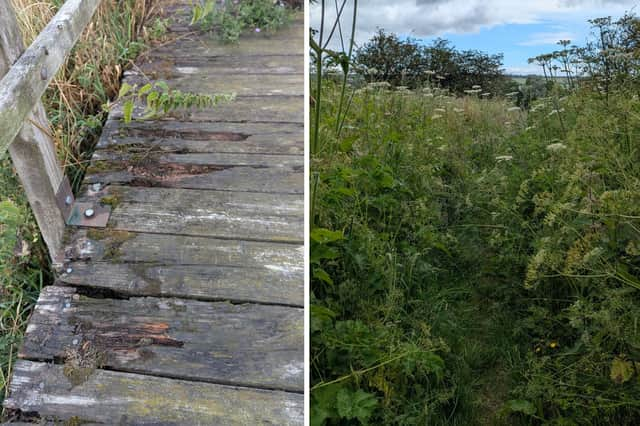
Issues encountered
Other issues raised included footpaths not clearly being defined through crop fields, or left ploughed up, missing waymarkers, overhanging thorny trees, and residents blocking access when a right of way passes across their property.
Some walkers say they take the matter in to their own hands, weed-whacking, cutting back overhanging branches, and organising walking parties to tackle some of the more unruly footpaths.
What the Law says
Landowners have a legal responsibility to maintain footpaths and ensure they are safe and unobstructed - this includes not ploughing footpaths that follow a field edge, and ensuring cross-field footpaths remain apparent on the ground to at least the minimum width of 1 metre, and not obstructed by crops.
Cross field footpaths can be ploughed, but they must be reinstated within 14 days.
Wilfully obstructing a public right of way (including leaving crops blocking it) is a criminal offence under Section 137 of the Highways Act 1980.
The Ramblers Research
New research by the Ramblers has uncovered what they call the “shocking scale of Britain’s blocked paths problem” - warning that millions of people are being denied access to nature. A Ramblers spokesperson said its data showed Lincolnshire County Council “reported 18 live blockages but also disclosed 814 path closures lasting more than a year”, in both urban and countryside areas.
Supporters of the Ramblers' Access Denied campaign will be meeting politicians across Britain in the coming weeks, to call for urgent action to restore public access to nature across the country.
Rachel Mulrenan, Campaigns Manager at the Ramblers, said: “Local paths are often people's easiest route into nature. They are lifelines that connect communities to green spaces, supporting better physical and mental health. Yet too many routes are left blocked, closed or neglected for years."
Advice for walkers
If you encounter a footpath issue you can report it via the FixMyStreet app. Many walkers say this has been an effective way of getting issues resolved in good time. The location of issues should be noted, and photos taken if necessary.
Safety advice for walkers during the colder months is to always check unfamiliar routes before you set off, ensure mobile phones are fully charged, carry warm clothing, water and a torch. What3Words is also a very useful app to make a note of where you have parked, or where you are located if you become injured or lost.
• For more information about public rights of way in Lincolnshire, including a map of all footpaths and bridleways, visit the Lincolnshire County Council webpage.