
Lincolnshire roads rated amber by new government pothole map - but council claims it's 'near impossible' to get green
The councillor in charge of Lincolnshire’s roads claims it would be “nigh-on impossible” to get the top grade in the government’s new ‘traffic light’ rating system.
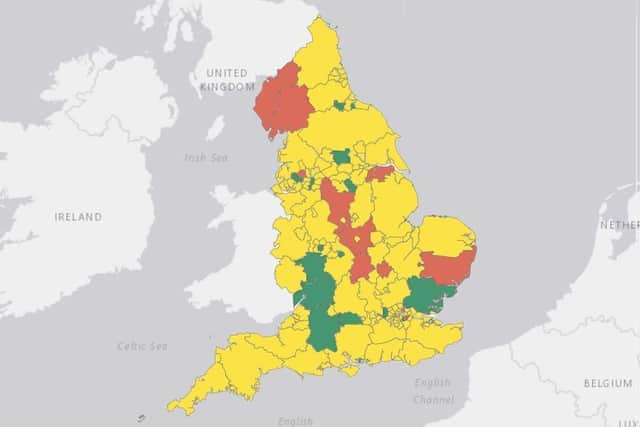
Areas are being graded red, amber and green depending on how well councils are tackling potholes and keeping roads in good condition.
Lincolnshire is rated amber (along with most of the country), with 13 authorities, including North Lincolnshire and Derbyshire, being graded red.
Councillor Michael Cheyne, the Reform executive member for highways at Lincolnshire County Council, says that it’s unlikely to get the top rating due to the huge investment its unclassified roads would need.

“From our perspective, the Highway Service continues to improve, and our road condition statistics support this direction of travel,” he said.
“Whilst we are doing well, we still have more work to do and the size of the task we inherited means that to become a green-rated authority on the map would entail Lincolnshire’s unclassified road network improving further.
“It’s worth noting that, for our county, getting to a green rating under this mapping system is a nigh-on impossible task because of the extremely high level of spend that would be required precisely for that unclassified network.
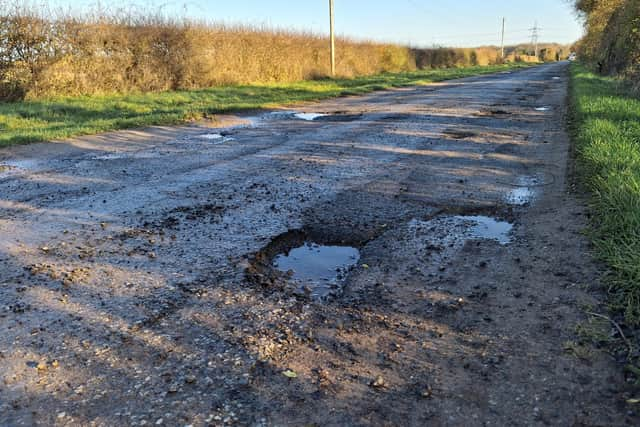
“We are working to improve those roads, but the reality is that we very much need to remain focused on the A, B and C category roads too, and it’s this huge drain on our limited funding that continues to impact on lesser roads.
“This is the first time the measures have been collated in this way. We are keen to work with the Department of Transport to tailor these for maximum transparency going forward.
“At this moment in time, they do not cover efficiency of spend, which is vitally important for a large rural authority such as Lincolnshire.”
The council has been criticised for some time about the condition of smaller rural roads.
One Lincolnshire woman who lives on an unclassified road near Navenby recently said it had cost her at least £2,000 in repairs to her car.
Lincolnshire County Council’s new leader said last year the roads were in a “dreadful” state, and the authority was looking at new ways – such as a JCB pothole filling machine – to improve them.
The Department for Transport doesn’t give an indication of how it reached its ratings, although they are apparently based on figures reported by the council.
Transport Secretary Heidi Alexander said: “For too long, drivers have paid the price because our roads were left to deteriorate.
“I have heard time and again their frustration on footing the bill because they hit a pothole – money they should never have to spend in the first place.
“We’ve put our money where our mouth is, increasing the funding for local highway authorities with £7.3 billion to fix roads and given them the long-term certainty they have been asking for.
“Now it’s over to them to spend the money wisely, and for the first time, we are making sure the public can see how well councils are doing in delivering the improvements they want to see in their local area.
“This government’s record investment will save drivers money on repairs, make roads safer and help restore pride in our communities.”
The interactive map shows every local authority’s rating, to highlight best practice and drive improved performance from councils.
‘Amber’ ranked highway authorities show some qualities of investing in more long-term preventative measures rather than just patching up potholes, while also maintaining good road conditions and investing significantly into improving local roads, but there is room for improvement in individual areas. red lighted areas will get extra support to improve processes.
The government said it increased funding is a multi-year investment to improve the condition of roads. This allows authorities to repair potholes effectively and move away from expensive, short-term repairs and instead invest in long-term preventative measures.
As an incentive to better roads, access to full future funding allocations will be linked to performance, ensuring councils get on with the job and use taxpayer money efficiently to repair and maintain their roads.
It is also providing up to £300,000 to help councils access and adopt more innovative approaches to maintenance, including uptake of longer-lasting, low-carbon materials for repairing roads faster, more efficiently and far less often.