
Police and Crime Commissioner ‘not surprised’ at news his role to be scrapped

The Police and Crime Commissioner for Lincolnshire has said he is disappointed but not surprised that his role is to be scrapped under Government proposals for policing reform.
The Government announced today (Thursday) that PCCs will be scrapped at the end of their electoral cycle in 2028, with their roles absorbed by existing mayors and council leaders.
It alleges the £100million savings to taxpayers will result in millions reinvested into more neighbourhood police on the beat, by cutting the cost of bureaucracy to fund frontline policing.
They said: “At least £20 million will be reinvested every year as a result of efficiencies in police governance, enough for 320 constables.”

The government claims public understanding of, and engagement with, PCCs remains low despite efforts to raise their profile as being elected representatives of local people to hold the forces to account, although there has been historically low voter turnout. Two in five people are unaware PCCs even exist.
Their roles will be absorbed by regional mayors wherever possible, meaning measures to cut crime will be considered as part of wider public services such as education and healthcare.
In areas not covered by a mayor, this role will be taken on by elected council leaders. The government will ensure there is continuity of the support services for victims and witnesses that are currently provided by PCCs.
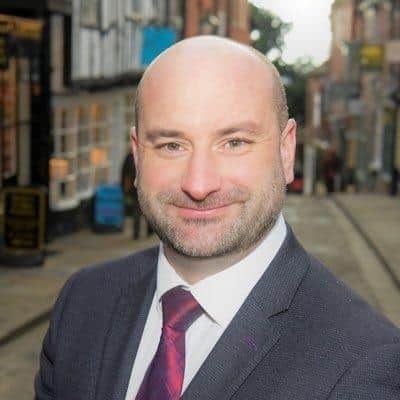
Marc Jones was elected as Lincolnshire’s second PCC in May 2016, replacing Alan Hardwick. He was re-elected in 2021 and then again in 2024, when there was just 19.08 per cent turn out for the election
Commenting on the news he received today, he said: “It is not a surprise to me that this decision has been taken, given the Government’s push for Mayor’s to take over the PCC functions where their geography aligns.
“Despite me being clear in my mind when I was elected in 2024 that this would be my last term of office, I am hugely disappointed that I will not be handing the baton on to a new PCC in 2028 to continue with the valuable work. The small, dedicated team of professionals who work in the office of police and crime commissioner are exceptional and work tirelessly for our communities. I know that they will continue to work alongside me to deliver the best possible services until the changes take affect.”
However, he said he is disappointed by the “very muddled and rushed approach”, with some areas retaining the role of the PCC through a deputy mayor and others, like Lincolnshire “being left with a much less transparent and democratic approach delivered through a council”.
Mr Jones said: “Again, our area is being treated as less important than others and it will undoubtably lead to a greater gap between those areas with directly elected representation and those with a simple council function. This is not in the interests of Lincolnshire communities.”
He said his main focus will remain on ensuring Lincolnshire Police gets the fair funding they deserve and supporting the Chief Constable to provide the most efficient and effective policing with the budget, a point he put directly to the Policing Minister this morning.
"I will continue to be the strong voice for policing and crime for Lincolnshire for as long as I am privileged to hold this position,” he said.
The Mayor of Greater Lincolnshire, Dame Andrea Jenkyns, has welcomed the announcement ahead of the Government's White Paper on delivering police reform.
The Mayor, who heads the Greater Lincolnshire Combined County Authority (GLCCA), believed the policing responsibilities will shift to her office and said: “This is a significant step forward in the devolution journey for local places, and should strengthen local leadership and accountability. By transferring responsibilities to the Mayor and the GLCCA, we can ensure a seamless transition avoiding potential disruption to vital services. We are committed to working with the current Police and Crime Commissioners and their offices for Lincolnshire and Humberside to ensure this is a smooth and productive process over the next two years.
“These changes should create a single, unified structure where policing priorities can be aligned with the Mayor and the Combined Authority's wider strategies for transport, housing, skills and economic growth.”
The move comes as part of a government White Paper on policing reform designed to raise standards, strengthen performance management and “end the postcode lottery in crime outcome”, while restoring local neighbourhood policing.
Home Secretary, Shabana Mahmood, said: “The introduction of Police and Crime Commissioners by the last government was a failed experiment.
“I would like to recognise the efforts of all current and former Police and Crime Commissioners, and thank them. These individuals served their communities and will continue to do so until they have completed their current terms.”
Other key measures already announced by the government that will be in the White Paper include a new National Centre of Policing, bringing together support services such as IT and forensics, and a Police Performance Unit to drive up standards.
In response to questions about whether the PCC responsibilities would transfer to the Mayor or the county council, a Home Office spokesman explained the announcement was about police governance rather than boundaries, “nothing was today said about any merger or restructure”. He said: “In relation to the future governance arrangements in areas where police forces stretch across multiple authorities or mayoralties, we would expect the local policing and crime board to include the leaders from each upper tier authorities, mayors (where they exist in the force area) and up to two co-opted members. “Further detail will be set out in our forthcoming white paper and this is subject to legislation in the second session, subject to Parliamentary time.”
Association of Police and Crime Commissioners chair, Emily Spurrell, PCC for Merseyside, said: “On behalf of our communities we are deeply disappointed by this decision and the lack of engagement with us.
“For more than a decade, directly elected Police and Crime Commissioners have transformed policing accountability and delivered essential support services for victims of crime. Having a single, visible local leader – answerable to the public – has improved scrutiny and transparency, ensuring policing delivers on the issues that matter most to local communities.
“Abolishing PCCs now, without any consultation, as policing faces a crisis of public trust and confidence and as it is about to be handed a much stronger national centre, risks creating a dangerous accountability vacuum.
“Many of today’s flagship government missions – supporting victims, working with local partners to prevent crime, tackling violence against women and girls – originated with and are delivered by PCCs, reflecting the priorities of our communities.
“Whatever follows in our place must be rooted in local and national accountability, clear and identifiable leadership and connected to local communities. The public deserve nothing less.
“PCCs have worked hand-in-hand with the Home Office and operational policing to shape a police service fit for the future and confront policing’s biggest challenges. We remain committed to ensuring that public accountability remains at the heart of police reform.“