
Bird watching in China
Rasen Rotary has a huge range of speakers to interest and challenge the Rotarians.
Last week David Cohen, an ornithologist who works with the Wildlife Trust, made his second visit to Rasen Rotary.


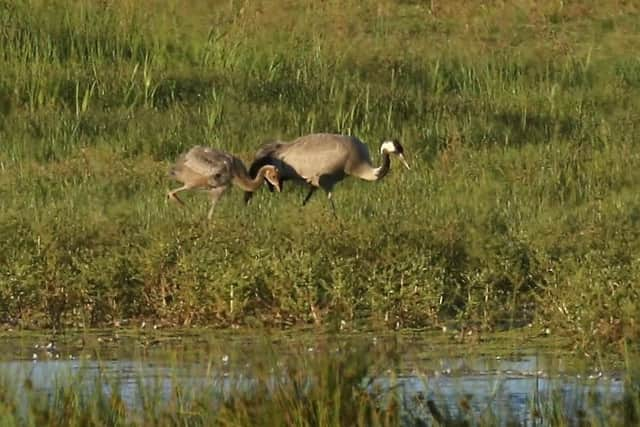
The first time, a Zoom visit during Covid saw David talking about the re-introduction of common cranes to wetlands in the south of Lincolnshire. (The common crane is quite a large but shy bird, about four feet tall with a wing span of up to six feet and weighing some 5.5Kg. These birds were quite common up until the 16th Century after which they were hunted for food to almost extinction. The population is now growing).
David is now retired and has spent many years travelling the world, drinking the wine and observing birds. He has recently been to China and talked about his ornithological experiences in that country. He has recently returned home from a trip to Sichuan and he had also been to Yunnan in 2020.
China, he said, was an interesting place with a population of 1.4 billion people with a reputation of not being too wildlife friendly. They tend to eat a great deal of wildlife and together with Vietnam are the biggest market for trade in endangered species. Items like tiger parts and pangolins (the most traded creatures on earth) often end up in China where pangolins are viewed as a delicacy. Pangolins are also viewed as a status symbol because if you can afford to eat them you must be very wealthy and of high status. The scales, covering the surface of most of the pangolin are made of keratin (same as our fingernails) and are used in all sorts of herbal remedies and even as an aphrodisiac.
David had a collection of photographs of the areas he had been visiting and had photographs of the birds that he had been able to see. His latest trip to Sichuan began in the capital city of Chengdu, with a population of 22 million people is the fourth largest city in China. It has a GDP of US$350 billion and is one of the most important economic, financial, commercial and communication centres in China. Its surrounding area is known as the country of heaven and the land of abundance.
David’s visit was part of an organised ornithological trip to view the many and varied bird life in this part of China. The area around Chengdu was at quite a high altitude and the scenery was spectacular. Rotarians were shown a range of pictures of the area and the birds that he had managed to photograph.
Although, as he had already mentioned, the Chinese are well known for eating most things, in particular endangered species, David was interested to note that the younger population had developed an interest in bird photography. On one day they had encountered a local ‘birding’ photography competition where there were probably 200 or 300 young Chinese, all equipped with the latest, expensive, camera gear, all looking to capture a rare or exotic bird picture. Because of this growing interest in bird photography, it had led to the introduction of bird watching hides and attempts to attract these rare birds to them. This has really transformed bird watching in China and other parts of Southeast Asia because many birds are very difficult to find in the dense forests but will now come out in front of the hides where food has been provided to attract them out.
One of the top birds to see in China are the pheasants, many of which are spectacular, particularly in colour. Because of their size they have been easy to hunt and consequently now remain hidden in the deep shadows of the forests. The introduction of the bird hides has now tempted these reluctant birds out. The males are the ones with the bright colours which they use to attract a mate, the females tend to be much more subdued as they will tend the eggs and wish to remain inconspicuous.
One of the hides that David visited had a fresh water pool constructed in front of it with numerous perches of twigs arranged all around. This attracted the birds down to drink and bathe and so gave wonderful photo opportunities.
They also visited Wawushan, on a plateau high up at an elevation of nearly 3,000m. Here they saw a red panda up in a tree. These are smaller than the Giant Panda, which is very rare and only to be seen in special reserves. The red panda is slightly more active than the Giant version, it feeds down on the ground on bamboo and then climbs up into the treetops and finds a perch to go to sleep.
David spoke of birds unique to China, some birds that are endemic to China and that part of the Far East. They were lucky to see some of these rare endemic birds.
Despite its high population numbers there are vast areas of China which are uninhabited and remain unspoilt and unexplored habitats. David was able to show pictures looking across the mountain ranges with large areas of untouched forest.
David then visited part of the large Tibetan plateau and showed pictures of several birds that they encountered up there, before showing pictures he took in Yunnan in 2020. There were no security issues with customs or security going into or travelling around China.