
NFU calls for funding reinvestment to help Lincolnshire farms meet environmental delivery ambitions
The NFU has said that next year’s budget for agri-environment delivery needs to be around £1bn to meet demand from Lincolnshire farmers and those across the country.
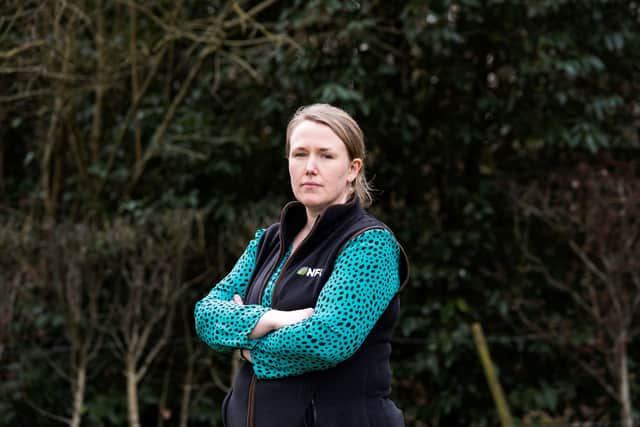

To meet the huge demand from county farms and those further afield the NFU has said that level of budget for the Sustainable Farming Incentive (SFI) would be needed but money could be recycled with other schemes coming to a close.
Defra could commit that funding into SFI27 to allow farmers to get involved and continue to deliver for the country by funding the environmental work, which is required to support the government’s legally binding targets.
The Government's agri-environment scheme pays farmers to adopt and maintain practices that help produce food sustainably and protect the environment.
The call comes as new figures show that the UK invests significantly less in agriculture than other economies.
Those farming in Lincolnshire could then seek an agreement next year but going forward the scheme would need that level of budget, be opened early and have a clear long-term plan behind it.
The NFU’s analysis shows that 48,000 farmers are eligible to apply including those in the county.
With strong appetite already demonstrated for SFI26, this would enable farmers to continue the environmental work they have delivered on behalf of the government and the public for many years.
Eligible applicants would include those whose SFI23, expanded SFI, Countryside Stewardship and Higher Level Stewardship agreements are all due to expire by and in 2027, as well as those unsuccessful in securing an agreement this year.
The last application window for SFI ran out of budget in less than six hours leaving many farmers unable to claim and future demand could be even higher.
NFU Vice-president Robyn Munt said: “When farmers invest, the benefits reach far beyond the farm gate, strengthening environmental delivery, domestic food resilience and rural communities across the country.
“Farmers have shown in their droves that they want to take part in agri-environment schemes. The experience of SFI26 left no doubt about the strength of that demand.
“For years, the government has contracted farmers to deliver the environmental work needed to underpin its legally binding targets.
"Farmers have committed land, time and resources to restoring hedgerows, creating buffer strips and improving soils all while continuing to produce food.
“As existing agri-environment schemes come to an end and funding is freed up, Defra must honour its side of the partnership with farmers by reinvesting that money in SFI27 and ensuring its budget matches demand.
“It should open the scheme in early 2027 and ensure the wider ELMs (Environmental Land Management schemes) are fully functioning, alongside publishing a clear ELMs strategy which would give farmers the certainty to plan and invest.
“The ball is now firmly in Defra’s court.”
The NFU’s key asks for SFI27 have been informed by NFU farmer and grower member feedback through two SFI surveys on their SFI26 experiences and the approach to application windows.
The NFU's call follows new Organisation for Economic Co-operation and Development (OECD) figures, which show that the UK invests significantly less in agriculture than other economies.
Support amounted to just 0.2% of GDP between 2023 and 2025, around half the OECD average.
The OECD has also called for UK farmers to be given greater certainty through stable, long-term support schemes. It said clear, multi-year funding would help farmers plan how they use their land and invest in their businesses, pointing to uncertainty over future environmental payments and recent problems with the rollout of schemes in England.
Ms Munt continued: “The OECD’s findings underline that creating the right conditions for British farming to succeed is not simply an agricultural priority, but a national resilience imperative.
"A stable and predictable agricultural policy would give farm businesses the confidence to plan for the long term, withstand global shocks, produce the nation’s food and continue delivering for the environment.
“A properly funded SFI27 within a fully functioning environmental scheme offer, backed by a clear long-term plan, is central to providing that certainty and building a secure, resilient food system.
“Lincolnshire farmers and those across the country are ready to play their part.
“Defra must now give them the tools and confidence to do so.”
NFU key asks on SFI27:
Provide an SFI27 budget that matches farmers’ ambition to deliver for the environment. The NFU estimates that a budget of more than £1bn will be required.
Open SFI27 in early 2027, allowing agreements to begin from 1 April 2027. Farmers whose existing agreements are expiring should be prioritised to prevent a break in environmental work.
Allocate funding on a £/hectare basis to give as many farmers as possible access to the schemes, provided payment rates remain financially viable and properly reward farmers for the work involved.
Urgently address the lack of access for common land to SFI and Countryside Stewardship Higher Tier.
Publish a plan for ELMs for the rest of this Parliament, setting out scheme opening dates and transparent budget information so farm businesses can plan ahead with confidence.