
Severe ME Week: Lincolnshire woman calls for greater awareness of severe ME
"Simply getting washed and dressed with support can cause a significant crash”
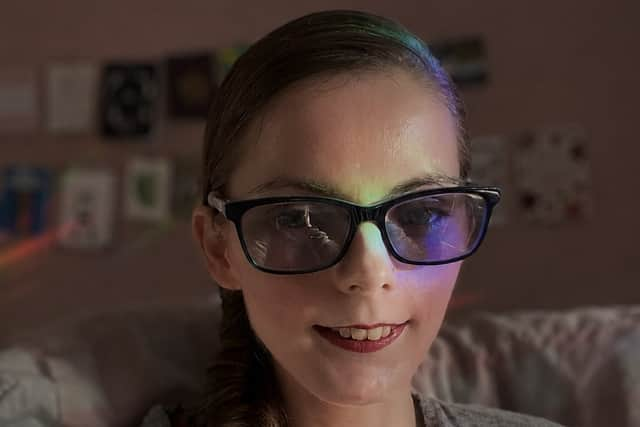
As part of Severe ME Week 2026 (3rd – 9th August), Naomi Gilchrist, 33, from Lincolnshire, is sharing is sharing her story to raise awareness of a condition that remains widely misunderstood and to highlight the challenges faced by people with severe Myalgic Encephalomyelitis (ME).

It is estimated that at least 404,000 people in the UK have ME (Myalgic Encephalomyelitis), also known as CFS (chronic fatigue syndrome), and around 25% of these people may have severe or very severe symptoms for prolonged periods. ME is a multisystemic disease. Symptoms include profound fatigue, sleep disturbance, post-exertional malaise, cognitive difficulties and a range of other symptoms including pain, headaches, nausea and intolerance to lights and noise. The severity and intensity of ME symptoms means that people can be housebound/bedbound for years often needing support with daily activities.
Naomi's illness began in 2014 after contracting flu, from which she never fully recovered. Despite repeatedly seeking help, it took two years before Naomi received a diagnosis, and as her condition deteriorated, it was classified as severe ME.
Before becoming ill, Naomi was studying for an undergraduate Master's degree in nursing, but as her health worsened, she had to leave university.
Today, Naomi lives independently in an adapted home, supported by personal assistants and her father, who help her safely manage daily life. Naomi explains, "Most of my day is spent in bed, and severe ME means that even the smallest tasks require careful planning and pacing."
Activities many people take for granted can trigger Post-Exertional Malaise (PEM), a worsening of symptoms that can occur hours or days after physical, cognitive or emotional exertion. "Simply getting washed and dressed with support can cause a significant crash. A bath can leave me much worse later that day or even the next day," states Naomi.
Naomi relies on her personal assistants for a wide range of support, including personal care, meal preparation, medication, attending appointments and collecting essential supplies. Her father also provides practical support and help in emergencies. Naomi also uses a wheelchair full-time and relies on a range of adaptations, including a profiling bed, specialist mattress, bath lift and voice-controlled technology.
“One of the most difficult aspects of severe ME is its unpredictability. I wake up exhausted every morning, but I never know when my energy will suddenly crash, how severe it will be or how long it will last."
Naomi calls for greater understanding of the condition and wants people to understand that severe ME is far more than fatigue; she also experiences severe brain fog, memory problems, muscle pain, nerve pain, weakness and sensory sensitivity. "The best way I can describe it is to imagine the worst hangover you've ever had, combined with a severe case of flu and the feeling of not having slept for a week. Rest doesn't relieve it," explains Naomi.
At its most severe, sensory overload and pain can leave her temporarily unable to move or speak. Her body can become so overwhelmed that it essentially shuts down, and during those episodes, she is only able to communicate by blinking or squeezing someone's hand.
Despite the significant challenges she faces, Naomi has focused on building a life that brings her happiness. Naomi enjoys being a pen pal, although writing even a short postcard can sometimes take weeks or months to complete due to her symptoms. She also enjoys crafting and blogging when energy levels permit.
While Naomi grieves aspects of her life she can no longer enjoy, such as her love of ballet, Naomi is also determined to make the most of the life she has today. "This illness has turned my life upside down, but I've created a new life for myself, and I'm happy with what I've built. I want people to understand that severe ME is not simply being tired. It is a life-changing, disabling illness that affects every aspect of daily life. Too many people with severe ME are left to navigate this illness alone," says Naomi.
The ME Association is part of a group of charity representatives and clinicians who are working with the Department of Health and Social Care on an action point from the ME/CFS Delivery Plan which is developing a template service specification for the ME/CFS specialist
referral services. Originally, this was due to only cover people with mild and moderate ME/CFS. Following our input, the plans now include people with severe ME/CFS, helping to support the commissioning of referral services for people with mild, moderate and severe ME/CFS.
Martine Ainsworth-Wells, trustee and campaigns director at The ME Association, said, “This August, Severe ME Week is an important opportunity to raise awareness of the condition. Many people like Naomi are confined to their homes or beds, experiencing debilitating symptoms that affect every aspect of daily life.
Naomi hopes that by sharing her story, more people will understand the true impact of severe ME and the need for better support and understanding. The ME Association will continue to campaign to raise awareness of the inequalities affecting this large patient community, and we want people with severe ME to know they are not alone.”
For further information and support, visit The ME Association: https://meassociation.org.uk/about-the-mea/campaigns/severe-me-week/