
Student from Lincolnshire wins prestigious national award
On 8 July 2026, Gabriella, who grew up in Boston, was celebrated at the eighth annual Student Social Mobility Awards for overcoming adversity to succeed in her studies and beyond.


With a reduction in available graduate roles, fierce competition for jobs, and the freeze on student loan repayment thresholds, many students have been left wondering whether university is still ‘worth it.’
Gabriella’s inspirational story shows that for many students, university still has the power to transform lives for the better. From growing up in Boston to winning the Government and Public Sector Award, she has come a long way.
From a young age, Gabriella had an interest in finance. She helped her parents to save money, and even appeared on Martin Lewis’ Money Show at age 12. She has turned personal experience into a national campaign for financial literacy and social mobility, including writing a report on financial education in schools that received coverage in The Times.
Since then, Gabriella has begun studying Politics, Philosophy and Economics at the University of Oxford, where she has just finished her first year. She has worked with MPs, civil servants, and organisations including the Bank of England, with a focus on helping young people to build confidence and access opportunities through financial literacy.
Gabriella has combined this with a passion for social mobility, becoming the President of her university’s branch of the 93% Club, the largest network of state-educated students and professionals in Britain.
When reflecting on her work, Gabriella said, “I think I am very much of the belief that if there is something wrong in the world, I want to play a part in fixing it.”
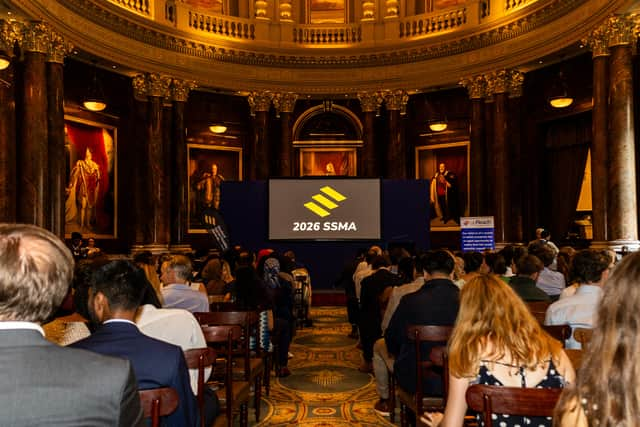
As a result of her advocacy, Gabriella received the Government, Politics & Public Sector Award at this year’s Student Social Mobility Awards.
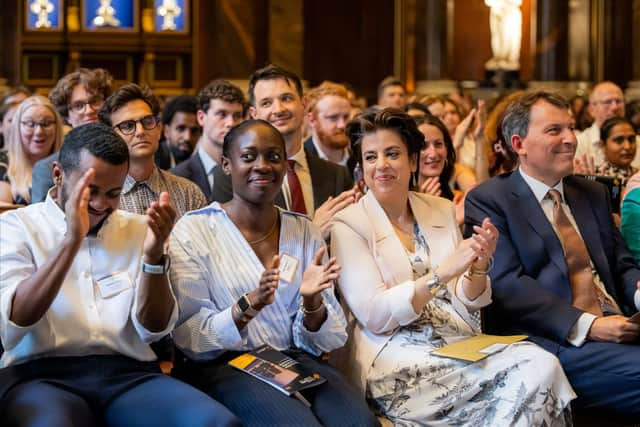
At the awards ceremony, undergraduate nominees from working class backgrounds were recognised for their grit and determination to thrive at university. Now in their eighth year, this summer’s awards celebrated those who are now facing the most challenging job market in decades – and are still determined to come out on top.
Despite significant improvements in working class access to university in the UK, this does not automatically translate into career success or long-term social mobility. Research shows that working class students are less likely to complete an internship than their more privileged peers, and that they are less likely to secure a highly-skilled graduate job, even when they achieve higher grades than their classmates.
Organised by the award-winning social mobility charity, upReach, the awards recognise students who have excelled in their field and demonstrated great resilience, determination or initiative. The awards also showcase the outstanding work being done by mentors, employers, and universities to transform social mobility across the UK.

upReach currently provides personalised 1-to-1 career support to 3,200 students – including over 150 from the East Midlands, like Gabriella.
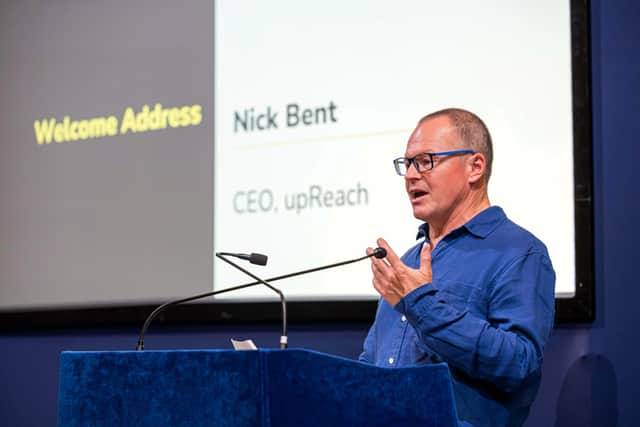
upReach CEO, Nick Bent, comments, “Talent is everywhere, but young people are often held back by things outside of their control. Now more than ever, it is imperative to uplift those who have worked tirelessly to succeed, and who are bringing new life to social mobility in the UK.”
Having overcome significant class barriers and mitigating circumstances, Gabriella is an inspiring role model for those from similar backgrounds, encouraging them to set their ambitions high.
Living in a rural part of Lincolnshire, Gabriella often found that her location made it difficult to get involved in activities in-person. Her advice for other young people growing up in the area is: “Try and do as much as you can virtually. I think that location is obviously a barrier in getting to big cities to go to events, but there's a lot you can do virtually with the power of social media.”
“Also, don't be afraid to reach out and contact as many people as you think might be helpful to you. I rang up a journalist from The Times entirely out of the blue because I thought it would be useful, and that is what got my report coverage.”
The 2026 awards have been generously supported by Bank of America, Slaughter and May, the Royal Academy of Engineering, G-Research, and iQ Student Accommodation. Their sponsorship not only covered the costs of hosting the awards ceremony, but also enabled nominees from all over the UK to attend with their travel and accommodation costs covered. The ceremony was hosted at Drapers’ Hall in London, the venue of the historic Drapers’ guild of merchants.