
'Home life' and 'family circumstances' behind rising school exclusions, officials say
Troubled home lives are contributing to a rise in permanent exclusions from schools, officials have said.
Martin Smith, assistant director of children’s education at Lincolnshire County Council, said officers have found that matters at home often have a knock-on effect and lead to pupils being excluded.
At a children’s and culture scrutiny committee on Friday, July 17, Mr Smith said there have been some issues with the ‘social contract’ of parents buying into behaviour policies.
Mr Smith went on to explain that the county council is working with local organisations to try to keep as many pupils in mainstream education as possible.
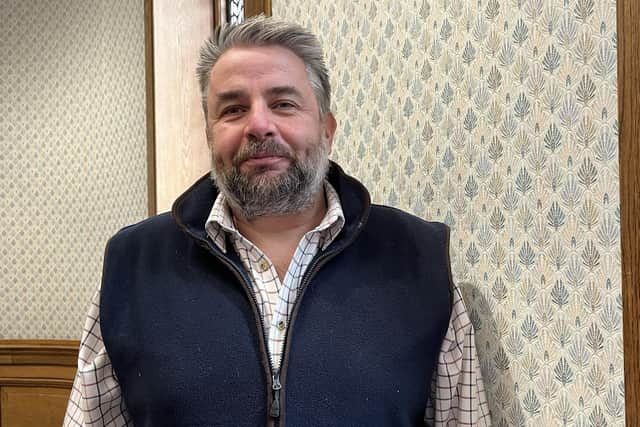

He added: “What we’ve found in the education team is where we’ve done place-based approaches such as Gainsborough and Skegness, when you bring that partnership around a community – whether that’s social care, family, health, housing, police – there are real opportunities to create a better context for children to thrive and improve in terms of lived experience.
“What I’d also say is that as a local authority, we need to be really mindful that it’s the headteachers’ duty and responsibility to decide when a child is permanently excluded.”
Mr Smith stressed that the vast majority of schools – 94% – in Lincolnshire haven’t permanently excluded pupils.
The county council had set itself a target for 0.15% of school pupils to be permanently excluded for the 2025/26 financial year – which is in line with the national target.

The numbers were higher, however, sitting at 0.19% of pupils for 2025/26.
The council said that permanent exclusions have been on the rise since 2020 – a nationwide trend.
Coun Richard Davies (Conservative – Grantham West) said that while permanent exclusions should be a last resort, they can help to prevent one student from persistently disrupting the rest of the class.
He added: “If you have a child that’s in a classroom of other children and all of them are there broadly behaving but you’ve got somebody who is continually disruptive, I don’t know what as a teacher you can do and there must come a point where you it is the only option.
“Because there are some children, some families and some parents who don’t want to abide by that social contract.”
But Coun Jackie Brockway (Conservative – Nettleham and Saxilby) – a former teacher – said she doesn’t believe that the current education system is fit for purpose.
She said it requires children to sit in “uncomfortable clothes, put them into classrooms where they have to sit on hard chairs with desks that don’t necessarily fit their body size” and added that class sizes are too big for a teacher to be able to get around every child within a lesson.
Coun Brockway added: “And then we look at children’s behaviour. I think we should be looking at the system’s behaviour.
“The children are children. It is natural for them to be lively and bouncy.”
She went on to say that the negative stigma around exclusions needs to stop – and said they can help some children who struggle to fit into the mainstream education system.
Coun Brockway added: “Exclusions can be an incredibly positive thing for the child. Just because a child doesn’t necessarily fit in the system of one school doesn’t mean to say that they’re not going to be happy elsewhere.”