
Boston woman who suffered stroke, aged just 28, after assault shares story as part of national campaign to raise awareness of condition
A woman from Boston who suffered a stroke, aged just 28, after an assault has shared her story as part of a national campaign to raise awareness of the condition.
Chloe Beecham remembers feeling ‘something burst’ during the attack and what she describes as a rush of blood inside her neck.
The assault had caused a carotid artery dissection – a tear in one of the major arteries in the neck. A blood clot formed, cutting off blood supply to her brain.
At the time, Chloe had no idea she had a life-threatening injury. She went to bed with an ice pack, believing she simply had a bad headache. The next morning, despite feeling unwell, Chloe got up for work as normal.
Her face felt strange, her right hand was not working properly, and when she looked in the mirror, something did not seem right with her eye. Still, she got in her car and drove herself to work.
By the time she arrived, she was unknowingly experiencing a major stroke. She dropped her phone without realising she could not grip it properly. Colleagues noticed something was not right; they saw her right foot dragging and her speech becoming confused.
One of Chloe’s managers recognised the warning signs.
Chloe said: “They realised stroke.”
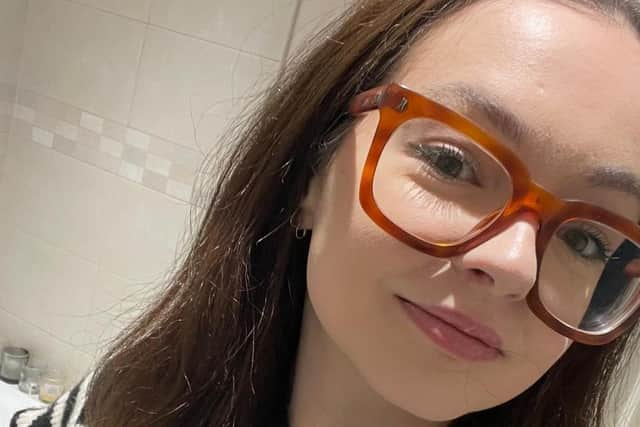

Instead of dismissing her symptoms because she was only 28, they acted immediately and took her to Manchester Royal Infirmary.
Chloe’s mum Lesley received a phone call from her daughter’s boss while she was at home in Lincolnshire.
Lesley said: "As soon as they told me Chloe wasn’t right and described what was happening, my first thought was she’d had a stroke. You don’t expect to think that about your 28-year-old daughter, but I just knew something was terribly wrong.”
She immediately made the three-hour drive to Manchester. By the time she arrived, Chloe had undergone scans and had already been transferred by emergency ambulance to Salford Royal Hospital for specialist care after a stroke was identified.
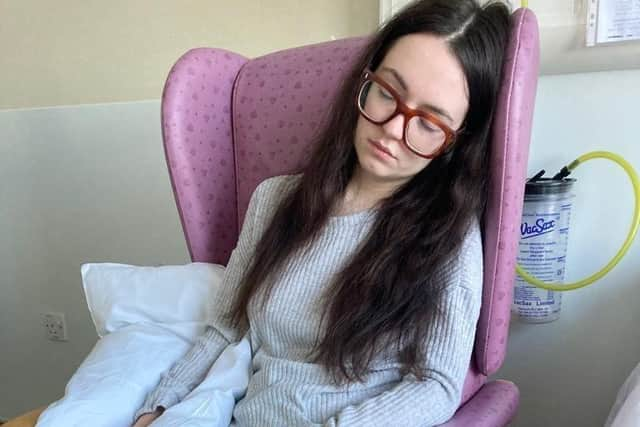
Initially, Chloe was still able to move a little and answer questions, but every answer was the same: “January.”
Lesley said: “It didn't matter what anyone asked, she just kept saying ‘January’. Then someone asked her what her name was, and she couldn’t tell them. That’s when my heart just sank.”
Her first night in hospital, Chloe had a second stroke and a seizure. Overnight, her speech disappeared completely and she became paralysed down the right-hand side of her body.
All of this was taking place in the run-up to Christmas of that year.
On Christmas Eve, Chloe was transferred closer to home so her family could be with her throughout her recovery. Chloe had to relearn how to walk and talk.
The stroke had left her with aphasia, affecting her ability to communicate, and even now, more than three years later, conversations can still be difficult.
Chloe said: “It was frustrating. Words just gone.”
As her speech slowly returned with the help of NHS speech and language therapists, another challenge remained. Police needed Chloe’s account of what had happened, but for months she simply could not explain it.
Gradually, she practised a handful of words over and over again until one day four words that helped complete the picture of what had happened and allowed the investigation to move forward.
Lesley said: “I've watched Chloe lose so much. The job she loved. Her independence. Her flat. Her car. But I’ve also watched her refuse to give up.”
More than three years later, Chloe continues to live with the effects of her stroke. She has aphasia, epilepsy caused by scarring on her brain, weakness in her right arm and hand, and foot drop, meaning she wears a brace to help her walk.
While her rehabilitation continues. Chloe refuses to let her stroke define her.
Chloe said: “I'm still me. Keep going.”
Lesley believes Chloe’s story carries an important message for everyone.
"People think strokes only happen to older people, but they don’t,” she said. “Chloe was only 28. If her colleagues hadn’t recognised something was wrong and acted so quickly, she might not be here today.”
Chloe hopes that by sharing her experience, more people will understand that stroke can affect anyone, regardless of age. She wants young people to know the signs.
She wants people to trust their instincts when something does not feel right. Most of all, she wants others living with stroke to know that recovery does not stop when you leave hospital.
Chloe has shared her story as part of the Stroke Association’s ‘Survival Is Not Enough’ campaign.
The campaign aims to raise awareness of the impact of strokes and support a two-part documentary series commissioned by Channel 4, created in partnership with the charity.
‘Trauma: My Broken Brain’ follows three young adults, Dan, Saskia and Dec, who have experienced a life-threatening stroke.
It is available to stream now on Channel 4.
The F.A.S.T. acronym (Face, Arms, Speech, Time) is a test to quickly identify the three most common signs of stroke, The Stroke Association says:
- Face weakness: Can the person smile? Has their mouth or eye drooped?
- Arm weakness: Can the person raise both arms fully and keep them there?
- Speech problems: Can the person speak clearly and understand what you say? Is their speech slurred?
- Time to call 999: if you see any one of these signs.