
More than 200 miles of Lincolnshire roads improved after £12million road works scheme
Road improvement schemes costing £12 million have been delivered across Lincolnshire this summer.
Lincolnshire County Council (LCC) Highways says its roads are now “better” – after the equivalent of 213 miles of worn out road surface was treated.
“Lincolnshire has put real money behind its summer road programme, and it shows,” a spokesperson for the authority said.
“£6 million has been spent on surface dressing, £4.5 million on in situ recycling, £450,000 on carriageway preservation and and another £1.1 million already lined up for micro asphalt, the autumn phase that will be well underway by the time you read this.”
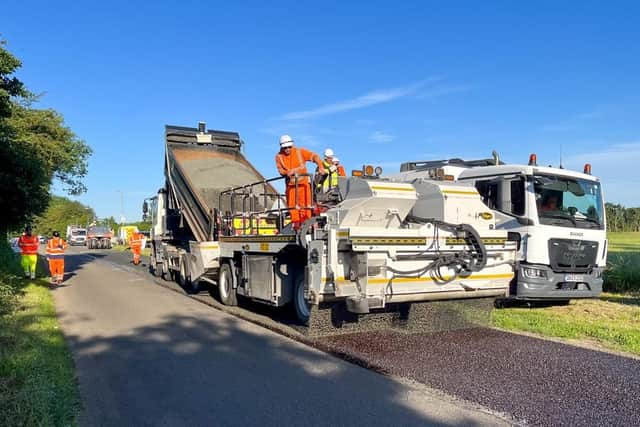

Highways at LCC says the completion of works highlights what it calls “a shift toward early intervention where potholes still get fixed, but the long-term way out of the road repair cycle is preventative treatment”.
Coun David East, executive member for Highways at LCC said: "The results are speaking for themselves. We have put serious money into serious schemes across the county to get to grips with road issues that affect many people as they travel. Our crews have been working very hard all summer, and the work is continuing at pace to keep the uplift going.
"What we're seeing is the delivery of preventative road maintenance that gets ahead of the problems before they grow into something bigger. It's the right way to approach the issues that have been set upon our county for too long.”
Crews have spent the summer strengthening the local road network ahead of the coming winter. Some 217 roads were surface dressed, 24 got the in situ retread and regeneration treatment and 41 were topped with preservation.
“It wasn’t just surfacing,” the spokesperson adds. “Teams also tackled drought-related cracking, brittle edges and the kind of hidden damage that shows up after long dry spells. Lincolnshire gets more of that than other parts of the country, and it’s one of the reasons the county leans so heavily on early intervention.”
Andy Creasey, the county programme manager for Highways, said: “Delivering this volume of work across such a large highway network, within a relatively short summer window and while working around weather conditions, requires careful planning and close coordination between our teams, our partners and the communities we work in.
“I’m really pleased with the progress we have made and the amount of preventative maintenance we have been able to deliver. The focus now moves onto the next phase of the programme, with carriageway micro asphalt getting underway and continuing our approach of using the right treatment at the right time to protect Lincolnshire’s roads.”
The next phase of road improvements is already up and running – with 94 Lincolnshire roads set to receive micro asphalt, a two-layer process for roads that are still structurally sound but are starting to show early signs of wear. The scheme seals, protects and buys years of extra life which is exactly the kind of early intervention the county is now banking on.
Roads planned for micro asphalt works in the autumn scheme include:
Ancaster – Flaminian Way, Barkston and The Leas
Boston – Burleigh Gardens, Comer Close and Towell Close
Skegness – Allenby Way, Johnson Close, Moss Drive and The Meadows
Chapel St Leonards – Palma Court
Coningsby – Carrington Close, Greenfield Road and Read Way
Halton Holegate – Manor Drive
Horncastle – Brook Road, College Park, Jobson Road and Tweed Close
Louth – Badminton Way
Market Rasen – The Ridings, Wells Drive and Wetherby Close
Navenby – Fosters Close and Maiden Well Close
Sutton on Sea – Cades Field Road and Shelley Close
Swaton – Chestnut Close